US, Iran Trade Conflicting Claims on Peace Talks Amid Tensions
President Trump claimed the US and Iran are in productive talks for a peace resolution, announcing a five-day pause on strikes against Iranian energy sites. However, Iran's foreign ministry has flatly denied any such negotiations are taking place, calling reports "fake news." Experts express caution, noting the conflicting statements and the long-standing issues that remain unresolved.

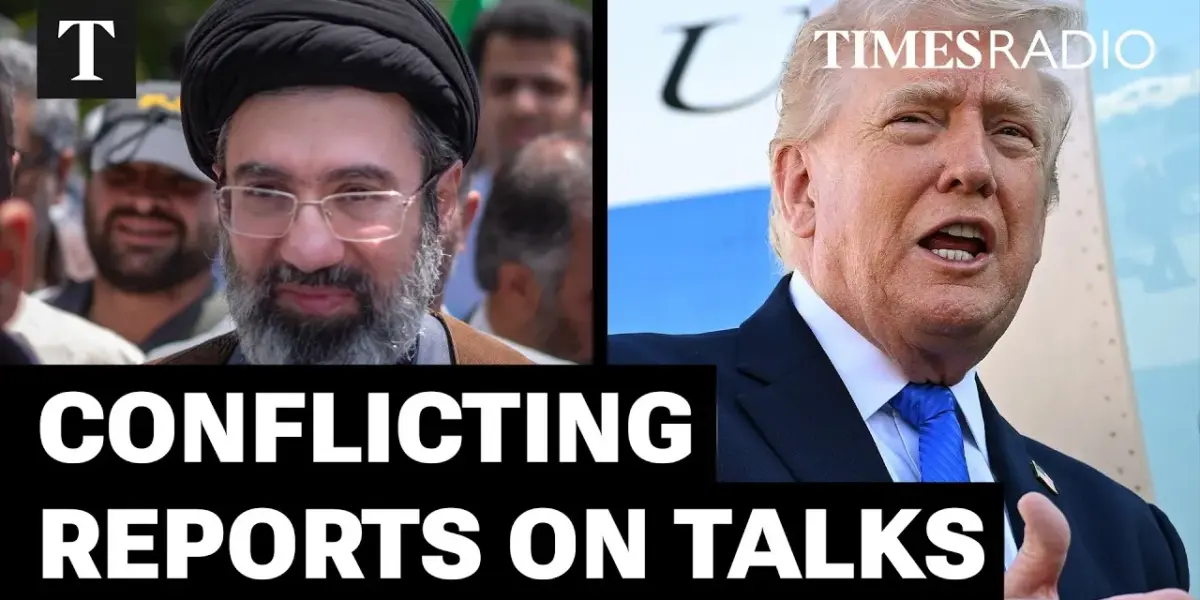
US Claims Productive Talks While Iran Denies Negotiations
President Donald Trump announced Tuesday that the United States and Iran have been engaged in “good and productive conversations” aimed at a “complete and total resolution of hostilities.” Trump’s statement, made via social media platform Truth Social, surprised many observers. He also stated that the U.S. would pause planned strikes on Iranian energy plants for five days, replacing an earlier deadline for Iran to halt attacks on shipping in the Strait of Hormuz.
Speaking to reporters later, Trump elaborated, “The discussions took place yesterday. They went into yesterday evening. They want very much to make a deal. We’d like to make a deal, too.” He indicated that while direct meetings are difficult to arrange, the two sides would connect soon, likely by phone. “We’re doing a 5-day period. We’ll see how that goes. And if it goes well, we’re going to end up with settling this,” Trump added.
When asked about control of the Strait of Hormuz in the event of a deal, Trump suggested it could be “jointly controlled” by the United States and Iran’s leadership. He also linked a potential resolution to a form of “regime change,” though he noted that “everybody’s been killed from the regime.”
Iran Issues Flat Denial of Any Talks
In stark contrast to the U.S. president’s claims, Iran’s foreign ministry issued a statement denying any such talks with Washington. Reports had circulated that Steve Witkoff, Trump’s special envoy, and Jared Kushner were negotiating with Mohammad Bagher Ghalibaf, the speaker of Iran’s parliament. However, Ghalibaf dismissed these reports as “fake news” on the social media platform X, stating, “The Iranian people demand complete and remorseful punishment of the aggressors.”
Expert Views on Conflicting Statements
Sir Mark Lyall Grant, former national security adviser, described the day’s developments as “pretty baffling.” He found it encouraging that Trump had delayed attacks on Iranian energy sites, which could have led to retaliatory strikes against Gulf states. “It’s encouraging that he’s clearly interested and looking for ways of deescalating this conflict,” Sir Mark told reporters.
However, he highlighted the contradictory messages. “The Iranians are claiming that actually there aren’t any talks and… the speaker… is claiming that he hasn’t been involved and it’s all fake news.” Sir Mark also noted that strikes between Iran and Israel had continued, and that while the prospect of talks positively impacted oil prices, it was “too soon to draw a conclusion that we’re moving towards the end of this conflict.”
“The sort of twist and turns of of the story today is is pretty baffling.”
Sir Mark Lyall Grant, Former National Security Adviser
Potential for Behind-the-Scenes Contact
Sir Mark acknowledged the possibility that Trump might be exaggerating tentative contacts to calm financial markets. “He’s used that tactic before and it has had the positive impact on the markets that he no doubt wanted it to,” he said. “On the other hand, it wouldn’t be surprising if the Iranians were denying talks that in fact were happening behind the scenes.”
He cautioned that even if some form of contact exists, it remains uncertain whether it’s a viable channel to restrain Iran’s actions. “We’re a very long way from the sort of comprehensive… cessation of hostilities and resolving all the problems that President Trump was talking about,” Sir Mark explained, citing issues like Iran’s nuclear program, ballistic missiles, and regional influence.
Diplomatic Channels and Potential Escalation
Reports emerged that Steve Witkoff was heading to Pakistan, a nation thought to be acting as a mediator. “Maybe Pakistan can host host those talks and that’ll develop into something more substantive,” Sir Mark suggested, noting that so far, discussions have been primarily by telephone. He believes Trump stepped back from the brink of attacking Iranian energy sites, realizing the potential for major, uncertain escalation.
Britain’s Defense Posture and Vulnerabilities
The discussion also touched upon Britain’s response, with HMS Dragon arriving in the Eastern Mediterranean. Sir Mark acknowledged that Britain’s defense posture appeared slow, attributing it partly to underinvestment and a belief that Trump would not proceed with the attack on Iran. “It does look as though they were sort of pushed into it by Israel,” he commented.
Regarding the threat of Iranian missile strikes on the UK, Sir Mark expressed skepticism about Iran possessing the long-range capability to hit British cities with substantial payloads. He believes a more significant threat comes from terrorism, cyberattacks, and espionage. He pointed to numerous plots against the UK supported by Iran, including recent incidents involving a submarine base and potential surveillance of Jewish synagogues.
Broader Threats and Future Outlook
Sir Mark emphasized that threats like terrorism and cyber espionage are more likely to affect British security than long-range missile attacks. He cited recent vandalism at a Jewish ambulance service as a potential example of the kind of response expected from Iran following regional events. “That is the sort of response I think we must expect,” he stated.
Looking ahead, the situation remains complex with conflicting narratives and ongoing regional tensions. While diplomatic efforts, however nascent or disputed, offer a potential path to de-escalation, the continued exchange of hostilities and Iran’s denial of talks suggest a long road to resolving the underlying issues. The effectiveness of any back-channel communications and the broader geopolitical responses will be crucial in determining the future trajectory of the conflict.
Source: Trump Hails Positive Talks With Iran – They Claim Talks Never Happened | Sir Mark Lyall Grant (YouTube)

Related Articles

G7 Allies Clash Over Iran War Strategy, Urge Focus on Russia
G7 foreign ministers met in Paris, revealing deep divisions over the U.S. war with Iran. European allies urged the U.S. to pressure Russia, linking its actions to the conflict and fearing support for Ukraine will wane.

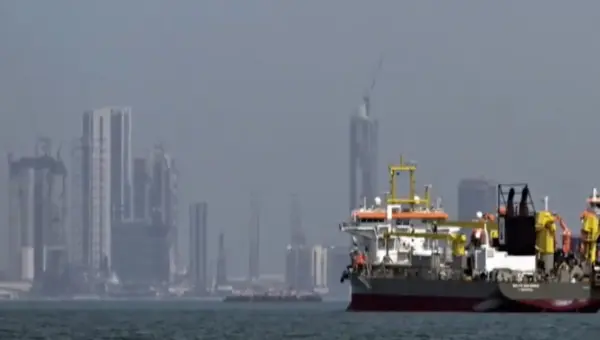
Iran Blocks China Ships, Exposing Beijing’s Weak Grip
Iran's recent decision to block Chinese ships at the Strait of Hormuz is exposing the limits of Beijing's influence in the Middle East. This action is causing delays and cancellations for Chinese manufacturers, turning a perceived geopolitical win into an economic strain.
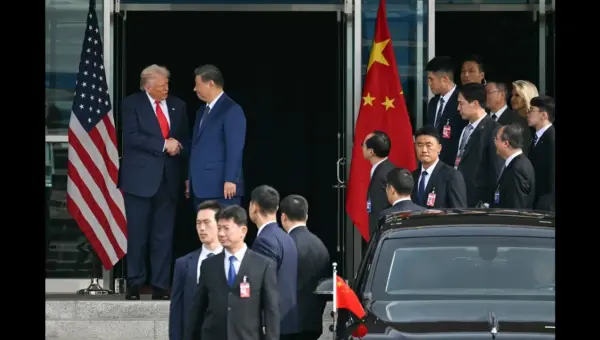
Trump’s “Walk Away” Tactic Signals Tougher Stance on China
Retired Air Force Brigadier General David Stillwell believes President Trump's strategy of being willing to walk away from negotiations puts pressure on China. This tactic, combined with US global actions and strengthened alliances, signals a more assertive American foreign policy.