US-Iran Tensions Mount: Diplomatic Window Narrows as Military Momentum Tilts Towards Conflict
Tensions between the US and Iran are reaching a critical point, with a significant American military buildup in the Middle East creating an undeniable momentum towards conflict. As President Trump weighs limited military strikes, Iran is rushing to present a counter-proposal, but the fundamental disagreement over the scope of a deal – Iran focusing on nuclear issues versus the US demanding broader regional behavioral changes and ballistic missile curbs – leaves a narrow diplomatic path.

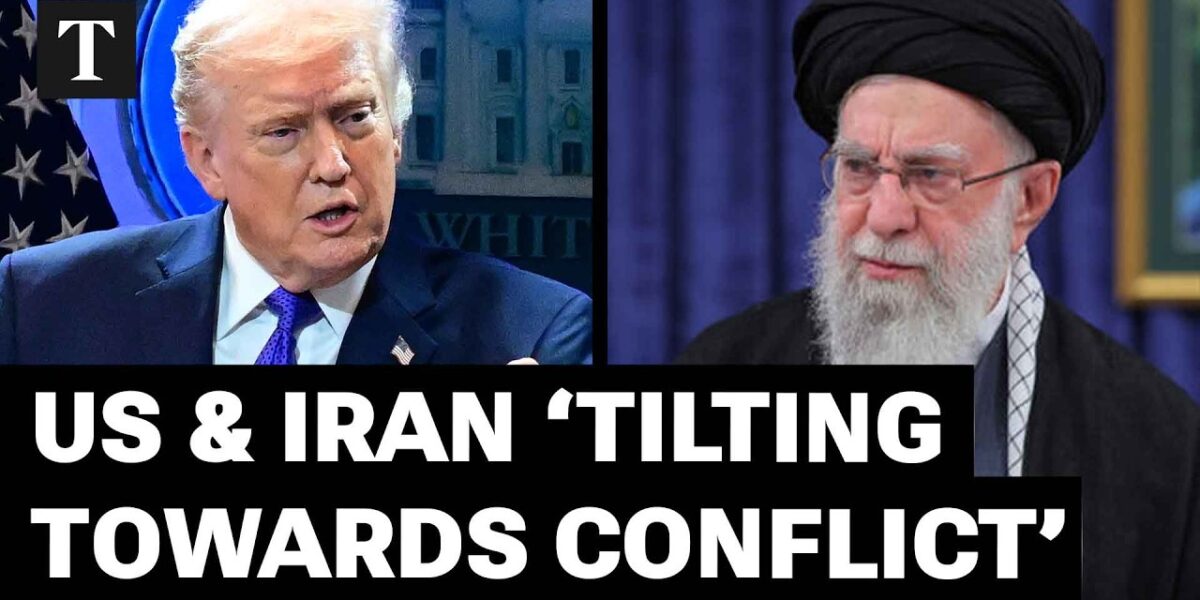
US-Iran Tensions Mount: Diplomatic Window Narrows as Military Momentum Tilts Towards Conflict
The Middle East stands on the precipice of a potentially devastating conflict, as a significant US military buildup in the region fuels an undeniable momentum towards military action against Iran. Despite indications from both Washington and Tehran that neither side explicitly desires war, the sheer scale of the American deployment, coupled with the complex demands of a potential diplomatic resolution, has created a perilous environment where the window for de-escalation is rapidly shrinking.
US President Donald Trump is reportedly weighing limited military strikes on Iran, a development that comes amidst a massive concentration of naval forces, including aircraft carriers and other warships, in the Middle East. This formidable display of power, the largest since 2003, has intensified fears of an imminent confrontation, pushing policymakers into a critical juncture where inaction becomes increasingly difficult.
Robert Pinfold, a lecturer in defense studies at King’s College London and an expert in territorial disputes and grand strategy, articulated the gravity of the situation during an interview with Times Radio. “Once you commit to sending so many military forces to the region, you kind of get into this momentum,” Pinfold explained. “Policymakers, they can’t just sort of press a button and send everyone home. They have to actually do something with all that military force. So, the fact there’s such a comprehensive military buildup edges us towards conflict even if it’s not something the US initially wanted.”
The Narrowing Diplomatic Path
Amidst the escalating military posturing, Iran’s Foreign Minister has indicated that a draft counter-proposal will be ready within days for US Special Envoy Steve Wickoff. This accelerated timeline is a stark indicator of the urgency perceived by Tehran. Initially, reports suggested a two-week timeframe for Iran’s response, but the rapid deployment of US forces has evidently compressed this period, highlighting the diplomatic pressure cooker both sides find themselves in.
Pinfold noted this shift, stating, “What’s interesting is the time frame has gone down so quickly… this, I guess, is a product of the building momentum, the fact that we seem to be drifting towards war.” He underscored the shared sentiment that while neither side desires open conflict, their respective rooms for maneuver are diminishing. “Both sides feel that their room for maneuver, their chance to get out of an open conflict, that window is getting smaller and smaller and smaller,” he added.
The core challenge in any potential negotiation lies in the fundamental disagreement over the scope of a deal. Iran consistently maintains that any discussions should be solely focused on its nuclear program. However, the United States, under the Trump administration, seeks a far more comprehensive agreement. Washington’s demands extend beyond nuclear enrichment to encompass a fundamental change in Iran’s regional behavior, including its support for proxy groups – collectively known as the “axis of resistance” – and the development of its ballistic missile program.
“This is not just about the nuclear program,” Pinfold emphasized. “The issue here is that the Iranians want this to be just about the nuclear program. The Americans don’t. They want this to be a deal that changes Iran’s behavior in the entire region.” He elaborated that such a deal would need to address not only nuclear capabilities but also Iran’s network of regional allies, such as Hezbollah, and its ongoing enhancement of ballistic missile technology.
US Military Objectives: From Crippling Blow to Limited Strikes?
The potential targets and scale of any US military action have been a subject of intense speculation. Prior to President Trump’s recent shift in rhetoric, the prevailing assessment was that the US was not interested in a limited campaign. Instead, the focus was believed to be on delivering a “crippling, possibly even a death blow to the regime.” Such an operation would extend far beyond merely striking nuclear sites, potentially involving comprehensive assaults on Iran’s command and control infrastructure, military installations, and even its political leadership.
Pinfold highlighted this earlier, broader intent, contrasting it with previous, more targeted actions. “This would not be just about strikes, targeted strikes on nuclear sites, for example, with US stealth bombers, which is what we saw in the 12-day war in the middle of last year,” he noted, referring to a period of intense, possibly Israeli-led, strikes against regional targets with reported US backing. Instead, a comprehensive campaign would aim to dismantle Iran’s military and political capabilities more broadly.
However, President Trump’s recent suggestion of “limited military strikes” represents a potential “gamechanger.” This shift could indicate a strategic reconsideration, possibly acknowledging the immense risks and broader implications of a full-scale conflict. A limited strike scenario might mirror the more targeted operations seen in the past, aiming to send a strong message without necessarily seeking to overthrow the regime or engage in a protracted war. This change in rhetoric, Pinfold suggested, implies that “Trump knows that the military pressure is building.”
The Imperative of a Trump “Win”
A significant factor in the current standoff is President Trump’s well-known preference for presenting any negotiation or foreign policy outcome as a decisive “win” for America, achieved without perceived loss of face. Given the substantial deployment of US military forces, the stakes for a diplomatic resolution are exceptionally high. Trump, Pinfold noted, needs to secure “something better than just an okay deal.” The sheer investment in military resources necessitates a tangible, demonstrable victory.
An “okay deal,” in this context, would be one that merely constrains Iran’s uranium enrichment – a primary concern of the original Joint Comprehensive Plan of Action (JCPOA), from which the US withdrew in 2018. However, with the current level of escalation, such a deal would likely be insufficient for Trump to claim a victory commensurate with the military pressure exerted.
Therefore, to avert military action and allow Trump to declare a diplomatic triumph, Iran’s counter-proposal would need to be far more extensive. It would likely require significant concessions regarding its regional influence and military capabilities. Specifically, this would entail:
- Changing Iran’s Relationship with Regional Allies: This means curbing support for groups like Hezbollah in Lebanon, various Iraqi militias, and the Houthi rebels in Yemen – all key components of the “axis of resistance” that project Iranian power across the Middle East.
- Curbing Ballistic Missile Development: This is a critical concern for US allies in the region, particularly Israel and the Gulf States. The fear is that Iran, even if it cannot directly win a war against the US, could use its expanding arsenal of ballistic missiles to inflict significant damage and destabilize the region, causing widespread chaos. “That’s what’s worrying US allies in Western capitals at the moment from Riyad to Tel Aviv,” Pinfold explained.
Without such comprehensive commitments, the likelihood of the US withdrawing its forces without some form of military action appears slim, given the domestic political imperative for Trump to demonstrate a return on the massive military investment.
Regional and Global Implications
The potential for conflict between the US and Iran carries profound regional and global implications. A military confrontation, even a limited one, could ignite a broader regional conflagration, drawing in other actors and potentially disrupting vital oil shipping lanes in the Persian Gulf. Such instability would have immediate and severe consequences for global energy markets, international trade, and the delicate geopolitical balance of power.
For US allies in the Middle East, particularly Saudi Arabia, the UAE, and Israel, the prospect of an emboldened or retaliating Iran is a significant concern. Conversely, regional adversaries of the US, such as Russia and China, would closely monitor any developments, potentially seeking to capitalize on a destabilized region or a US military entanglement.
The current period is undeniably critical. The momentum generated by the massive US military buildup, combined with the narrowing diplomatic window and the fundamental disagreements between Washington and Tehran, has created a highly volatile situation. As the world awaits Iran’s counter-proposal and President Trump’s next move, the region holds its breath, aware that the slightest miscalculation could plunge it into a conflict with far-reaching and unpredictable consequences.
The ultimate decision on whether the path forward involves a limited strike, a more comprehensive campaign, or a last-minute diplomatic breakthrough, remains shrouded in uncertainty. As Robert Pinfold concluded, “Unfortunately, the momentum is tilting towards conflict.”
Source: Trump Weighs Up Military Action In Iran As Momentum Tilts Towards Conflict (YouTube)

Related Articles

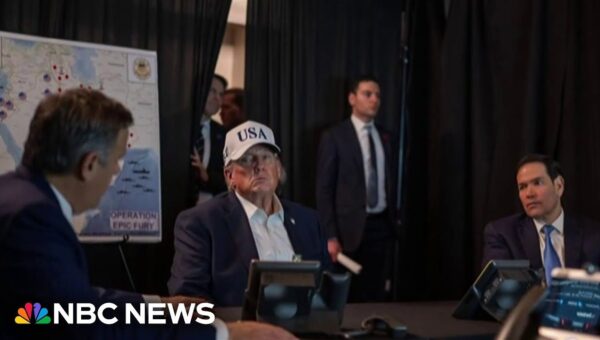
Trump: Iran Strikes Ahead of Schedule, Expects ‘Great Deal for World’
Three U.S. service members have been killed amid escalating conflict with Iran, President Trump confirmed. He stated that strikes are ahead of schedule, with senior Iranian leaders killed, and expressed optimism for a "great deal for the world" despite ongoing talks with Iranian officials.
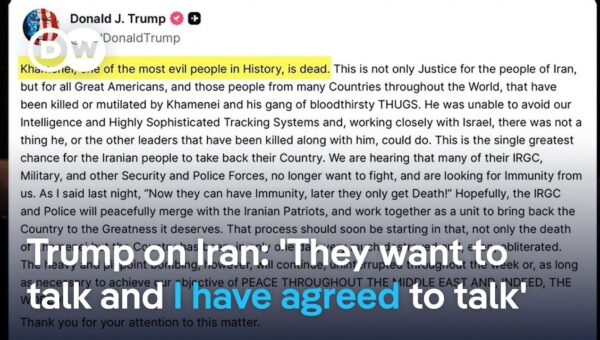
Trump Agrees to Talks with Iran After Major Strikes
President Donald Trump has agreed to talks with Iran's leadership following coordinated strikes that reportedly killed key figures, including the Supreme Leader. While Trump claims significant military successes, U.S. strategy remains unclear, and public opinion shows limited support for the actions amid rising American casualties.

Trump’s Putin Stance: US Strategy and Global Implications
Analysis suggests Donald Trump's approach to the Ukraine war involves pressuring Kyiv, but US involvement is crucial for resolution. China's influence and the 'MAGA' agenda's geopolitical implications are key factors.