US-Iran Talks Signal Pause in Strikes; Airport Chaos Grips Nation
President Trump announced potential progress in US-Iran talks, leading to a temporary halt on military strikes. Meanwhile, a partial government shutdown is causing significant disruptions at US airports, impacting TSA agents and travelers. Lawmakers are also debating election integrity and a large Pentagon spending request.

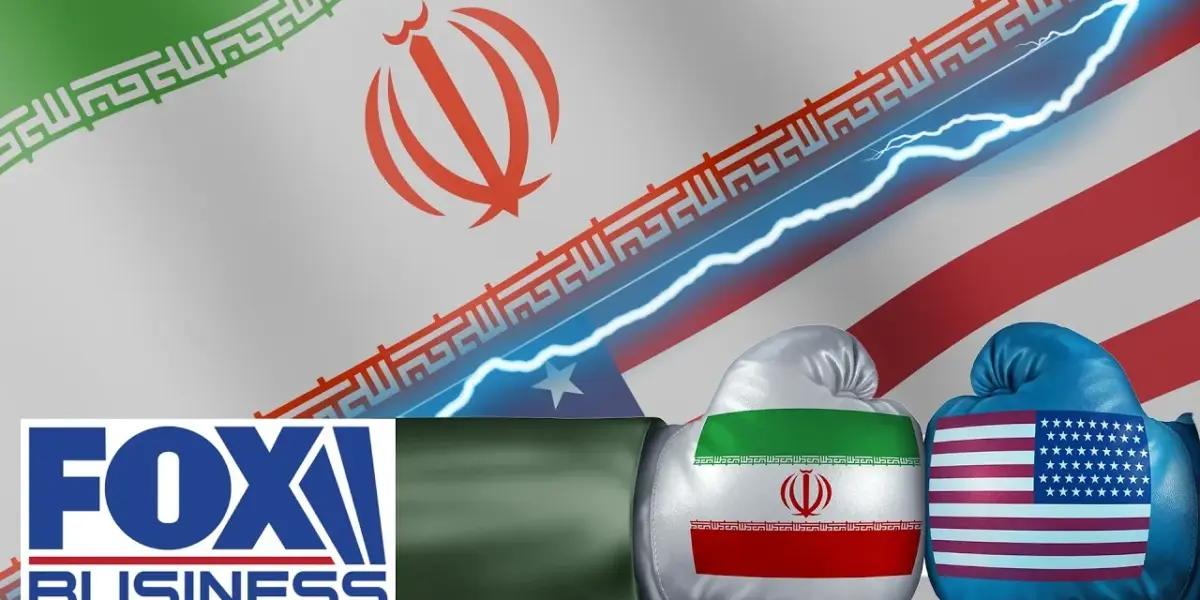
US-Iran Talks Signal Pause in Strikes; Airport Chaos Grips Nation
President Trump announced on Truth Social that the United States and Iran have held productive conversations over the past two days. Following these discussions, he has directed the Department of Defense to pause all military strikes against Iran’s power plants and energy infrastructure for five days. This pause allows ongoing talks to continue.
Meanwhile, a significant request from the Pentagon for $200 billion for Iranian-related matters is being discussed by Republicans. Lawmakers are considering whether to attach this defense funding to a reconciliation package. Congressman James Comer expressed support for a reconciliation package, emphasizing the need for fiscal balance. He stated, “If you increase spending $200 billion for something, you have to cut something.” Comer also noted his dislike for the conflict with Iran but framed it as “cleaning up Joe Biden’s and Barack’s mess.”
However, Iran’s state television reported a conflicting account. A spokesperson for the Islamic Revolutionary Guard Corps (IRGC) and the Iranian Foreign Ministry claimed that President Trump’s remarks about halting strikes were a ploy to buy time for military preparations. They denied any direct or indirect talks with the Trump administration.
Responding to these conflicting reports, a source indicated belief in the ongoing talks based on their briefing. The source questioned the trustworthiness of Iranian television. “At the end of the day, I think the President is conscious. I don’t think anyone wants to see much more damage to Iran unless they refuse to make peace here and put a halt to their quest to have a nuclear weapon,” the source stated. They reiterated that Iran does not need nuclear capabilities and referenced the Obama administration’s deal with Iran, which they believe provided significant funds and overlooked nuclear development.
Airport Shutdown Fuels Homeland Security Concerns
The conversation then shifted to the ongoing partial government shutdown and its impact on national security and airports. A deadly collision at New York’s LaGuardia Airport highlighted concerns about airport safety and TSA operations. With the shutdown in its 38th day, Markwayne Mullin’s nomination as the new DHS Secretary is being considered. President Trump has deployed ICE agents to airports to support TSA officers, many of whom have been working without pay for over five weeks.
Congressman Comer criticized Democrats for their role in the shutdown, stating they initially opposed funding Homeland Security and wanted to fire ICE agents. He believes Democrats aim to disrupt the economy, especially with the election approaching. “The truth is, the Democrats want to disrupt the economy as much as they can. They know the number one issue in the election is the economy,” he said. Comer also expressed concern that TSA agents, Coast Guard members, and other Homeland Security employees are not being paid for no good reason.
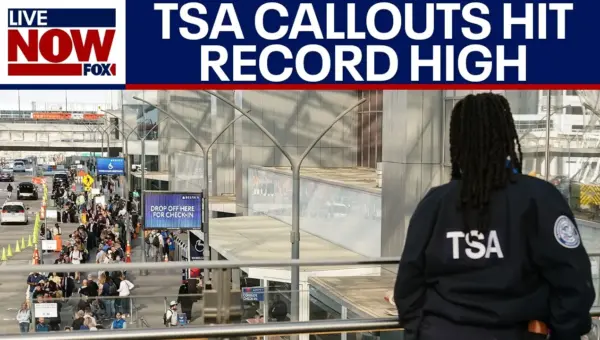
Airlines are reporting economic damage, particularly during spring break and summer travel seasons. TSA call-out rates reached a national high of 11.5%, with 40% of agents in Atlanta calling out. Many TSA agents face financial hardship, struggling with mortgages, car payments, and healthcare costs. Over 1,100 agents have quit since the fall, with at least 300 leaving during this recent period. Elon Musk reportedly offered to pay TSA agents’ salaries, though the legality of this is uncertain.
Comer stated he had voted three times to fund the Homeland Security budget, which would cover TSA agents, the Coast Guard, and the Secret Service. He criticized Democrats for continuing to oppose these funding measures. Comer expressed confidence in Markwayne Mullin’s leadership and hoped he could persuade Senate colleagues to pass funding bills. “When you turn your back on paying for federal employees’ salaries, paying for an entire government agency that, by the way, is in charge of protecting the homeland, you are not governing. You are becoming a political pawn,” Comer stated.
Election Integrity Debate Intensifies
The discussion also touched upon the “Save America Act,” with lawmakers failing to reach an agreement. President Trump urged continued work until the bill is passed, suggesting lawmakers stay through Easter if necessary and advocating to end the filibuster. Comer agreed, emphasizing the importance of confidence in elections. “If we can’t have confidence in elections as a country, what does that say about our country?” he questioned.
Comer believes Democrats oppose voter ID laws because they want to protect their base, which he characterized as illegal voters. He drew a parallel to other situations requiring identification, such as checking into a hotel or entering the Capitol. “You don’t have to show ID to vote? That is preposterous,” he argued. Comer noted that only states refusing to require citizen verification are “blue states,” suggesting this points to a higher probability of cheating when identification is not required for voting.
Market Impact
The news of potential US-Iran talks, even with conflicting reports, could temporarily ease geopolitical tensions. This might offer some relief to oil markets, which are sensitive to Middle Eastern instability. However, the uncertainty surrounding the actual progress of these negotiations means any market reaction could be short-lived.
The ongoing government shutdown and its impact on critical services like air travel create economic drag. Staffing shortages and disruptions at airports can lead to delays, cancellations, and decreased consumer confidence, potentially affecting travel and related industries. The financial strain on federal employees not receiving pay also impacts consumer spending.
The debate over election integrity, while primarily a political issue, can influence investor sentiment if it leads to significant policy changes or prolonged political uncertainty. The focus on fiscal responsibility versus increased defense spending also highlights ongoing budget debates that could impact future government spending priorities.
What Investors Should Know
Investors should monitor the developments in US-Iran relations closely. Any escalation or de-escalation can affect global energy prices and broader market sentiment. Keep an eye on how the US and Iran’s official statements evolve.
The impact of the government shutdown on the economy is a growing concern. Investors should consider how prolonged disruptions to services and government operations might affect corporate earnings and consumer behavior, particularly in sectors reliant on travel and consumer spending.
The political discourse around election integrity and government spending reflects ongoing domestic policy debates. These issues, while not directly market-moving in the short term, can shape the longer-term economic and regulatory environment.
Source: MIXED SIGNALS: Iran DENIES negotiations as US says talks are real (YouTube)

Related Articles
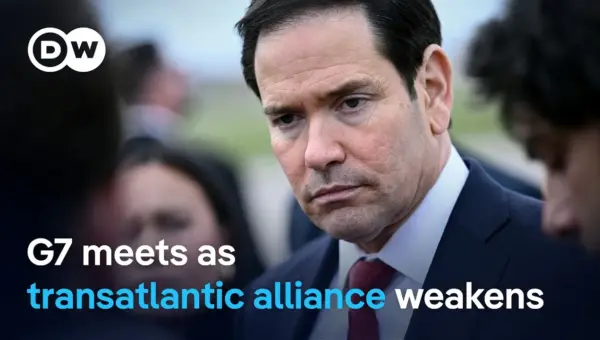
G7 Allies Clash Over Iran War Strategy, Urge Focus on Russia
G7 foreign ministers met in Paris, revealing deep divisions over the U.S. war with Iran. European allies urged the U.S. to pressure Russia, linking its actions to the conflict and fearing support for Ukraine will wane.
TSA Workers Get Paid After Record Absences
TSA agents will finally receive paychecks after working nearly six weeks without salary, following a directive from President Trump. Record high absences had strained airport operations and caused significant passenger delays. The situation has sparked calls for better protections for essential workers during government shutdowns.

Iran Blocks China Ships, Exposing Beijing’s Weak Grip
Iran's recent decision to block Chinese ships at the Strait of Hormuz is exposing the limits of Beijing's influence in the Middle East. This action is causing delays and cancellations for Chinese manufacturers, turning a perceived geopolitical win into an economic strain.