US-Iran Relations: Divergent Histories Fuelling Conflict
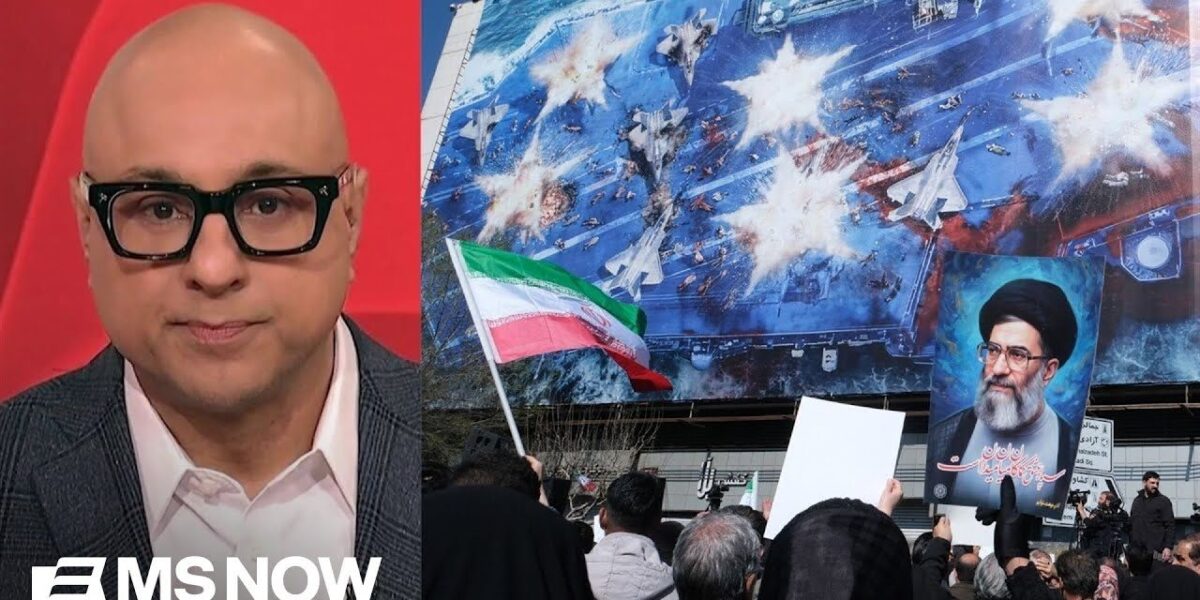
The enduring conflict between the U.S. and Iran stems from vastly different historical interpretations. While Americans focus on the 1979 revolution, Iranians remember foreign interference in 1953 as the true beginning of their grievances. This divergence in memory fuels ongoing distrust and complicates potential resolutions.

US-Iran Relations: Divergent Histories Fueling Conflict
The complex and often adversarial relationship between the United States and Iran is not a recent phenomenon, but rather a narrative shaped by profoundly different historical interpretations and memories. While many Americans mark the 1979 revolution and subsequent hostage crisis as the genesis of bilateral tensions, Iranians often trace the roots of distrust back decades earlier, to pivotal events that they perceive as foreign interference and the subversion of their democratic aspirations.
Early Seeds of Distrust: 1906-1953
The historical divergence begins as early as 1906, with Iran’s Constitutional Revolution. This period saw merchants, clerics, and reformers successfully push the monarchy to adopt a constitution and establish a parliament, marking one of the Middle East’s earliest experiments with representative government. However, this nascent democratic movement occurred within a landscape increasingly influenced by global powers. By 1907, Britain and Russia had carved Iran into spheres of influence, signaling that the nation’s sovereignty was conditional and its independence constrained.
The geopolitical pressures intensified in 1941 during World War II. Britain and the Soviet Union jointly occupied Iran to secure vital oil supplies and establish a crucial supply corridor to the Eastern Front. This occupation led to the abdication of Reza Shah and the ascension of his son, Mohammad Reza Pahlavi, to the throne. By the mid-20th century, a significant segment of the Iranian populace recognized their nation’s strategic importance and the ways in which great powers exploited it.
The 1953 Oil Nationalization and the CIA Coup
This understanding of their geopolitical position set the stage for the pivotal events of 1953. In 1951, Mohammad Mossadegh, a secular nationalist, was elected Prime Minister. His primary agenda focused on the nation’s oil resources, which were largely controlled by the British-owned Anglo-Iranian Oil Company. Iranians widely considered the terms of this arrangement exploitative, especially when contrasted with the 50-50 profit-sharing agreements Saudi Arabia had recently negotiated with American oil companies. When Britain rejected Iran’s request for a similar deal, citing financial constraints and the unique structure of the Anglo-Iranian Oil Company, many Iranians viewed it as a defense of colonial privilege.
In response, Mossadegh nationalized Iran’s oil industry. While Iran saw this as an assertion of sovereignty, Britain interpreted it as theft, imposing sanctions and seeking international legal recourse. When these efforts proved insufficient, British officials lobbied Washington to frame Mossadegh’s actions through a Cold War lens. The proximity of Iran to the Soviet Union fueled fears in Washington not just of losing oil access, but of losing influence to communism.
Consequently, the CIA agreed to participate in a covert operation, codenamed Operation Ajax. Kermit Roosevelt III, a CIA operative and grandson of President Theodore Roosevelt, worked alongside British intelligence. Using CIA funds, they orchestrated political pressure campaigns, propaganda efforts, and street demonstrations. While the exact amount of funding remains debated, it was sufficient to mobilize unrest and influence key Iranian figures. Operation Ajax succeeded in overthrowing Mossadegh and restoring the Shah to full authority. In Washington, it was lauded as a triumph of Cold War statecraft. However, in Iran, it became a profound national trauma—a democratically elected government overthrown by foreign intervention.
The Shah’s Reign and the 1979 Revolution
For the subsequent 25 years, the Shah ruled as a staunch ally of the United States. Iran became a major purchaser of American military hardware, acquiring advanced fighter jets, naval systems, and surveillance technology. This strategic partnership, however, was deeply transactional. While the U.S. viewed the Shah as a bulwark of regional stability, his regime simultaneously engaged in significant political repression. The Shah’s security service, Savak, ruthlessly suppressed dissent, while rapid modernization efforts exacerbated social inequalities, enriching a select few while leaving the majority behind.
When the revolution erupted in 1979, Americans perceived it as a sudden betrayal. Conversely, many Iranians viewed it as the delayed, inevitable consequence of the 1953 coup and the subsequent autocratic rule it enabled. This historical framing underscores a fundamental disconnect in how the two nations understand the origins of their conflict.
The 1988 Incident: Another Divergent Memory
Another significant event that highlights this chasm in historical memory is the downing of Iran Air Flight 655 in 1988. During the final stages of the Iran-Iraq War, the U.S. Navy cruiser USS Vincennes mistakenly shot down the civilian Airbus over the Persian Gulf, killing all 290 people on board. The United States characterized the incident as a tragic error that occurred amidst a tense naval engagement, a narrative that largely prevails in American recollection, if the event is remembered at all.
In Iran, however, the event is remembered as an act of aggression by American forces against innocent civilians, further solidifying a deep-seated distrust of the United States. This incident is viewed not as an isolated mistake, but as another chapter in a long history of perceived American hostility.
The Battlefield of Memory
The legacy of these historical events, while not excusing subsequent actions such as the hostage crisis, Iran’s support for militant groups, domestic repression, or regional destabilization, is crucial for understanding the present-day animosity. The United States and Iran are separated not merely by policy differences or ideological opposition, but by fundamentally incompatible narratives of their shared past.
Americans tend to remember the moment Iran ostensibly turned against the United States, focusing on the 1979 revolution and its immediate aftermath. Iranians, on the other hand, often recall the moment they believe democracy was stolen from them in 1953 and the subsequent decades of autocratic rule supported by foreign powers. This disparity means that each nation often views its actions as a justifiable response to the other’s aggression.
The danger lies not just in the present hostility, but in these irreconcilable origin stories. When nations cannot agree on how their conflict began, achieving a resolution on how it might end becomes exceedingly difficult. In the context of U.S.-Iran relations, history is not merely background context; it is an active battlefield, shaping perceptions, fueling grievances, and obstructing pathways to reconciliation.
Looking Ahead
Understanding these divergent historical memories is paramount for any future diplomatic engagement or de-escalation between the United States and Iran. Without a mutual acknowledgment, or at least a deeper comprehension, of the other’s historical narrative, efforts to bridge the current divide are likely to remain fraught with misunderstanding and suspicion. Future developments will hinge on whether either side can move beyond its own ‘origin story’ to engage with the historical grievances of the other, a formidable challenge given the deeply entrenched nature of these conflicting memories.
Source: Understanding America’s complicated relationship with Iran (YouTube)

Related Articles

Iran War Escalates: Region Plunged into Conflict
The Middle East is engulfed in a widening conflict as Iran launches retaliatory strikes across multiple neighboring nations following US and Israeli preemptive actions. Critical infrastructure and civilian areas have been targeted, with reports of a girls' elementary school being hit and the Strait of Hormuz potentially closed. The situation is marked by conflicting statements, disrupted communications, and growing regional instability.

US-Iran Tensions Rise Amid Nuclear Talks and Strike Threats
Amidst escalating U.S.-Iran tensions, President Trump has expressed dissatisfaction with nuclear negotiations, while military buildups in the region raise concerns of a potential strike. Diplomatic talks are set to continue, but uncertainty looms as key countries evacuate staff from Iran and surrounding areas.
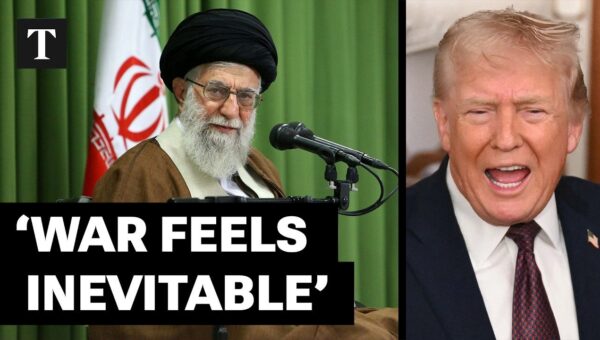
US-Iran Tensions Escalate: War ‘Almost Inevitable,’ Experts Warn
Experts warn that a military confrontation between the US and Iran feels "almost inevitable" as diplomatic options narrow and Western nations evacuate staff from the region. The potential scale and objectives of any U.S. action remain unclear, while Iran's proxy network poses a significant threat of retaliation.