US Iran Policy Shifts: Victory Redefined Amidst Empty Claims
US policy towards Iran is constantly shifting, moving away from clear goals like regime change to less defined objectives. Recent claims of destroying Iran's ancient military assets raise questions about actual progress, especially since Iran retains control over the vital Strait of Hormuz. This highlights a need for a more consistent and transparent foreign policy.


US Iran Policy Shifts: Victory Redefined Amidst Empty Claims
The United States’ approach to Iran seems to be in constant flux, with objectives changing almost daily. This isn’t just a simple adjustment of goals; it’s a lowering of what counts as success. What was once a clear aim of regime change has morphed into a less defined stance, leaving many to question the actual progress being made.
Initially, the focus was on toppling the Iranian government. However, as that proved a difficult task, the conversation shifted. The new talking point became Iran’s alleged weapons of mass destruction. This focus on WMDs offered a more tangible, though still debated, reason for action. Yet, even this objective faced challenges, as verifying Iran’s nuclear activities proved difficult.
Now, the narrative on television often highlights claimed military successes. We hear about the destruction of Iran’s air force and navy. But a closer look reveals these claims are built on shaky ground. The air force and navy in question were largely gifted to Iran by the United States over 50 years ago. They are ancient military assets, hardly posing a significant threat to modern American forces.
So, what has the US achieved? It seems the primary accomplishment is the destruction of outdated military equipment. This has not led to securing enriched uranium, a key concern. Meanwhile, Iran continues to exert control over the Strait of Hormuz, a vital waterway for global oil transport. This continued influence raises serious doubts about any real victory being achieved.
Why This Matters
The shifting goalposts in US foreign policy towards Iran raise important questions about strategy and effectiveness. When objectives are constantly redefined, it becomes difficult to measure success or failure. This ambiguity can lead to public confusion and a lack of clear understanding about the nation’s foreign policy aims.
This situation is not entirely new. Throughout history, nations have adjusted their foreign policy objectives when faced with complex geopolitical challenges. The challenge lies in maintaining a consistent and transparent approach, especially when dealing with sensitive international relations. Without clear objectives and verifiable outcomes, it’s hard to know if the actions taken are truly serving national interests.
Historical Context and Background
US-Iran relations have been strained for decades, particularly since the 1979 Iranian Revolution. This event led to a significant breakdown in diplomatic ties. For years, the US has focused on Iran’s nuclear program, its support for regional militant groups, and its human rights record. These issues have often been the basis for sanctions and international pressure.
The military assets mentioned, like the old air force and navy, are remnants of a time when the US and Iran were allies. After the revolution, these assets became symbols of the changing relationship. Their current state highlights the long period of military and political tension between the two countries.
Implications, Trends, and Future Outlook
The current situation suggests a potential lack of a clear, long-term strategy. This could lead to continued uncertainty in the region. If the US continues to change its objectives, it may struggle to build trust with allies or effectively deter adversaries. It also allows Iran to continue its regional activities without facing clear consequences.
Looking ahead, a more defined and consistent policy is needed. This policy should focus on achievable goals and clear metrics for success. Transparency with the public and allies will be crucial. Without these elements, the US risks falling into a cycle of reactive measures with unclear outcomes, as seen with the recent discussions about military actions.
The control over the Strait of Hormuz remains a critical point. Any policy towards Iran must address this issue directly. A failure to do so means that despite any other actions, a key strategic leverage point for Iran will persist. This underscores the need for a comprehensive and well-thought-out approach to managing US-Iran relations moving forward.
Source: Adam Mockler Educates Conservatives on Iran #politics #fyp #new (YouTube)

Related Articles


Ukraine Eyes Moscow with New Ballistic Missiles
Ukraine is developing ballistic missiles with an 850km range, potentially capable of striking Moscow by summer. This capability aims to equalize the battlefield and could influence Russian public opinion and political calculations, while President Putin's reduced public activity suggests internal pressures.


Trump’s Iran Gamble: A Venezuelan Fantasy?
Donald Trump's praise for U.S. actions in Venezuela as a model for Iran may reveal a naive oversimplification of foreign policy. Detailed military and economic planning, crucial for success, seemed to be sidelined in favor of an optimistic, yet potentially flawed, approach.
Trump Promises Iran War End in 3 Weeks
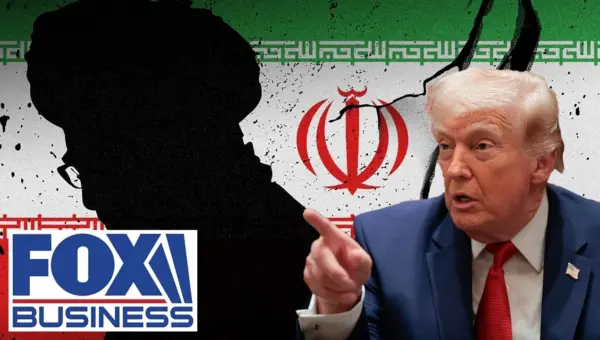
President Trump plans to conclude military operations in Iran within two to three weeks, vowing to hit the nation "extremely hard." The conflict has impacted gas prices, but the President expects a quick market recovery. European allies are urged to take more responsibility for securing vital shipping lanes.