US-Iran Peace Talks Stall; Strait of Hormuz Blockade Announced
High-level U.S.-Iran peace talks in Pakistan have collapsed after 21 hours, failing to secure a deal. Following the breakdown, President Trump announced a U.S. Navy blockade of the Strait of Hormuz, though its scope was later adjusted. The move has sent oil prices soaring and raised concerns about further regional instability.

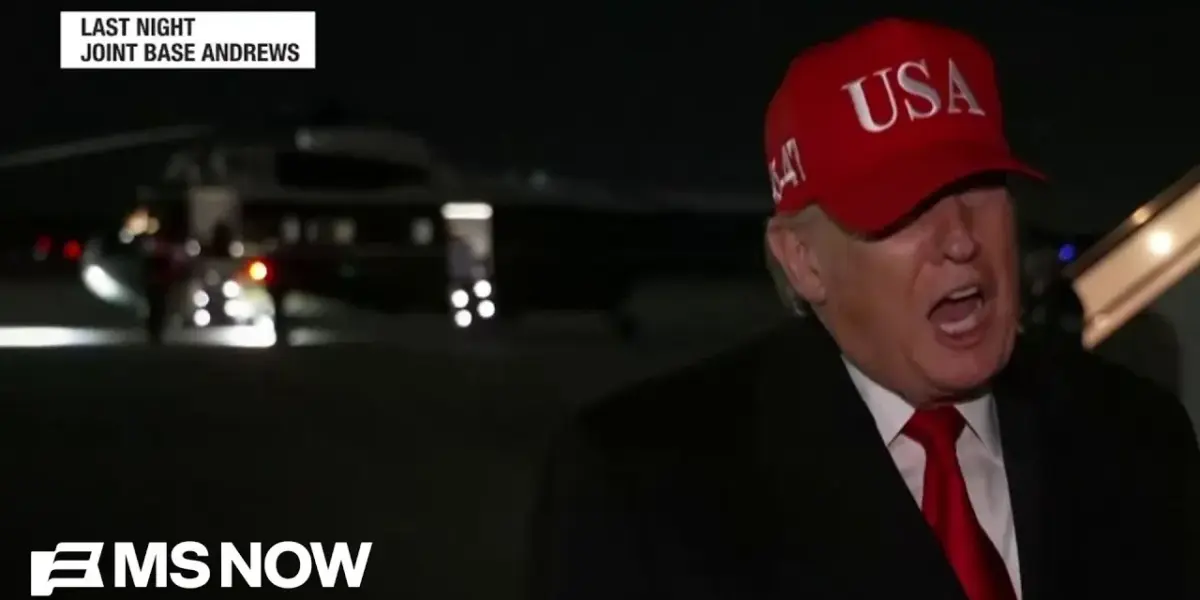
Peace Talks Collapse After 21 Hours
High-level peace talks between the United States and Iran have failed to produce an agreement, leaving the future of a fragile cease-fire uncertain. The negotiations, which lasted for 21 hours in Pakistan’s capital, Islamabad, on Saturday, marked the most significant face-to-face meetings between American and Iranian leaders in nearly five decades.
Vice President J.D. Vance, who led the U.S. delegation, told reporters after departing Islamabad that “very clear” red lines had been set for Iran. He stated that the U.S. presented its “final and best offer” and would await Iran’s response.
U.S. Demands and Iranian Response
According to a U.S. official, the American red lines for Iran included ending all uranium enrichment activities, halting funding for militant groups, and fully reopening the Strait of Hormuz without imposing tolls for passage.
Iranian officials, however, expressed that the U.S. “failed to gain the trust of the Iranian delegation.” Despite the lack of an agreement, they left the door open for future discussions, emphasizing that it is now up to Washington to prove it can earn that trust.
“We’ve made very clear what our red lines are,” stated Vice President J.D. Vance.
President Trump Announces Strait of Hormuz Blockade
Hours after the high-stakes meeting concluded without a deal, President Trump announced that the U.S. Navy would begin a blockade of the Strait of Hormuz. The announcement, made via a social media post, indicated that the Navy would stop ships from entering or leaving the vital waterway. The plan also included interdicting any vessel paying Iran’s wartime tolls and destroying any mines laid in the strait.
However, the U.S. military later appeared to adjust the scope of the blockade. A statement indicated that starting at 10 a.m. Eastern time, the blockade would apply to all Iranian ports. Ships traveling between non-Iranian ports would still be permitted to transit the strait.
Iran’s parliament speaker responded to the blockade announcement with a taunt directed at American consumers, predicting, “Soon you’ll be nostalgic for $4 to $5 gas.”
Economic Impact and Expert Analysis
Following the announcement of the blockade, oil prices surged above $100 a barrel. Mark Polymeropoulos, a retired CIA officer and national security analyst, discussed the risks and rewards of the blockade.
Polymeropoulos explained that blocking the Strait of Hormuz has long been a theoretical option in military planning. He noted that such a move would require a significant commitment of U.S. naval resources, potentially involving multiple aircraft carrier battle groups, frigates, and destroyers. He also highlighted the inherent risks to U.S. forces involved in such an operation.
The analyst framed the situation as a test of patience, where “economic pain” for Iran would be weighed against the impact on the American economy, particularly at the gas pump. He suggested that the blockade, while theoretically logical, could be a race to see who has greater staying power.
“This is going to be kind of a race to who is the most patient. Economic pain, the Iranian economy will suffer from this versus the American economy and $5 gallon of gas at the pump.”
Geopolitical Considerations and Future Uncertainty
The decision to implement the blockade now, when it has been a long-standing option, raises questions about the administration’s strategy. Polymeropoulos suggested that the move might be an attempt to avoid a massive escalation involving U.S. ground forces, especially as the cease-fire remains in place.
However, he cautioned that other actors could disrupt the situation. “The enemy gets a vote,” he stated, referring to the possibility of Iran launching attacks on U.S. naval forces. He also pointed to Israel, suggesting that some Israeli leaders might be eager to re-engage in conflict, which could easily reignite fighting.
Conflicting reports add to the uncertainty. Some analysts believe the Trump administration aims to avoid further military confrontation, while others suggest the President is considering limited strikes to pressure Iran. The influence of other nations in the Middle East, who are concerned about Iran’s nuclear program, also plays a critical role in the unfolding situation.
Key Issues Remain Unresolved
A significant sticking point in the negotiations reportedly involved a cease-fire in Lebanon, indicating the complex web of regional issues connected to the U.S.-Iran talks. The presence of Vice President Vance in the high-level delegation was seen as a notable departure from usual diplomatic protocol, suggesting a direct, almost “rug merchant” style of negotiation aimed at reaching a final deal.
The fundamental issue of Iran’s nuclear program remains a critical, unresolved challenge for both President Trump and Israeli Prime Minister Netanyahu. Until this issue is addressed, the stability of the Strait of Hormuz and the broader region will continue to be precarious.
Looking Ahead
As the U.S. implements its scaled-back blockade of the Strait of Hormuz and Iran issues warnings about gas prices, the international community watches closely. The coming days will be critical in determining whether diplomatic channels can be reopened or if escalating tensions will lead to further conflict. The actions of Iran and other regional players will be crucial in shaping the outcome.
Source: U.S. and Iran fail to reach agreement in peace talks (YouTube)

Related Articles
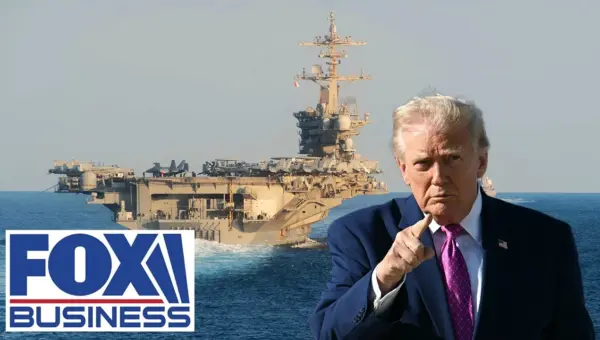
Trump Orders Strait of Hormuz Blockade: Oil Prices Surge
President Trump has ordered a U.S. naval blockade in the Strait of Hormuz, citing Iran's nuclear ambitions and failure to reach a deal in recent talks. The move sent oil prices surging, with Brent crude up over 7% and WTI crude up 8%. Financial markets opened lower amid the heightened geopolitical tensions.

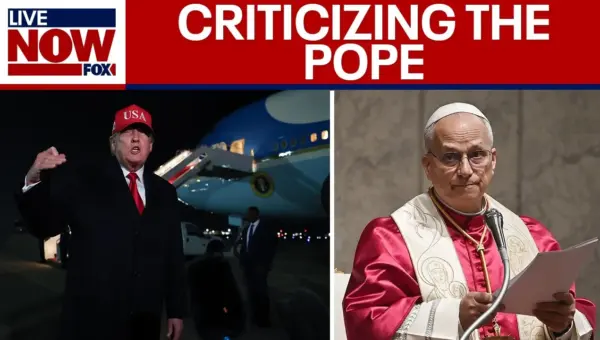
Trump Criticizes Pope Francis, Defends Iran Policy
President Trump criticized Pope Francis, calling him "very liberal" and questioning his stance on crime and nuclear weapons. He also detailed his administration's aggressive policy against Iran, citing military and economic pressures that have left the nation "desperate."
Ukraine’s Drones Disrupt Russian Oil, Forge Gulf Ties
The conflict in the Persian Gulf has caused a major oil shortage, boosting prices and creating new challenges for Russia. Meanwhile, Ukraine's advanced drone technology, funded by Gulf investments, is disrupting Russian oil exports and forging new international partnerships.