US-Iran Peace Talks Collapse: What’s Next for Global Stability?
Peace talks between the United States and Iran have collapsed in Islamabad, with both sides blaming each other for the failure. Key sticking points included Iran's nuclear program and the ongoing blockade of the Strait of Hormuz, raising fears of renewed conflict and continued global economic disruption.


US-Iran Peace Talks Collapse Amid Standoff
Islamabad, Pakistan – Hopes for a swift de-escalation in the ongoing conflict between the United States and Iran were dashed as peace talks in Islamabad collapsed after 21 hours of intense negotiation. Officials from both nations failed to reach an agreement, leading to mutual accusations and heightened global uncertainty. The breakdown of these crucial discussions leaves the region teetering on the brink, with fears of renewed hostilities and continued disruption to global energy markets.
Finger-Pointing and Stalled Diplomacy
Following the talks, U.S. Vice President JD Vance stated that Iran walked away from the negotiation table, refusing to meet American red lines, particularly concerning nuclear weapons. “We laid out our red line specifically on nuclear weapons and Iran walked away,” Vance told reporters, adding that the failure of these talks significantly harms Iran more than it does Washington. On the other side, Iranian state media countered by labeling American demands as excessive and citing an atmosphere of deep mistrust as the reason for the impasse.
Nuclear Ambitions and Strait of Hormuz Blockade
A central sticking point in the negotiations appears to have been Iran’s nuclear program. While Iran maintains it does not possess nuclear weapons and is enriching uranium only for civilian purposes, the U.S. insists on an affirmative commitment from Iran that it will not pursue nuclear weapons or the means to develop them. This demand includes restrictions on Iran’s uranium enrichment capabilities and stockpiles, which experts suggest Iran is highly unlikely to compromise on.
Adding to the tension is the ongoing blockade of the Strait of Hormuz, a critical chokepoint for global oil and gas supplies. The conflict has already led to soaring gas prices worldwide, with hundreds of tankers idled. The U.S. has indicated it is preparing a mine-clearing operation to force the strait open, a move that could further inflame the situation.
“The simple fact is that we need to see an affirmative commitment that they will not seek a nuclear weapon and they will not seek the tools that would enable him to quickly achieve a nuclear weapon. That is the core goal of the president of the United States and that’s what we’ve tried to achieve through these negotiations.”
– U.S. Vice President JD Vance
Expert Analysis: A Cycle of Distrust
Scott Lucas, Professor of American Studies at the UCD Clinton Institute, suggested that both sides need an agreement but are unwilling to make the necessary concessions. He noted that Iran needs a deal for survival, having suffered damage to its infrastructure and military. For the U.S., easing Iran’s grip on the Strait of Hormuz seems to be a primary objective, but Iran is unwilling to yield without something significant in return.
Dr. Cameron Martin, an Associate Professor of International Relations at the University of Sussex, echoed this sentiment, stating that Iranian officials did not believe the U.S. was serious about the talks. He pointed to the U.S. delegation’s need to constantly consult with Washington as a sign of a lack of full authority to make decisions on the spot, contrasting it with the Iranian delegation’s perceived ability to negotiate more independently.
The Nuclear Program: A Return to JCPOA?
The U.S. demands appear to signal a desire to return to a framework similar to the Joint Comprehensive Plan of Action (JCPOA), the 2015 nuclear deal that the Trump administration withdrew from. However, experts believe this is unlikely for the current administration, as it would be seen as a sign of weakness and an admission that previous policies failed. Iran, which had its enrichment levels increased after the U.S. withdrawal from the JCPOA, is also unlikely to readily give up its nuclear program.
Strait of Hormuz: A Dangerous Escalation?
Regarding the Strait of Hormuz, Donald Trump’s administration has threatened action regardless of a deal. However, experts caution that statements do not always reflect reality. The deployment of only two U.S. warships may not be sufficient to control the strait, and the haphazard placement of mines by Iran makes their removal a complex challenge. The potential for military action in the strait raises concerns about further escalation, potentially leading to a full-blown war.
Looking Ahead: Confidence-Building Measures or Further Conflict?
With the immediate breakdown of high-level talks, the path forward remains uncertain. Experts suggest that the best hope may lie in confidence-building measures, such as Iran allowing more ships through the Strait of Hormuz in exchange for the unfreezing of some Iranian assets. Another possibility is moving negotiations to the level of technical experts to find a suitable limit on Iran’s enrichment program and establish inspection protocols.
However, the underlying distrust and fundamental differences over Iran’s nuclear program, missile capabilities, and regional influence remain significant hurdles. Without a clear agenda and a willingness from both sides to compromise, the chances of a breakthrough remain slim. The temporary ceasefire is set to expire soon, raising the possibility of a return to air strikes and further destabilization in the region.
Source: US-Iran peace talks collapse: What does it mean for the war? | DW News (YouTube)

Related Articles

Iran’s Strait of Hormuz Blockade Shifts Global Oil Power
Iran's control over the Strait of Hormuz, a vital global oil route, is shifting economic power dynamics. As former President Trump declared a U.S. naval blockade, experts highlight Iran's effective use of this physical choke point, challenging U.S. financial leverage and potentially forcing negotiations under duress.

US Tightens Grip, Eyes Regime Change in Iran
John Bolton argues that the recent ceasefire with Iran was a mistake and advocates for a renewed military strategy. His proposal includes reopening the Strait of Hormuz and maintaining a blockade on Iranian oil to pressure the regime, with the ultimate goal of regime change.

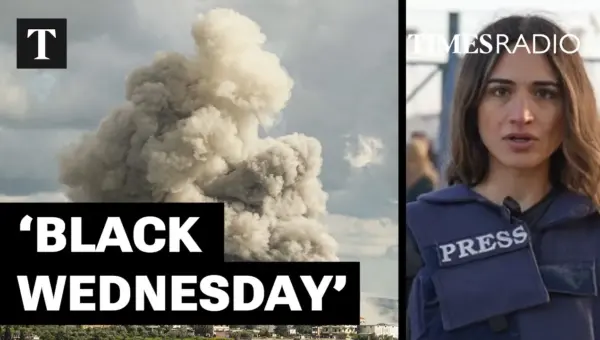
Beirut Reels From Attacks Amidst Fragile Peace Talks
Beirut is in shock after devastating Israeli attacks killed over 350 people in a single day, marking the city's deadliest event in decades. Amidst widespread grief and a call for a ceasefire, Lebanon is preparing for unprecedented direct talks with Israel, a move met with mixed reactions and internal protests.