US-Iran Nuclear Talks Intensify Amid Military Buildup
US and Iranian officials met in Geneva for crucial nuclear talks, with a third round concluding and a fourth scheduled for Vienna. The negotiations occur amidst a significant US military buildup in the Middle East and threats of military action. Analyst Ahmed Mamaran highlighted Iran's internal struggles and reluctance to capitulate on its nuclear program, while also noting the resurgence of student protests.

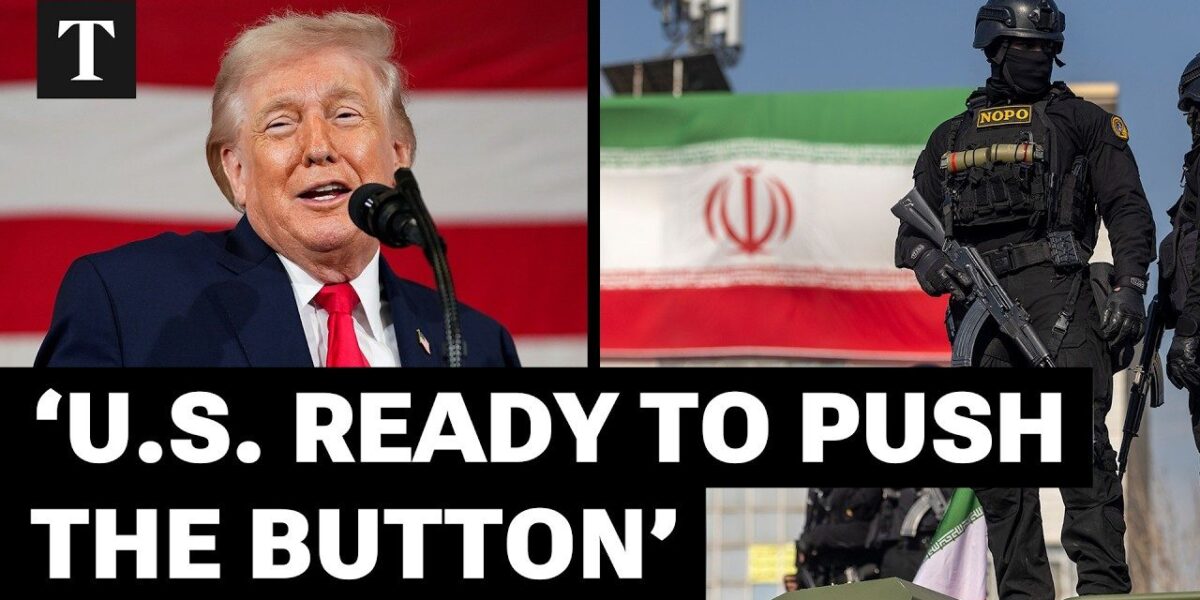
High-Stakes Negotiations Resume in Geneva
Geneva, Switzerland – In a critical juncture for international diplomacy, United States and Iranian officials convened in Geneva for a third round of talks aimed at curbing Iran’s nuclear program. The negotiations, described as constructive by Iran’s top diplomat, concluded with an agreement to reconvene in Vienna next week, signaling a continued, albeit complex, path forward. However, the high stakes of these discussions are amplified by a significant US military buildup in the Middle East, the largest in over two decades, and persistent threats from the Trump administration to pursue military action should a deal not materialize.
Iran’s Stance: Capitulation or Compromise?
Sources close to the negotiations suggest that the US has been pressing for Iran’s complete capitulation regarding its nuclear program, particularly concerning enrichment levels. Iran, however, has shown reluctance to abandon its nuclear ambitions entirely, especially the prospect of zero percent enrichment. This impasse creates a perception of limited time for both Iranian decision-makers and President Trump, who faces the critical choice between launching a military strike or accepting a potentially less favorable deal.
“The US has been focusing on solely Iran’s capitulation, and we know that Iranians have not been open to give up so much of their nuclear program, in particular going to 0% enrichment.”
Ahmed Mamaran, Director of Communications and Senior Iran Analyst at Dawn, a US foreign policy think tank, highlighted the delicate balancing act. “The perception is that there’s not much time for Iranians to decide and there’s not much time for President Trump to whether launch a military attack or accept Iran’s deal,” Mamaran stated.
A History of Disruption
The current diplomatic standoff echoes past negotiations, where military actions have at times overshadowed or even interrupted diplomatic efforts. Mamaran recalled a previous instance where, between negotiation rounds, Israel attacked Iran, leading to a twelve-day war that occurred amidst ongoing talks. This historical context underscores the volatile nature of the region and the potential for unforeseen events to derail diplomatic progress.
Internal Pressures on the Iranian Regime
Mamaran elaborated on the internal challenges facing the Iranian regime, suggesting that Iran is caught “between Iraq and a hard place.” He explained that a full capitulation on its nuclear program would be domestically costly. The regime is currently grappling with a severe legitimacy crisis, exacerbated by recent events and crackdowns. Giving up a significant policy achievement like the nuclear program, which is central to its resistance discourse, could alienate its core supporters and create further instability.
“If they capitulate and give off their nuclear program as a whole, then it would be very costly for them at home because right now, as we have been reporting on this, Iranians are facing a very severe and deep legitimacy crisis inside the country.”
The nuclear program, Mamaran argued, is a core component of the regime’s identity and its resistance strategy. Compromising on it significantly could fracture its base of support, particularly at a time when it is already facing widespread public dissatisfaction.
Resurgence of Student Protests
Adding another layer of complexity, recent weeks have seen a spike in anti-government protests emerging from Iranian universities. While not on the scale of previous demonstrations, these student actions are seen as a significant development, particularly given the harsh crackdown that followed earlier unrest. Mamaran described the protests as “very courageous,” noting that students are chanting against the regime and calling for change, even in the aftermath of a violent crackdown that reportedly resulted in thousands of casualties in January.
“The fact that one month after students go on campuses and chant down to the dictator and ask for regime change or change in the government, it shows that it’s not about policy disputes, it’s not about the economy. The grievances have become more intensified.”
The persistence of these protests suggests that the government’s efforts to silence dissent have not been entirely successful. Instead, the crackdown may have intensified the moral outrage among students, fueling further calls for systemic change.
Looking Ahead: Vienna and the Brink
With the next round of talks scheduled for Vienna, the international community watches closely. The US military presence in the region signals a readiness to act, while Iran navigates a precarious internal and external landscape. The coming week will be crucial in determining whether diplomatic progress can be made or if the situation will escalate, pushing the US closer to the precipice of military action.
Source: ‘U.S. Ready To Push The Button’, says U.S. Think Tank (YouTube)

Related Articles


Melania Trump’s Quiet Diplomacy on Ukraine War
Former First Lady Melania Trump has emerged as an influential, though unofficial, voice on the Ukraine war, reportedly shaping her husband's perceptions and engaging directly on humanitarian issues like the deportation of Ukrainian children. Her advocacy, possibly influenced by her European background, has drawn international attention and sparked unique reactions, including widespread social media support from Ukrainians.

US-Iran Relations: Divergent Histories Fuelling Conflict
The enduring conflict between the U.S. and Iran stems from vastly different historical interpretations. While Americans focus on the 1979 revolution, Iranians remember foreign interference in 1953 as the true beginning of their grievances. This divergence in memory fuels ongoing distrust and complicates potential resolutions.

Ukraine Peace Talks Stall: A Year of Failed Diplomacy
One year of U.S.-led peace talks between Ukraine and Russia has yielded little progress, with key demands remaining irreconcilable. Despite Ukraine's concessions, the conflict persists, highlighting the complex motivations and inconsistent strategies of mediators like Donald Trump.