US-Iran Nuclear Talks: Averting War or Escalating Tensions?
Amidst escalating U.S. military posturing, indirect talks between the U.S. and Iran have resumed in Geneva concerning Iran's nuclear program. Experts weigh in on the complex demands, potential concessions, and the unpredictable consequences of military action, highlighting that while an all-out war is unlikely, a limited strike could escalate.

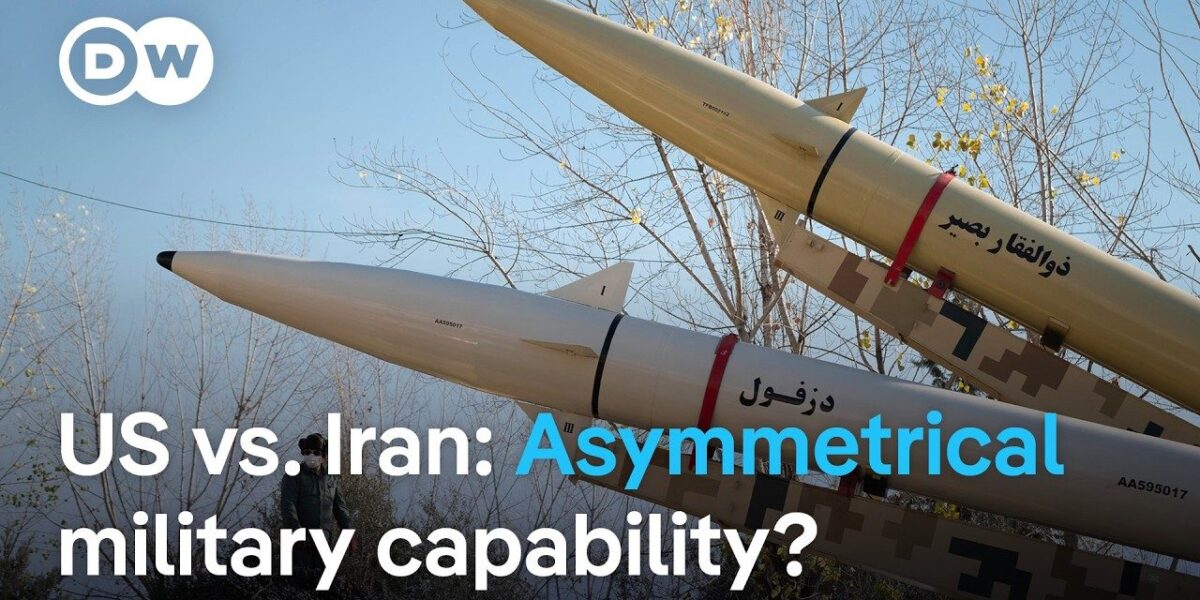
US and Iran Engage in Critical Nuclear Talks Amidst Military Buildup
Geneva, Switzerland – In a high-stakes diplomatic effort to avert further military escalation, the United States and Iran have concluded another round of indirect negotiations concerning Iran’s nuclear program. According to the Omani foreign minister, who is mediating the talks, significant progress has been made, with further technical discussions scheduled for next week in Vienna. These negotiations are widely viewed as a final opportunity to de-escalate a situation fraught with tension, particularly as the U.S. has been assembling a substantial naval task force in the region and President Trump has issued threats of further strikes.
U.S. Military Posturing in the Middle East
The U.S. military presence near Iran has seen a significant increase, marking the largest buildup in the region in over two decades, since the invasion of Iraq. The aircraft carrier USS Gerald R. Ford has departed from Crete, heading towards the Middle East, as part of this extensive deployment. Satellite imagery analyzed by Reuters confirmed the presence of the USS Abraham Lincoln among warships positioned off the coast of Oman. This military show of force underscores the gravity of the current standoff.
Iran’s Nuclear Ambitions and U.S. Concerns
During his State of the Union address, President Trump articulated the perceived threat from Iran, citing its development of missiles capable of reaching Europe and U.S. bases overseas, with ongoing efforts to develop intercontinental ballistic missiles. He warned Iran against continuing its weapons program, particularly nuclear weapons. However, Iranian President Hassan Rouhani has consistently stated that his country is not pursuing nuclear weapons. Foreign Minister Mohammad Javad Zarif emphasized Iran’s willingness to engage in dialogue and address concerns, but stressed that the right to peaceful nuclear technology is a non-negotiable red line.
“We are ready to answer questions. We are ready to remove concerns, but we are not ready to give up our right for peaceful use of nuclear technology. This is what we demand.”
– Iranian Foreign Minister
Expert Analysis: Navigating Complex Demands
Kaman Matin, an associate professor of international relations at the University of Sussex, highlighted the core challenges in the negotiations. He explained that for Iran, retaining the ability to enrich uranium on its own soil is a crucial demand, potentially including options like regional consortiums. In return, Iran seeks sanctions relief. On the U.S. side, President Trump has historically opposed Iran’s enrichment activities. Additional complicating factors include Iran’s missile program and its support for regional proxy forces, issues that have been temporarily set aside in the current round of talks but remain points of contention, particularly for hawkish elements within the White House.
Matin noted the difficulty in assessing the reported progress, recalling similar optimistic news preceding past escalations. He stated that for a deal to be struck, both sides need to present it as a victory to their domestic audiences. Iran must demonstrate its right to enrich uranium, while the U.S. has reportedly demanded the dismantling of Iranian nuclear facilities, allowing only a small reactor for medical research and the surrender of all enriched uranium. Matin expressed doubt about Iran’s ability to agree to such stringent demands.
Strategic Considerations for a Potential U.S. Strike
The prospect of a U.S. military strike on Iran is fraught with strategic complexities. Matin pointed out internal dissent within the U.S. military establishment regarding the risks involved. Concerns include the depletion of ammunition for air and missile defense systems, which could inadvertently benefit China in a potential conflict over Taiwan. Furthermore, the lack of a clear exit strategy and defined objectives for a U.S. attack, beyond regime change, remains a significant question.
Matin elaborated on the potential nature of a U.S. strike, emphasizing that a ground invasion is highly unlikely, a fact that Iran fully understands. Calculations are therefore based on the assumption of aerial attacks. While such attacks could degrade Iran’s military capabilities, including the IRGC and missile launch sites, and potentially target leadership, the Islamic Republic believes it can survive without a ground invasion. Iran possesses ballistic missiles capable of striking U.S. bases in the region, targeting U.S. allies, and hitting vulnerable civilian infrastructure like desalination plants. However, Matin cautioned that wars are unpredictable, and an attack could potentially destabilize the regime, leading to internal unrest and empowering opposition groups, thereby altering the entire strategic equation.
Military Analyst Perspective: Avenues for De-escalation
Marina Myron, a military analyst at King’s College London, offered her assessment on the ongoing talks and the potential for conflict. She believes that neither side desires a wider war in the Middle East and that the outcome depends on the concessions made. Myron suggested that a potential middle ground could involve increased monitoring and transparency regarding Iran’s nuclear program, in exchange for concessions like limited access to financial markets for Iran.
Myron indicated that for the U.S., particularly with upcoming midterm elections, a successful diplomatic outcome would likely involve enhanced transparency and limitations on Iran’s nuclear program. While concerns about ballistic missiles have been raised by figures like Marco Rubio, the primary focus remains on the nuclear issue, with regional tensions and support for proxies also being potential discussion points.
Scenarios If Negotiations Collapse
Regarding the consequences of failed negotiations, Myron outlined several scenarios. She deemed an all-out war unlikely from the U.S. perspective, given the political ramifications for President Trump. A more plausible kinetic response could be a limited, precision strike on Iranian nuclear facilities. However, Myron warned of the potential first and second-order effects, including Iranian retaliation against U.S. bases or allies like Israel, which could escalate into a wider conflict. She stressed that both the U.S. and Iran are keen to avoid such an escalation.
Myron concluded that if negotiations break down, it does not necessarily mean immediate U.S. strikes. The U.S. might increase pressure through coercive diplomacy, showcasing military readiness, and scheduling further talks with specific conditions. The situation remains fluid, with the possibility of either continued diplomatic pressure or a military response if an agreement cannot be reached.
Source: Could Iran's military resolve outweigh US military capability in a protracted war? | DW News (YouTube)

Related Articles


Melania Trump’s Quiet Diplomacy on Ukraine War
Former First Lady Melania Trump has emerged as an influential, though unofficial, voice on the Ukraine war, reportedly shaping her husband's perceptions and engaging directly on humanitarian issues like the deportation of Ukrainian children. Her advocacy, possibly influenced by her European background, has drawn international attention and sparked unique reactions, including widespread social media support from Ukrainians.

US-Iran Relations: Divergent Histories Fuelling Conflict
The enduring conflict between the U.S. and Iran stems from vastly different historical interpretations. While Americans focus on the 1979 revolution, Iranians remember foreign interference in 1953 as the true beginning of their grievances. This divergence in memory fuels ongoing distrust and complicates potential resolutions.

Israel Defends Iran Strikes, Cites Nuclear Threat
Israeli Opposition Leader Yair Lapid defended recent strikes against Iran, citing Tehran's nuclear ambitions and threats as justification for military action. He distinguished between accidental civilian casualties in defensive operations and intentional targeting by Iranian forces, while addressing the global implications of a nuclear Iran.