US, Iran Agree to Truce; Israel Continues Lebanon Strikes
The U.S. and Iran have agreed to a two-week ceasefire, with Iran promising to help secure passage through the Strait of Hormuz. However, Israel continues its strikes against Hezbollah in Lebanon, creating a divide in objectives. Lingering questions about the deal's specifics and domestic political pressure on President Trump add to the uncertainty of lasting peace.


Fragile Ceasefire Reached Between US and Iran
In a sudden development, the United States and Iran have agreed to a two-week ceasefire, halting all bombing and military strikes. The agreement, reached just before a Tuesday deadline, was announced by President Trump on social media. Iran has stated it will help coordinate safe passage for ships through the Strait of Hormuz, a crucial waterway for global oil shipping. This move comes after weeks of rising tensions and attacks in the vital Persian Gulf region.
Deal Details and Lingering Questions
While both the U.S. and Iran are claiming victory, the specifics of the deal remain unclear. President Trump’s announcement was conditional on Iran agreeing to an “immediate and safe opening of the Strait of Hormuz.” However, Iran has its own 10-point plan that includes demands like the withdrawal of U.S. combat forces from the region and compensation for damages. These points are considered non-starters by the United States, raising questions about the true viability of any long-term resolution.
Adding to the uncertainty, Iran has reportedly suspended traffic through the Strait of Hormuz in response to Israeli strikes in Lebanon. This action directly challenges a key U.S. demand and highlights the complex web of conflicts involving Iran and its proxies.
Israel’s Divergent Strategy in Lebanon
While the U.S. seeks a broader ceasefire, Israel has continued its assault on Iran-backed Hezbollah in Lebanon. Israeli officials have made it clear that the U.S.-Iran agreement does not extend to this conflict. This divergence in objectives between the U.S. and its key ally, Israel, could jeopardize the fragile truce.
NBC News Foreign Correspondent Matt Bradley, reporting from Tel Aviv, noted that Israel did not join the U.S. and Iran in declaring victory. Instead, some Israeli opposition figures have called the U.S.-Iran deal a diplomatic failure, fearing it closes the door on further offensive actions against Iran. Bradley explained that Israel views the diplomatic track as an American concern and has prioritized cutting off Iran’s influence in the region, which includes actions against Hezbollah.
Domestic Political Fallout in the U.S.
The ceasefire comes amid significant political pressure on President Trump. His previous rhetoric, including threats to bomb Iran “into the Stone Age,” had drawn criticism from Democrats, who called for his impeachment over potential war crimes. More surprisingly, some prominent conservative figures and MAGA loyalists, including Tucker Carlson and Marjorie Taylor Greene, have also voiced dissent, questioning the president’s approach and breaking with typical party lines.
While many Republicans in Congress have remained silent during their recess, the pushback from within his own base and from Democrats puts President Trump in a precarious political position. The upcoming return of Congress will likely see increased scrutiny of his foreign policy decisions and rhetoric.
Diplomatic Efforts Continue Amidst Uncertainty
Despite the mixed signals and ongoing conflict in Lebanon, diplomatic efforts are slated to continue. U.S. Vice President JD Vance, Special Envoy Steve Witkoff, and Jared Kushner are scheduled to travel to Islamabad, Pakistan, for talks. Pakistan’s Prime Minister had invited delegations from both sides to meet, aiming to find a resolution. However, with Iran claiming the U.S. has violated parts of the agreement and calling bilateral negotiations unreasonable, the path forward remains highly uncertain.
The situation highlights the deep divisions and complex geopolitical dynamics at play. Whether this two-week pause will lead to a lasting peace or simply serve as a temporary breather remains to be seen. The world will be watching closely to see if the U.S. and Iran can bridge their significant differences and if Israel’s continued operations in Lebanon will undermine the broader stability efforts.
Source: Will the U.S.-Iran Ceasefire Hold? – April 8 | Here's the Scoop (YouTube)

Related Articles


Machete Attack at Grand Central Leaves 3 Injured
A man wielding a machete randomly attacked three people at Grand Central Station in New York City on Saturday morning. Police confronted the suspect, leading to an officer-involved shooting. The victims are in stable condition, and authorities are increasing transparency with body camera footage release.

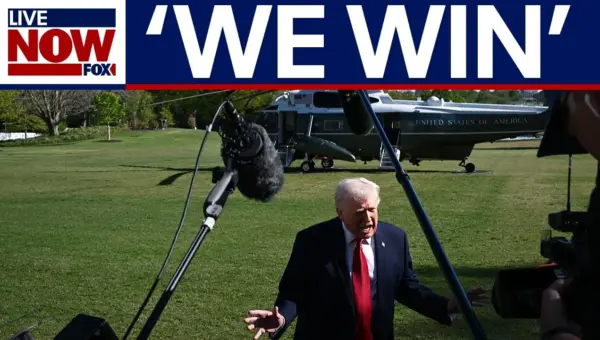
Trump: Iran Deal Outcome ‘Doesn’t Matter’ as U.S. Claims Victory
President Donald Trump declared that ongoing negotiations with Iran are irrelevant, as he believes the U.S. has already achieved a decisive victory. He highlighted extensive military gains, including the sinking of nearly all of Iran's naval vessels and a positive outlook on U.S. energy exports.


Vance’s Peace Play: A Desperate Gamble for Power?
Senator JD Vance's potential role in peace talks is questioned, with critics suggesting desperation over genuine diplomacy. Meanwhile, reports of a ceasefire are contradicted by ongoing violence, highlighting a potential disconnect between political narratives and battlefield realities.