US, Iran Agree to Ceasefire Amid Tensions
The United States and Iran have reached a two-week ceasefire agreement, de-escalating tensions in the Middle East. The deal hinges on the safe opening of the Strait of Hormuz, with negotiations planned for Friday. Experts remain cautious, stressing that the success of the ceasefire depends heavily on its implementation and enforcement.

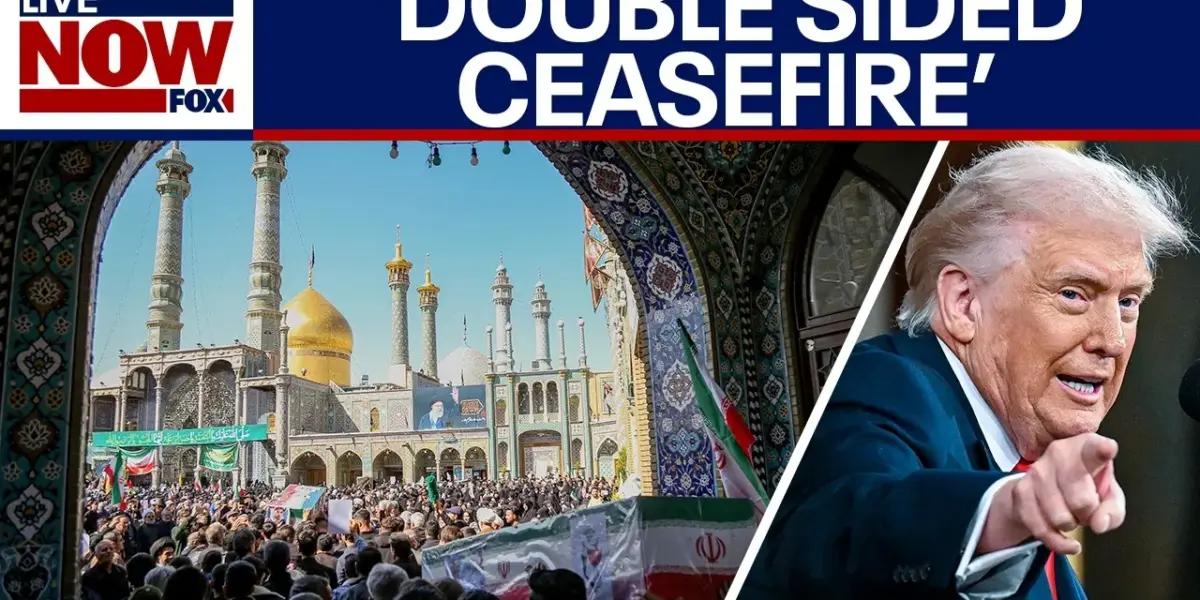
Middle East De-escalates as US, Iran Announce Ceasefire
The United States and Iran have reached a two-week ceasefire agreement, pulling the Middle East back from the brink of further escalation. The deal, announced late Tuesday, aims to halt hostilities and potentially pave the way for further negotiations. This development comes after a period of heightened tensions, including stark threats from President Trump regarding the “demolition of Iranian civilization.” The ceasefire is contingent upon the complete, immediate, and safe opening of the Strait of Hormuz, a vital global shipping lane.
Details of the Ceasefire and Key Conditions
While the agreement marks a significant de-escalation, the specifics of its implementation and enforcement remain crucial. Sources indicate that a first round of negotiations between the U.S. and Iran on ending hostilities is planned for Friday in Islamabad. The White House has confirmed discussions about potential in-person talks, though nothing is finalized. Iran has stated that safe passage through the Strait of Hormuz will be possible for a period of two weeks, but this will require coordination and consideration of technical limitations. This conditionality is a key point of focus, as Iran has previously threatened to strike tankers in the region.
Expert Analysis: The Devil is in the Details
Tom Carico, director of the missile defense project at the Center for Strategic and International Studies, offered a cautious perspective on the agreement. “The devil’s always in the details,” Carico stated, emphasizing that the success of the ceasefire hinges on its implementation and enforcement. He noted that the situation evolved rapidly, moving from calls for “unconditional surrender” to a ceasefire. Carico pointed to Iran’s missile and drone programs, as well as its regional harassment, as underlying reasons for the current tensions. He also suggested that economic pressure, particularly concerning the opening of the Strait of Hormuz, may have played a significant role in pushing for this deal.
“If the big problem is not solved and we’re back here, we’re doing this again a year from now, that will have been a failure, not a success.”
Tom Carico, Center for Strategic and International Studies
Rhetoric and Military Actions
The period leading up to the ceasefire was marked by intense rhetoric. President Trump had posted a strong message on social media demanding the opening of the Strait of Hormuz and later threatened Iran with the “annihilation” of its civilization. While the exact impact of these threats on Iran’s decision-making is unclear, Carico suggested that economic pressure might have been a more significant factor. He acknowledged the U.S. military’s capability for impressive strikes but noted that a ceasefire was perhaps the most likely outcome. The U.S. had also conducted strikes on Carg Island, an area vital to the Strait of Hormuz, earlier in the day, which some speculated could have been a precursor to a larger military action or a tactic to encourage a diplomatic solution.
Israel’s Involvement and Regional Dynamics
The ceasefire is described as “double-sided,” primarily between the U.S. and Iran, with Israel’s direct involvement in the agreement less clear. Reports emerged of sirens sounding across southern Israel amid new incoming fire, potentially from Iran, even as the ceasefire was taking effect. Carico highlighted that there are multiple players in the region, including Iran’s neighbors like the UAE and Saudi Arabia, who have long-standing rivalries with Iran. He also noted that while the U.S. may desire a ceasefire, Israel has different war aims, particularly in the context of recent events like October 7th. The involvement of Iranian proxy groups remains a factor to watch.
Economic Implications and the Strait of Hormuz
The opening of the Strait of Hormuz is a critical component of the agreement, with significant economic implications. The waterway is a vital chokepoint for global oil transport. Iran’s conditions, including coordination and technical limitations, suggest that tanker traffic may not immediately return to normal. Carico believes that there will likely be some movement of tankers, which could help ease global oil prices and provide relief to economies in Europe and elsewhere. However, he cautioned that the market will likely remain conservative, recognizing that the situation is not fully resolved and that this is more of a pause than a definitive solution. The risk premium and insurance costs for tankers are also expected to keep prices elevated for some time.
Unlikely Mediators and Future Concerns
Adding another layer to the diplomatic efforts, reports suggest that Vice President JD Vance and China played roles in brokering the late-hour deal. Carico expressed more concern about China’s involvement, suggesting that China’s interests may not align with those of the U.S. He believes China could benefit from prolonging economic pain for the U.S. and Europe. The potential involvement of Russia and China as mediators raises questions about the terms of any future agreement and whether verifiable dismantling of Iran’s nuclear and missile programs can be achieved. Carico warned against premature celebration, stressing the importance of robust enforcement and questioning whether the terms will be as favorable as hoped.
Looking Ahead: Enforcement and Future Stability
The coming weeks will be critical in determining the success of this ceasefire. The focus will be on whether Iran complies with the agreed-upon terms, particularly regarding the Strait of Hormuz. Experts like Carico emphasize that any outcome short of maintaining or increasing pressure on Iran could be seen as a win for Tehran, as well as for Russia and China. The U.S. Department of Defense Secretary is expected to provide further updates, and the world will be watching closely to see if this fragile ceasefire can hold and lead to lasting stability in the region.
Source: Middle East update: Trump announces ‘double sided ceasefire’ with Iran (YouTube)

Related Articles

Trump’s Iran Deal: Bold Tactics Yield Fragile Peace
A panel discusses President Trump's Iran ceasefire deal, a special election in Georgia, the DOJ's renewed fight against fraud, and Trump's relationship with Hungarian Prime Minister Viktor Orbán. Analysts debate Trump's negotiation tactics, the implications of the Georgia race, and the U.S.'s foreign policy stance.

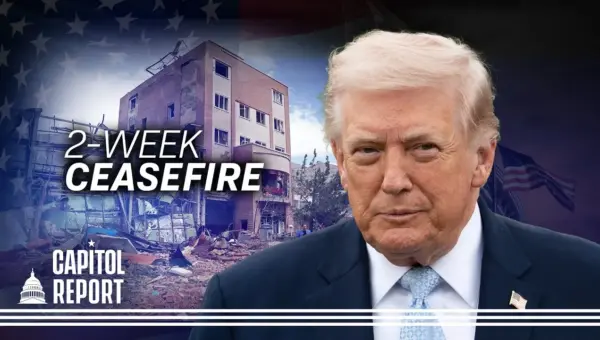
Trump Halts Iran Attacks, Seeks Peace Deal
President Trump has agreed to a two-week suspension of attacks on Iran, contingent on Iran reopening the Strait of Hormuz. This move comes as the U.S. reports progress on a peace proposal and highlights the Iranian people's desire for freedom.
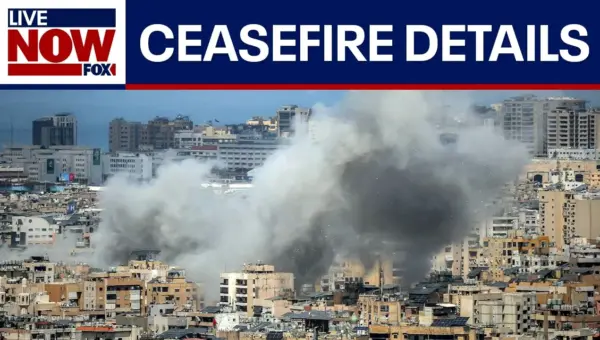
US-Iran Ceasefire Holds Amid Tensions, Strait of Hormuz Key
The US and Iran have agreed to a two-week ceasefire, brokered by Pakistan, with the crucial condition that Iran reopens the Strait of Hormuz. This development impacts global oil and gas supplies, as well as food security through fertilizer transport. However, concerns remain about potential Iranian mobilization and compliance, particularly following reports of post-ceasefire missile launches.