US, Iran Agree to 2-Week Ceasefire Centered on Strait of Hormuz
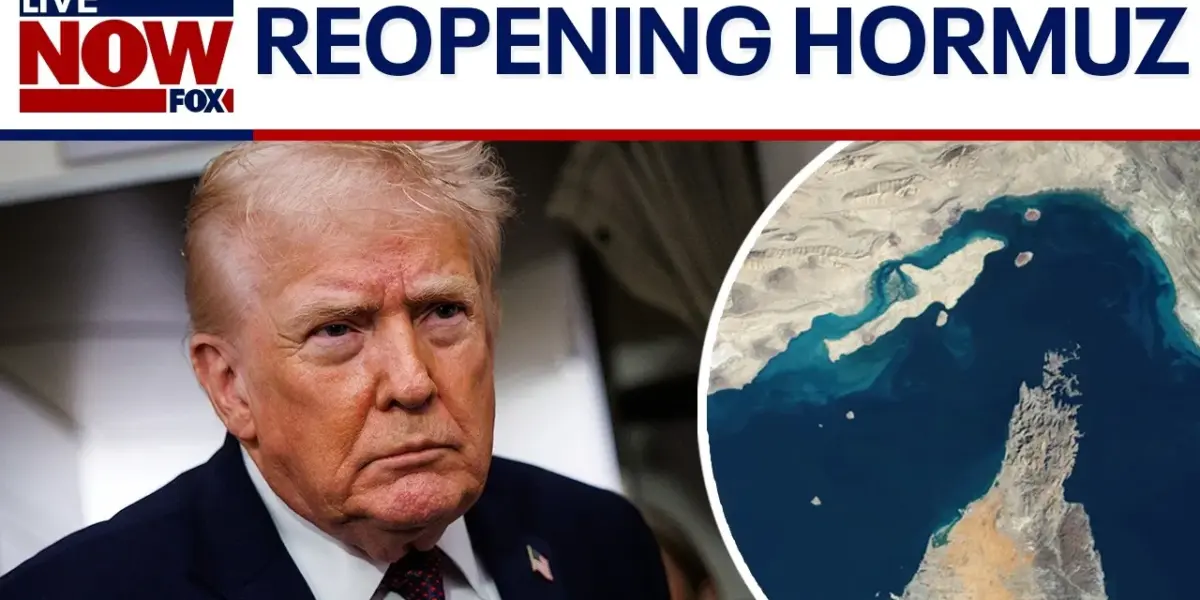
The U.S. and Iran have agreed to a two-week ceasefire, brokered by Pakistan, focusing on reopening the Strait of Hormuz. While a significant development, the deal's terms are complex and its fragility is a major concern due to the numerous actors involved.

Deal Struck Amid High Tensions
A last-minute agreement has been reached between the United States and Iran, bringing a two-week ceasefire that could potentially lead to lasting peace. The deal, brokered Tuesday night with assistance from Pakistan, comes just before a critical deadline set by President Donald Trump.
Under the terms, the U.S. will suspend bombing Iran for two weeks. In return, Iran has agreed to reopen the Strait of Hormuz, a vital waterway for global oil transport. President Trump hailed the agreement as a significant win, suggesting Iran “blinked” under pressure.
“The pressures on the Iranians and if they want to stay alive, they’ll get hot on these negotiations,” President Trump stated. The U.S. has been applying significant pressure on Iran, a strategy described by some as “coercive diplomacy with military action.” Pope Francis also weighed in, urging both sides to return to the table for peaceful solutions, noting that conflict “only provokes more hatred throughout the world.”
Key Terms and Lingering Questions
Details of the agreement are still emerging, with conflicting reports from both sides. Iran has claimed the U.S. has “capitulated” and will discuss Iran’s 10-point plan for ending the conflict. The U.S., meanwhile, has issued a more cryptic message, implying its military strength forced Iran to the negotiating table to discuss both the U.S.’s 15-point plan and Iran’s 10-point proposal.
Professor Alon Burstien of the Israel-Palestine Report noted that while President Trump claims most points are agreed upon, the two plans appear to be speaking “entirely different languages.” He added that initial reports about the ceasefire’s terms seem to reflect more of Iran’s demands than the U.S.’s.
“We don’t know at this point, what was agreed to… According to all reports, is a Pakistani proposal for a two-week ceasefire during which time the sides are going to negotiate.” – Prof. Alon Burstien
The ceasefire is a temporary pause, not a permanent end to hostilities. The focus remains on the Strait of Hormuz, with the U.S. agreeing to the ceasefire as long as the strait is reopened. The exact timeline for normalcy in the strait remains uncertain.
Regional Implications and Proxy Groups
The two-week ceasefire is expected to provide a respite for various groups involved in the wider conflict. This includes Iran, Hezbollah in Lebanon, and the Houthis in Yemen.
Professor Burstien explained that the ceasefire likely includes a halt to fighting between Israel and Hezbollah. While he would be surprised if Israel withdraws from Lebanon, he expects the front lines to freeze for two weeks, giving both sides time to regroup.
Similarly, the Houthis, who have threatened to cut off the Bab-el-Mandeb Strait, will also gain time to prepare. This lull is seen as an opportunity for all sides to consolidate their positions and prepare for potential future breakdowns in negotiations.
Iran is expected to focus on internal security and regrouping its regime and command structures. Both Israel and the United States are likely to use this period to build up armaments and ensure their defense systems are fully operational.
Understanding the Negotiation Plans
While official versions are not public, Professor Burstien outlined the known points of the U.S. and Iranian proposals:
U.S. 15-Point Plan (as known from a week ago)
- Dismantling existing nuclear capabilities.
- Handing over all enriched materials to international organizations.
- No uranium enrichment.
- Opening of the Strait of Hormuz.
- Limitations on Iran’s missile programs.
- Iran will abandon all proxies.
- In return, the U.S. offers:
- Lifting sanctions.
- Assistance in civil nuclear programs.
- No “snapback” sanctions (sanctions returning).
Iran’s 10-Point Plan (as presented two days ago)
- Permanent declaration that the war is over, not just a ceasefire.
- Binding guarantees that the U.S. and Israel will not attack Iran again.
- Recognition of Iran’s right to nuclear enrichment on its territory under the Non-Proliferation Treaty.
- Removal of all direct and indirect sanctions on Iran.
- Recognition that Iran controls the Strait of Hormuz and can charge transit fees (split with Oman) for rebuilding.
- An end to all regional hostilities, including conflicts between Israel and Hezbollah.
Professor Burstien highlighted that reports suggest Iran has already been granted the right to charge transit fees during the two-week ceasefire, a demand from its 10-point plan. He also confirmed that Iran’s demand for the ceasefire to include Lebanon has been accepted, a point not present in the U.S. plan.
He also noted that different versions of Iran’s plan may be presented in different languages to appeal to various audiences, a common tactic in Middle Eastern negotiations to manage domestic and international perceptions.
Challenges and Fragility of the Ceasefire
Despite the agreement, analysts consider the ceasefire to be fragile. The short, two-week timeframe adds significant pressure, as both sides may try to gain maximum leverage until the last minute.
The Strait of Hormuz, while a central focus, may not be the most vulnerable point. Both Iran and the U.S. have an interest in its smooth operation. However, the sheer number of actors involved, each with differing interests, presents a greater risk.
“The vulnerable point of the ceasefire is simply the amount of actors involved here. We have the United States, Iran, Israel, Hezbala, Hus, militias in Iraq, Pakistan negotiating… Each one of these actors is going to both be acting and saying things in a certain way that will mount pressure.” – Prof. Alon Burstien
Miscommunications and conflicting messages between these actors could easily destabilize the fragile truce. For instance, actions by Hezbollah, which is not directly bound by the ceasefire, could provoke responses that escalate tensions and strain the agreement.
Professor Burstien pointed to past incidents, such as when Israel had planes en route to Iran but turned back after a call from President Trump, illustrating how quickly events can change and how crucial clear communication is. The potential for missteps or deliberate provocations by any of the numerous parties involved makes the next two weeks a critical period.
What’s Next?
The coming days will be crucial for observing how closely both sides adhere to the ceasefire terms. Key indicators will include activity in the Strait of Hormuz, the cessation of hostilities in all agreed-upon regions, and the progress of negotiations based on the respective 10-point and 15-point plans. The international community will be watching closely to see if this temporary pause can indeed pave the way for a more stable and lasting peace in the Middle East.
Source: Trump’s Iran ceasefire deal centers around Strait of Hormuz (YouTube)

Related Articles


Trump’s Iran Deal: Bold Tactics Yield Fragile Peace
A panel discusses President Trump's Iran ceasefire deal, a special election in Georgia, the DOJ's renewed fight against fraud, and Trump's relationship with Hungarian Prime Minister Viktor Orbán. Analysts debate Trump's negotiation tactics, the implications of the Georgia race, and the U.S.'s foreign policy stance.

Trump Halts Iran Attacks, Seeks Peace Deal
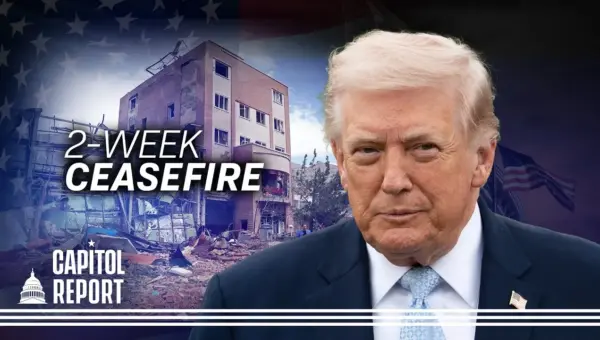
President Trump has agreed to a two-week suspension of attacks on Iran, contingent on Iran reopening the Strait of Hormuz. This move comes as the U.S. reports progress on a peace proposal and highlights the Iranian people's desire for freedom.
US-Iran Ceasefire Holds Amid Tensions, Strait of Hormuz Key
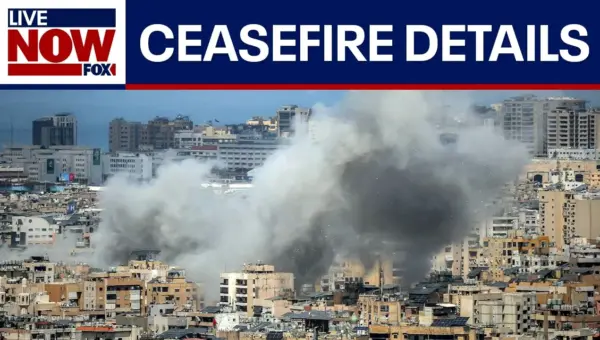
The US and Iran have agreed to a two-week ceasefire, brokered by Pakistan, with the crucial condition that Iran reopens the Strait of Hormuz. This development impacts global oil and gas supplies, as well as food security through fertilizer transport. However, concerns remain about potential Iranian mobilization and compliance, particularly following reports of post-ceasefire missile launches.