US Global Image Fractures Amidst Geopolitical Illiteracy
An American tourist's public breakdown in Europe, fueled by MAGA ideology and geopolitical illiteracy, has exposed a widening gap between US self-perception and international realities. The incident highlights critiques of American exceptionalism, media bubbles, and the impact of such insularity on global standing and foreign policy.

US Global Image Fractures Amidst Geopolitical Illiteracy
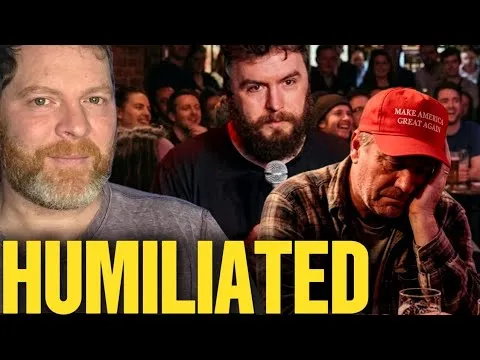
A recent incident involving an American tourist in Europe, whose MAGA affiliation and subsequent public breakdown were captured on TikTok, has highlighted a growing disconnect between American self-perception and international realities. This event, while seemingly a minor cultural clash, serves as a potent symbol of a broader geopolitical challenge: the perceived insularity and geopolitical illiteracy among a segment of the American populace, particularly those aligned with the MAGA movement. The incident, which unfolded in a Belgian comedy club, saw the American tourist confronted by comedian Victor Petrasin, whose sharp, internationally-focused crowd work exposed a fundamental lack of understanding regarding global affairs, foreign policy, and even basic historical context.
The ‘Main Character Syndrome’ and Foreign Policy Ignorance
The core of the critique leveled against the American tourist, and by extension, a broader segment of the MAGA base, is a perceived detachment from global realities, fueled by a media ecosystem that often reinforces an exceptionalist narrative. The comedian’s line of questioning, touching on the US invasion of Iran, the distinction between automatic and semi-automatic weapons, and the historical foundations of the United States, revealed a profound ignorance. The tourist’s inability to differentiate between Iran and Iraq, his reliance on talking points rather than informed opinions, and his defense of policies rooted in a misunderstanding of history underscore a key concern: that a significant portion of the American electorate bases its worldview on a curated, often nationalistic, media diet.
“When you live in America, you live inside of a corporate media bubble where every day you’re told that America is the greatest nation on the planet. It is the most righteous, the most heavily armed main character on the planet. But what happens when you take a guy whose entire global geopolitical understanding of the world comes from Fox News media and Facebook memes?”
This insularity is further exemplified by the tourist’s position on immigration. His assertion that illegal immigration is the world’s biggest problem was met with a sharp retort questioning the legality of European colonization of the Americas. The comedian highlighted the inherent irony of a nation founded on immigration, including what he termed ‘illegal immigration,’ now grappling with such a stance. This historical illiteracy, the argument suggests, is not an individual failing but a systemic issue stemming from an education system that is often underfunded and a public that is disengaged from its own nation’s complex history and its global implications.
Shifting Alliances and Global Perceptions
Beyond the individual interactions, the video touches upon the broader implications of this perceived American detachment for its standing on the world stage. European comedians, once often reliant on American cultural influence, are now found dissecting American foreign policy and societal issues with a critical eye. This shift reflects a changing global dynamic where European nations, often bearing the brunt of geopolitical instability stemming from US foreign policy decisions, are increasingly vocal in their critiques.
The discussion also veered into the complex relationship between the US, Israel, and the Middle East. The comedian’s pointed questions about who is bombing Lebanon and Qatar, and the subsequent clarification that while US bombs are used, the impetus comes from Israel, highlight the intricate web of alliances and responsibilities. The reliance of Israel on American financial and military support, contrasted with the domestic challenges faced by American taxpayers, raises uncomfortable questions about the efficacy and ethical implications of US foreign aid and military interventions. The notion that the US is involved in the Middle East “out of habit” or to maintain contracts for the military-industrial complex, as suggested by a veteran quoted in the video, points to a cynical, yet persistent, critique of American foreign policy drivers.
Economic Leverage and Geopolitical Realities
The economic dimension of US foreign policy is implicitly present throughout the critique. The video alludes to the US role as a “sugar daddy” for Israel, implying that economic leverage is a key component of this alliance. Furthermore, the mention of US sanctions and the potential for energy crises resulting from Middle Eastern instability underscores the interconnectedness of global economics and geopolitics. The argument that a destabilized Middle East benefits the American military-industrial complex suggests that economic interests, rather than purely strategic or humanitarian concerns, can drive foreign policy decisions.
The ‘Western Alliance’ and Future Scenarios
A significant, albeit brief, lament in the video concerns the perceived deviation of the Western Alliance. The assertion that the relationship between Western nations has diverged to a point of no return suggests a fracturing of a long-standing geopolitical bloc. This sentiment, while not elaborated upon, hints at a potential realignment of global powers, where historical alliances are strained by differing national interests and evolving global challenges.
The video presents a stark picture of a segment of American society seemingly out of step with global realities, leading to international ridicule and a questioning of US leadership. The core of the issue lies in a perceived disconnect between the ‘main character’ narrative promoted domestically and the complex, often challenging, realities faced by the rest of the world. The future scenarios suggested by this dynamic range from continued American exceptionalism leading to further international alienation, to a potential, albeit unlikely given the video’s tone, period of introspection and recalibration of US foreign policy and global engagement.
Global Impact: A Mirror to American Exceptionalism
This incident and the ensuing commentary serve as a potent mirror to the prevailing narrative of American exceptionalism. When an American, representing a significant political movement, displays such a profound lack of awareness on foreign soil, it not only invites ridicule but also raises questions about the United States’ capacity for effective global leadership and diplomacy. The critique suggests that this ignorance is not merely a personal failing but a symptom of deeper societal and political issues within the US, including media consumption habits, educational priorities, and the very definition of American identity in a globalized world. The world’s reaction, as depicted, is not just laughter, but a critical assessment of a superpower whose citizens, or at least a vocal segment of them, appear disconnected from the global consequences of their nation’s actions.
Source: The World Is Laughing At Us: MAGA Tourist Destroyed in Europe (YouTube)

Related Articles

Stocks Ignore War Risks, Focus on “Taco Moments”
Stock markets appear to be overlooking the severe supply chain risks stemming from the Iran conflict, focusing instead on potential diplomatic de-escalations. While the S&P 500 shows resilience, bond and commodity markets signal deep concern over disruptions to critical resources like LNG, helium, and fertilizers.
U.S. Iran Tensions Rise Amid Shifting Alliances
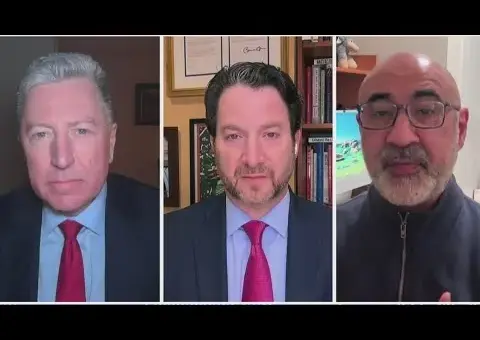
Rising tensions between the U.S. and Iran are creating a volatile geopolitical situation. With conflicting signals on de-escalation and potential shifts in alliances like NATO and U.S.-Israel relations, the path forward remains uncertain. The global economy and regional stability hang in the balance.


Iran Targets US With Cyberattacks, Escalating Digital Warfare
Iran is increasingly using cyberattacks to challenge the U.S., as seen in a recent hack of the FBI director's account. Experts say this is a strategic shift due to Iran's limitations in conventional warfare. The U.S. needs to strengthen its digital defenses, focusing on encryption and cloud computing, rather than solely relying on traditional security measures.