US-Germany Ties Tested Amid Iran Conflict: Allies Reassess Relationship
The relationship between the U.S. and Germany is being tested by differing approaches to the Iran conflict, highlighting a growing divergence in foreign policy. Experts describe the situation as "hyper pragmatism" and an "abusive relationship," as Germany seeks greater autonomy while acknowledging the continued need for transatlantic ties.

US-Germany Ties Tested Amid Iran Conflict: Allies Reassess Relationship
The relationship between the United States and Germany has come under intense scrutiny following the recent conflict with Iran, raising questions about the future of transatlantic ties. Just weeks into the military action, a clear divergence in approaches between Washington and Berlin has highlighted underlying tensions, prompting experts to question the current status of the long-standing alliance.
A Shifting Dynamic in the Oval Office
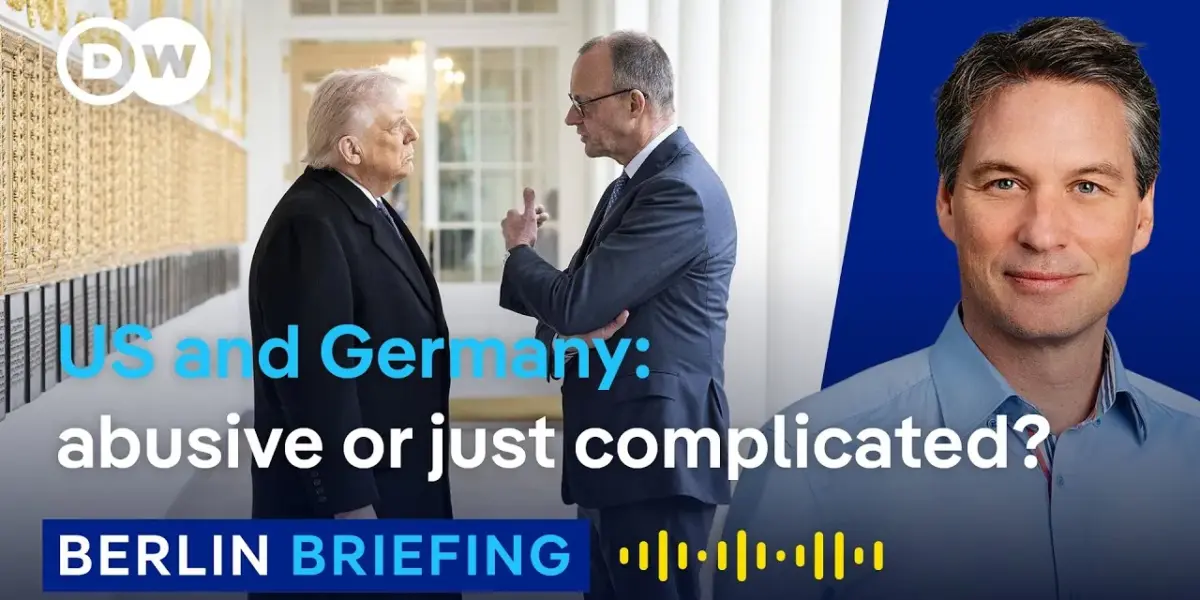
The initial interactions between German Chancellor Olaf Scholz and U.S. President Donald Trump, just over two weeks prior to the Iran conflict’s escalation, suggested a period of relative rapport. Michaela Kna, a journalist who was present during a meeting in the Oval Office, described the situation as a “buddy kind of friendship” within the political sphere. However, she noted a clear dependency, with one leader being more reliant on the other. This perceived closeness was quickly overshadowed by the unfolding events in Iran.
The U.S. expectation was that European allies, including Germany, would readily support its military campaign. However, this assumption proved incorrect. Chancellor Scholz, while acknowledging the need to address Iran’s actions, expressed reservations about the international legality of the U.S.-led attack. This stance, coupled with Germany’s reluctance to immediately endorse military action, signaled a growing divide.
Germany’s Stance: “Not Our War”
Chancellor Scholz has been clear and consistent in his messaging: “This is not our war.” Speaking publicly, he stated that while Germany shares many goals with its allies, including ending Iran’s nuclear program, it would not participate in the military conflict. This position was reiterated when discussing the security of the Strait of Hormuz, with Germany emphasizing that military involvement in ensuring free navigation would only be considered after the hostilities cease.
This approach, characterized by some as “hyper pragmatism,” is driven by several factors. Public opinion in Germany largely opposes direct military involvement, with estimates suggesting around two-thirds of Germans are against the war. Furthermore, German constitutional law requires parliamentary approval for troop deployment, a hurdle that Chancellor Scholz must navigate carefully within his coalition government.
Experts Weigh In: Appeasement or Principled Realism?
Suda David Wilp of the German Marshall Fund described Europe’s approach to the White House as a strategy of “appeasement” and “accommodation,” which may not always be effective. However, she also pointed to instances like the Iran conflict where Europe and Germany are attempting to set “red lines.” Wilp noted that while Europe remains dependent on the U.S. for security and trade, the U.S. also needs its European partners, citing President Trump’s evolving requests for assistance in the Strait of Hormuz.
Wilp also highlighted a significant shift: “The times of Germany being the indispensable partner are over.” Yet, she stressed that Germany is still recognized as a crucial pillar of European security architecture, undergoing a major transformation that is acknowledged in Washington. The expert community is grappling with whether Germany’s actions are appeasement or a form of “principled realism,” as described by Chancellor Scholz himself, seeking a balance between security policy and core principles.
NATO’s Delicate Position and Broader Implications
Terry Schwz, a NATO expert based in Brussels, explained the complexities of NATO’s involvement. While NATO technically has naval capabilities, the current situation involves an EU naval mission. The overlap in membership between the EU and NATO means that limited resources are shared. Crucially, any direct military engagement in the Strait of Hormuz carries the risk of escalating the conflict and drawing allies into a war they are unwilling to join, a sentiment echoed by populations across Europe.
The conflict’s spillover effects are a major concern for Europe. Issues such as energy costs, migration flows, and potential terrorism directly impact the continent. Therefore, Europe cannot afford to remain entirely detached, even as it seeks to avoid direct military engagement. The broader implication is that the trust within the transatlantic alliance has been significantly damaged. Reports of Danish soldiers being prepared with explosives to potentially blow up a runway in Greenland during a previous U.S. action underscore the deep fissures that have emerged.
A Relationship Under Strain
The current dynamic is further complicated by President Trump’s rhetoric, which has often questioned the value of NATO and accused allies of being “ungrateful.” This has led to a perception among some in the U.S. that European allies, particularly Germany, are using bureaucratic hurdles like the need for a parliamentary mandate as an excuse to avoid commitment. However, experts argue this is a misinterpretation of Germany’s constitutional and political realities.
The German government’s strategy appears to be one of pragmatic adaptation, acknowledging that a return to the pre-Trump status quo may not be possible. There is a growing recognition that Europeans must bolster their own defense capabilities and act more independently. As one expert put it, the relationship is being viewed as an “abusive relationship,” prompting a drive for greater agency and less dependence on the United States.
Looking Ahead: A New Transatlantic Reality
The future of the U.S.-German relationship hinges on navigating these complex geopolitical shifts. While hope for a return to past norms may have faded, the necessity for both the U.S. and Europe to cooperate remains. The current events are accelerating a process of European strategic autonomy that has been discussed for decades. The damage to trust is significant, and rebuilding it will be a long and challenging endeavor, regardless of future U.S. administrations. The focus now is on how Europe, and Germany in particular, can forge a more independent and resilient path forward while maintaining essential alliances.
Source: Disagreements over Iran — are the US and Germany still friends? | Berlin Briefing Podcast (YouTube)

Related Articles


Tiger Woods Arrested for DUI After Crash
Golf legend Tiger Woods was arrested for DUI in Florida following a dramatic rollover crash. Meanwhile, a government shutdown continues as House Republicans block a Senate deal, leading to airport chaos and TSA worker pay issues. The stock market also plummeted into correction territory amid fears of a prolonged Iran conflict.

Trump’s Iran War Plans Criticized Amid Border Funding Standoff
Lawmakers and analysts are criticizing the Trump administration's handling of the Iran conflict and its approach to border funding, arguing that a lack of clear planning and a focus on political battles are making the U.S. less safe. Concerns are particularly high regarding the FBI's priorities and the potential impact of these issues on national security.


Trump’s War Talk Stuns Financial Crowd
Donald Trump's recent speech in Miami focused on his foreign policy, particularly his critical views on NATO and his vision for international relations. He declared the U.S. would no longer defend NATO allies, questioned the value of existing alliances, and suggested renaming the Strait of Hormuz. The speech also touched on his personal views of success, his allies, and his perceived role as a global peacemaker.