US Gains More Than It Pays For in NATO Alliance
Despite criticism, the United States gains substantial international legitimacy, a vast network of allies, and enhanced security from its NATO membership. Experts argue these benefits outweigh the alliance's costs and that its defensive nature is key to its value.

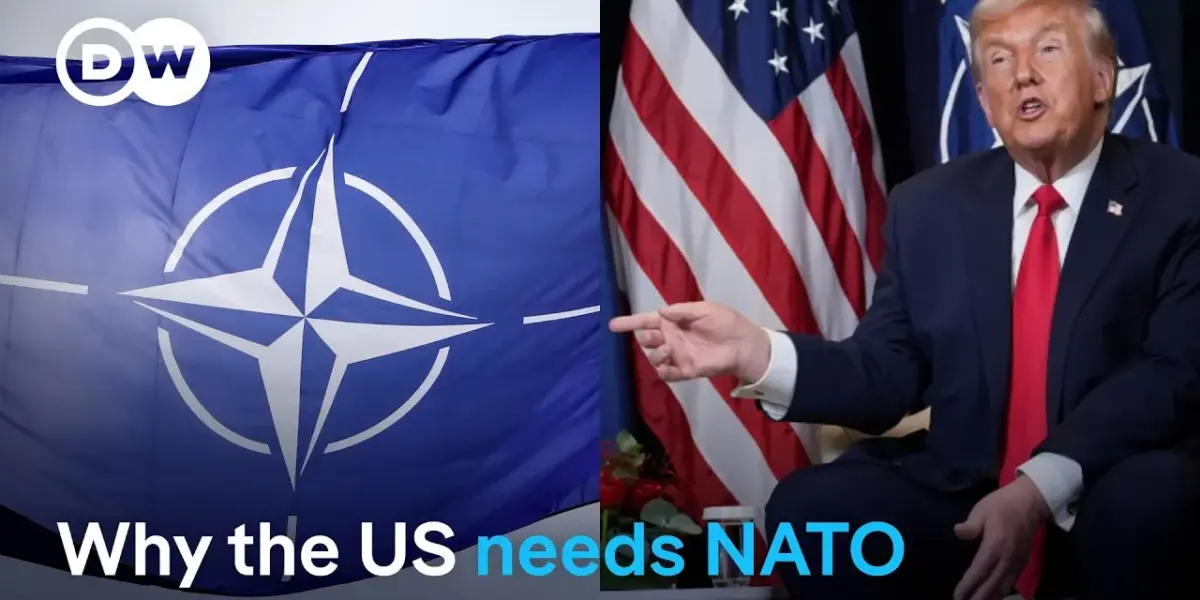
US Gains More Than It Pays For in NATO Alliance
The United States receives significant benefits from its membership in the North Atlantic Treaty Organization (NATO), despite recent criticisms suggesting the alliance is a financial burden. Experts argue that NATO provides the U.S. with crucial international legitimacy, a powerful network of allies, and enhanced security, outweighing its financial contributions.
NATO’s Role and Historical Context
NATO, a defensive alliance formed to protect member nations from military attack, has faced questions about its purpose throughout its history. The fall of the Berlin Wall and recent rhetorical attacks from President Donald Trump have led some to question the alliance’s relevance and strength. However, alliances that endure for decades do so for substantial reasons, not by accident.
Oana Lunescu, a distinguished fellow at the Royal United Services Institute and former NATO spokesperson, noted that NATO’s obituary has been written many times. “The question was, well, what is NATO for?” she said, referring to the period after the Cold War.
President Trump’s Stance on NATO
President Trump has openly expressed skepticism about NATO, calling it a “paper tiger” and criticizing member nations for not contributing enough financially. He has also questioned the alliance’s utility, particularly in the context of the Strait of Hormuz incident. “We spend trillions of dollars on NATO and when we need them, which we never do. We didn’t need them here either to be honest,” Trump stated.
However, experts point out that NATO is fundamentally a defensive alliance, not an offensive one. Its core promise, Article 5, states that an attack on one member is an attack on all. This article has only been invoked once in NATO’s 77-year history, following the 9/11 terrorist attacks, when allies supported the U.S. in Afghanistan with thousands of troops.
Benefits for the United States
Beyond mutual defense, NATO offers substantial strategic and economic advantages to the United States. It provides a network of 31 allies, a geopolitical asset unmatched by rivals like China or Russia. This network helps protect vital economic relationships, such as the significant trade between the U.S. and Europe, which remains the largest in the world.
Furthermore, NATO enables the U.S. to project power globally through a network of bases in Europe. It facilitates intelligence sharing within a clear and established framework. This collaboration grants the U.S. greater international legitimacy, demonstrating that it does not act alone on the world stage. In today’s complex global environment, no single country, not even the U.S., can effectively handle challenges independently.
NATO Secretary General’s Efforts
NATO Secretary General Jens Stoltenberg has been actively working to manage tensions and reassure President Trump. Known for his ability to communicate effectively with the U.S. president, Stoltenberg has engaged in discussions to mitigate concerns about the alliance’s future. He recently met with Trump in Washington to address these issues.
Stoltenberg, described as a “Trump whisperer” by some, has maintained a strong working relationship with the U.S. leader. His diplomatic skills are being tested as he navigates these critical discussions, with the future of NATO to some extent depending on their outcome. Many member states hope Stoltenberg can prevent major disruptions to NATO’s defense infrastructure, which would be complex, costly, and risky.
The Stakes of Disruption
A significant disruption to NATO’s integrated defense system would take years to repair and incur immense costs. The U.S. currently maintains approximately 80,000 to 85,000 troops in Europe. Recent large-scale NATO exercises, like the one held in Norway and Finland with significant U.S. participation, highlight the continued strength of the military and diplomatic ties.
While political strains exist, President Trump cannot unilaterally withdraw the U.S. from NATO without the backing of two-thirds of the Senate. Public opinion in the U.S. also generally favors the alliance. However, the persistent criticism is weakening the alliance’s image and potentially emboldening adversaries like Russia and China, whose goal is to divide NATO and isolate the United States from Europe.
The Path Forward for NATO
NATO has weathered many crises, but the current situation is viewed by many, including Oana Lunescu, as particularly tense and dangerous. “This is I think the most tense, the most dangerous moment in NATO’s history,” she stated. To emerge stronger, Europe needs to increase its defense investments, becoming a more robust partner for the United States.
The alliance’s strength lies in its collective security and the shared commitment of its members. As former NATO Secretary General Jens Stoltenberg aptly remarked during a 2019 address to the U.S. Congress, “It is good to have friends.” This sentiment underscores the enduring value of alliances in navigating a complex and unpredictable world.
Source: Transatlantic Trouble: How the United States benefits from NATO | DW News (YouTube)

Related Articles
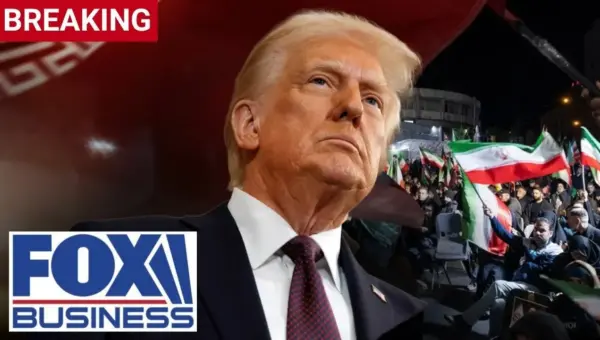
Trump Halts Iran Attack, Seeks Deal to Open Hormuz Strait
President Trump has suspended military action against Iran for two weeks, seeking a deal that includes the immediate opening of the Strait of Hormuz. This move aims to de-escalate tensions and secure long-term peace in the Middle East, with markets expected to react positively to the diplomatic progress.

Trump’s Iran Standoff: A Deal Made in Retreat?
President Trump has paused military actions against Iran, agreeing to a two-week negotiation period based on Iran's 10-point proposal. This move follows threats of severe strikes and raises questions about the administration's strategy and the concessions involved.
Trump Threatens Iran: ‘Civilization Will Die’
President Donald Trump has issued his most severe threat yet against Iran, warning of 'existential consequences' as a deadline for a deal expired. The conflict has escalated with strikes on civilian infrastructure, raising concerns about war crimes. Experts suggest Trump's rhetoric may mask desperation amid an unpopular war with unclear objectives.