US Foreign Policy Blunders: A Pattern of Disastrous Interventions
The U.S. approach to Iran, marked by a reliance on military force and a disregard for historical lessons, mirrors past interventions in Afghanistan, Iraq, and Libya, leading to predictable and destabilizing consequences. This analysis explores the pattern of failed regime-change strategies and their implications for regional and global stability.


US Foreign Policy Blunders: A Pattern of Disastrous Interventions
The current state of American foreign policy, particularly concerning its recent actions towards Iran, can only be described as a profound and self-inflicted shambles. The decision by the Trump administration to initiate a military confrontation on March 7th, seemingly predicated on the belief that a swift decapitation strike would dismantle the Iranian regime, has instead led to a cascade of unintended and destabilizing consequences. This approach, reminiscent of a misguided hope for a swift regime change mirroring perceived successes in other regions, has ignored critical lessons from decades of American engagement in the Middle East.
The Illusion of Swift Regime Change
President Trump reportedly envisioned a scenario where the initial strike would trigger the collapse of the Islamic Republic, paving the way for a new leadership amenable to the United States, perhaps drawing inspiration from the situation in Venezuela. However, this vision critically underestimated Iran’s capacity to retaliate. The subsequent missile and drone attacks on regional allies and U.S. bases disrupted vital economic activities in the Gulf and contributed to rising gasoline prices domestically. The maddening aspect of this miscalculation lies in its predictability. Anyone with even a cursory understanding of U.S. Middle East policy over the last quarter-century should have foreseen the potential for multiple, devastating, and unintended outcomes.
A History of Unintended Consequences
The post-9/11 interventions in Afghanistan and Iraq serve as stark historical precedents. While the intervention in Afghanistan following the September 11th attacks, targeting the Taliban regime that harbored al-Qaeda, had a clear and immediate cause, the rationale for intervening in Iran lacked such direct justification. The apparent success of the Afghanistan intervention, however, emboldened the Bush administration to pursue regime change in Iraq in 2003, toppling Saddam Hussein’s Ba’athist government. This led to the creation of two power vacuums, not nascent democracies. The fundamental error in both instances was the failure to recognize that before democracy can flourish, a functioning state with a legitimate monopoly on force must exist. The U.S. proved incapable of establishing such a state in either Afghanistan or Iraq, leading to prolonged instability, the rise of multiple militias, and power centers that undermined the installed governments.
This pattern of intervention continued with the Obama administration during the Arab Spring. The use of air power to prevent Muammar Gaddafi from reasserting control in Benghazi, Libya, resulted in an ongoing civil war. The Taliban have since returned to power in Afghanistan, and Iraq is governed by a fragile, corrupt administration increasingly aligned with Iran, rather than the United States.
The Limits of Military Power
The single, overarching lesson that should have been learned from these debacles is that military power, whether in the form of hundreds of thousands of ground troops or, even less effectively, air power, is insufficient on its own to achieve desired political transformations. While the concept of regime change is sometimes a necessary response to oppressive states that threaten regional stability, the method of achieving it is paramount. The Iranian Islamic regime, despite its internal unpopularity, is deeply entrenched, supported by elements with a vested interest in maintaining power, and sustained by a motivated ideological core.
Conversely, the opposition within Iran is fragmented, lacking organized leadership comparable to, for instance, the democratic movements in Venezuela. Furthermore, Iran, like Libya, Iraq, and Afghanistan, is characterized by ethnic divisions, including Kurdish, Azeri, and other minority groups concentrated in distinct regions. Unlike the transitions in Eastern Europe, where the U.S. could collaborate with the inspiring example of the European Union, current regional dynamics offer less favorable partnerships, with a right-wing Israeli government that faces regional distrust.
A Policy of Escalation and Ignorance
The current U.S. strategy, which has involved striking visible military facilities and, increasingly, civilian infrastructure like oil storage, power grids, and desalination plants, directly contradicts the stated aim of empowering the Iranian people. These dual-use civilian targets, while potentially weakening the regime’s economic base, alienate the very population the U.S. claims to support. The decision to avoid attacking Iran’s major oil terminal at Kharg Island, while unclear, might stem from a desire to prevent further oil price spikes, a short-sighted concern given the long-term strategic implications.
The Trump administration’s approach appears to be characterized by a willful ignorance of past policy failures and a contempt for expert opinion. By eschewing the counsel of experienced diplomats, intelligence analysts, and military officers, and instead relying on a small circle of loyalists, the administration is making policy on a day-to-day, ad-hoc basis. This leads to contradictory statements and objectives, creating an environment of extreme uncertainty and danger. The comparison of the current situation to a child with a flamethrower underscores the perceived recklessness and lack of strategic foresight guiding U.S. foreign policy.
Why This Matters
The repeated failures of U.S. foreign policy in the Middle East, particularly its reliance on military solutions for complex political problems, have had devastating human and economic costs. The interventions in Afghanistan and Iraq destabilized entire regions, fueled extremism, and undermined American credibility. The current approach towards Iran risks further escalating conflict, harming innocent civilians, and deepening regional animosities. It highlights a critical disconnect between stated U.S. goals—promoting democracy and stability—and the actual outcomes of its policies, which often exacerbate the very problems they aim to solve.
Implications, Trends, and Future Outlook
The trend suggests a continued struggle for the U.S. to adapt its foreign policy tools to the complexities of the modern Middle East. The reliance on military might, coupled with a disdain for diplomatic nuance and expert analysis, points towards a future of continued missteps. The fragmentation of opposition movements, the entrenchment of regimes, and the intricate web of regional alliances mean that simplistic, interventionist approaches are unlikely to succeed. The future outlook is one of persistent instability, fueled by a cycle of intervention and reaction, unless a fundamental shift occurs in how the U.S. approaches foreign policy challenges.
Historical Context and Background
The current predicament is rooted in the post-Cold War era, particularly the responses to the 9/11 attacks. The ‘Bush Doctrine’ of preemptive war and the pursuit of regime change, while perhaps well-intentioned in some respects, set a dangerous precedent. The subsequent interventions in Afghanistan and Iraq, and later the Libyan intervention, demonstrated a consistent pattern: underestimation of local complexities, overestimation of military efficacy, and a failure to build sustainable political structures. This historical context is crucial for understanding why the current policy towards Iran, despite its unique regional characteristics, echoes past failures.
Source: A Foreign Policy Made by Idiots (YouTube)

Related Articles


Israel Escalates Iran Strikes, Warns of Wider War
Israel has launched significant strikes inside Iran following continued missile fire, warning of further escalation. The conflict risks wider regional instability and economic disruption, especially concerning the Strait of Hormuz.

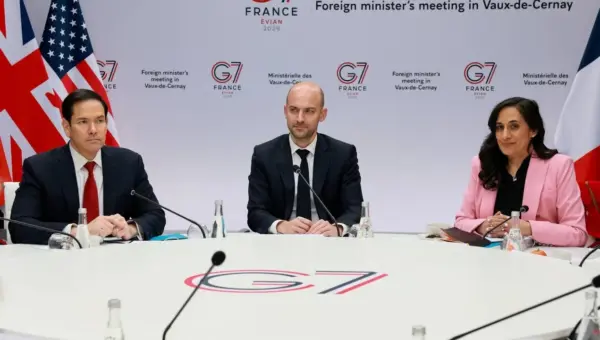
Rubio Puts US First at G7 Summit, Sparks Debate
Secretary of State Marco Rubio attended the G7 summit in France, emphasizing his commitment to serving the American people above all else. The meeting addressed the war in Iran and Russia's role, revealing differing approaches among allies on regional security and the Strait of Hormuz.
Trump’s Warpath: New Threats Signal Imperial Ambitions
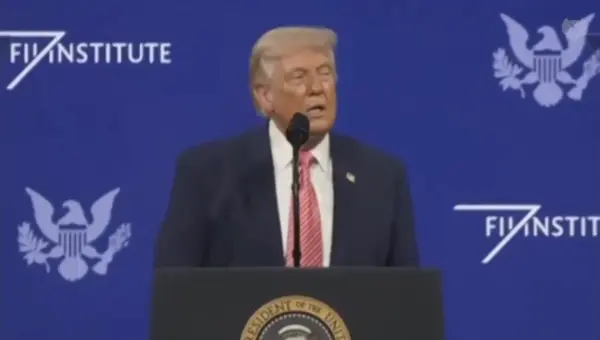
Recent statements from Donald Trump reveal a potential embrace of increased military action and interventionist foreign policy. This approach, characterized by critics as "imperialism 2.0," contrasts with his past promises of peace and has even drawn criticism from parts of his own base. The implications for U.S. global engagement and domestic priorities are significant.