US Forces Execute Daring Iran Rescue Mission
U.S. forces executed a complex rescue mission to recover a downed F-15E WSO deep inside Iran. The operation involved multiple aircraft, special operations units, and faced significant enemy resistance. Despite challenges, including the loss of two aircraft, the WSO was successfully extracted, showcasing advanced U.S. recovery capabilities.

US Forces Execute Daring Iran Rescue Mission
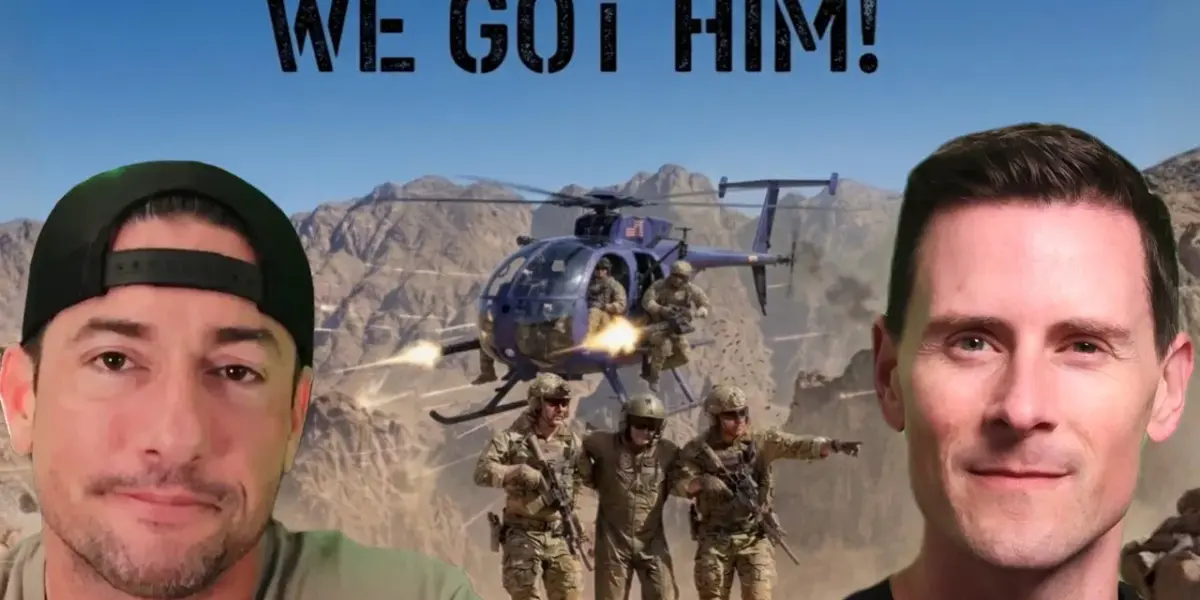
In a high-stakes operation amidst escalating conflict, U.S. forces successfully rescued a downed F-15E Weapon Systems Officer (WSO) deep within Iranian territory. The mission, a complex joint effort involving Air Force Pararescue (PJ), Delta Force, and Navy SEALs, highlights the U.S. military’s capability for deep-penetration recovery operations.
Background to the Conflict
The rescue occurred on day 39 of an intense conflict between the U.S., Israel, and Iran. Tensions were already high as President Trump issued an ultimatum to Iran, demanding the immediate opening of the Strait of Hormuz. He warned of escalated strikes on critical infrastructure, including power plants and bridges, if Iran failed to comply. Iran rejected these demands, vowing fierce retaliation and celebrating the downing of the U.S. F-15E. Amidst these developments, discussions about a potential 45-day ceasefire were reportedly underway.
The F-15E Shootdown and Initial Response
The F-15E was reportedly shot down by a man-portable air-defense system (MANPADS), utilizing technology not previously seen employed effectively by Iranian forces. The ejection of the pilot and WSO over hostile territory triggered immediate response protocols. U.S. Air Force Pararescue teams, postured and ready to deploy within minutes, were activated. The pilot was reportedly recovered quickly.
The WSO’s Survival and Evasion
The WSO, identified as being isolated on the ground, demonstrated exceptional survival skills. According to former Pararescueman Aaron Love, the WSO followed his training meticulously, evading detection for days. His initial radio call, “God is good. Enemy 3K to the north,” indicated his immediate adherence to Survival, Evasion, Resistance, and Escape (SERE) principles. He managed to find a defensible position atop a mountain and activate an emergency beacon, providing rescue forces with his location.
Multi-faceted Rescue Operation
The recovery mission involved a complex, multi-stage operation. Aircraft like the A-10 Thunderbolt II, known for their close air support capabilities and historically serving as “Sandy” aircraft for rescue missions, provided overhead support. However, the operation faced significant challenges and losses. Two A-10s were involved; one managed to return to friendly territory despite damage, while the other was forced to eject its pilot.
Two HH-60 Pave Hawk helicopters, crewed by experienced Pararescue teams, were also engaged. These aircraft reportedly came under heavy small arms fire, with personnel sustaining shrapnel injuries. Despite the intense engagement, the Pave Hawks successfully extracted the downed pilot and the WSO. The transcript notes that the WSO was extracted swiftly, but the overall operation continued to ensure the safety of all involved personnel.
Deep Strike and Special Operations Involvement
The operation escalated to a deep strike mission, involving MC-130J Commando II aircraft from the 123rd Special Tactics Squadron. These specialized aircraft, designed for special operations support, attempted to land on an unimproved airstrip near the WSO’s location. The plan involved deploying MH-60 Black Hawk helicopters from the 160th Special Operations Aviation Regiment (SOAR), known as the “Night Stalkers,” to extract the WSO.
However, both MC-130Js reportedly became inoperable upon landing, their wheels sinking into the terrain or experiencing other mechanical failures, leaving the crews stranded deep inside Iran. This created a second crisis, requiring the extraction of the MC-130J crews as well.
Extraction and Support Capabilities
To extract the stranded crews and the rescued WSO, specialized Short Takeoff and Landing (STOL) aircraft, identified as the D8 (likely a reference to the C-146A Wolfhound or similar), were employed. These aircraft, capable of operating from unprepared surfaces, flew into the area, often at low altitudes to evade detection. They loaded as many personnel as possible, including the rescued WSO and the crews from the disabled MC-130Js, for extraction.
The overall operation was supported by a vast array of U.S. military assets. Drones like the MQ-9 Reaper were used to target enemy forces approaching the area and even destroy sections of roads to impede enemy movement. Intelligence agencies reportedly employed deception tactics, feeding false information to mislead Iranian forces. The Space Force also played a role in providing essential support and intelligence.
Strategic Implications
The successful rescue of the F-15E WSO deep within Iran demonstrates the U.S. military’s advanced personnel recovery capabilities. It signals to adversaries that downed aircrew will be aggressively pursued for recovery, regardless of the risks. The operation also underscores the U.S. ability to conduct complex, joint special operations deep within contested territory, even when facing significant enemy resistance and unforeseen logistical challenges.
The incident occurred against a backdrop of heightened geopolitical tensions, with Iran’s control over the Strait of Hormuz remaining a critical global concern. The successful, albeit costly, rescue mission serves as a powerful projection of U.S. resolve and a reassurance to its own service members operating in hostile environments.
Historical Parallels
The operation echoes aspects of historical rescue missions, including the ill-fated Operation Eagle Claw in 1980, which aimed to rescue American hostages in Iran. The failure of Eagle Claw led to significant reforms and the eventual creation of Joint Special Operations Command (JSOC), emphasizing the need for specialized training and integrated joint forces for such high-risk operations. This recent rescue mission, executed by units that trace their lineage and capabilities back to the lessons learned from such past endeavors, showcases the evolution and effectiveness of modern U.S. special operations forces.
Source: INSANE New Details Emerge of The F-15E WSO Rescue In Iran (YouTube)

Related Articles


Iran Conflict: Military Pressure Won’t Solve Regional War
Military pressure alone will not resolve the complex regional conflict involving Iran, according to experts. A political understanding and renewed trust are essential to end hostilities and reopen the Strait of Hormuz. Past attempts at negotiation have been marred by escalations, creating a significant obstacle to peace.


US Reputation Suffers Under Trump’s ‘War on Iran,’ Says Ex-Diplomat
Former Undersecretary of State Rick Stengel warns that America's global reputation may be permanently damaged by the Trump administration's foreign policy, particularly its actions concerning Iran. He argues that the U.S. has lost its "soft power," replaced by the "ugly American" image. General Barry McCaffrey also raised concerns about military leadership shake-ups and the strategic challenges in Iran.
Iran Mission: Rescue or Cover-Up Unveiled?
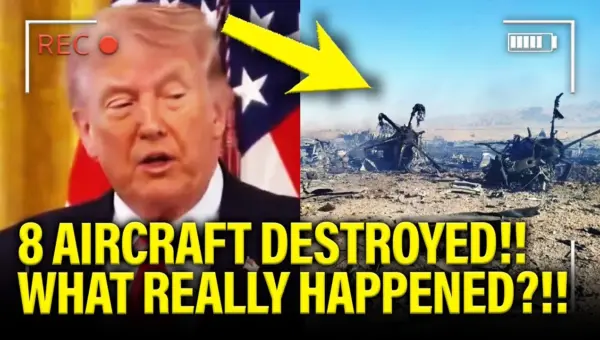
The official story of a US F-15E rescue mission in Iran is filled with inconsistencies, raising questions about its true nature. Conflicting accounts of aircraft destruction and the anonymity of the rescued pilot suggest the mission may have been a cover for a larger, failed operation.