US Faces Iran Tensions, Social Media Faces Accountability
The US faces mounting tensions with Iran, with ongoing military actions and a complex negotiation landscape. Simultaneously, social media giants like Meta and Google are confronting landmark legal challenges, as juries find them liable for addictive platform designs that harm children. In local news, Pima County Sheriff Chris Nanos is under pressure to resign following a no-confidence vote by his deputies and scrutiny of his past work history.


US Escalates Iran Conflict Amidst Diplomatic Stalemate
The United States is increasingly engaged in military actions against Iran, even as talk of peace initiatives emerges. The White House has reported productive talks, but Iran has denied these discussions have taken place. Reports also suggest Iran is rejecting a 15-point peace plan offered by President Trump. This plan reportedly includes key points such as Iran being forbidden from possessing nuclear weapons.
Iran has responded with its own five-point proposal. This counter-offer includes demands for an end to aggression and assassinations by the enemy. A significant point in Iran’s proposal is a call for complete control over the Strait of Hormuz, a vital waterway for global oil shipments. The wide gap between these proposals indicates that an agreement is unlikely, even if negotiations continue.
The US is reportedly seeking to arrange a meeting in Pakistan soon. However, the White House has warned that if Iran does not agree to a deal quickly, the US is prepared to increase the conflict. President Trump has stated that Iran will face harsher consequences if it fails to accept its current military defeat and engage in negotiations. He has made it clear that any further violence will be due to Iran’s refusal to acknowledge its situation and reach a settlement.
Military Actions Continue Unabated
US forces have continued strikes against Iranian military targets, with Central Command releasing footage of these actions. The US has reportedly hit its 10,000th Iranian target since the conflict began. Meanwhile, Israel has also maintained its military operations, with the IDF reporting strikes on two key naval cruise missile production sites in Tehran and a submarine development facility in Isfahan.
Iran has continued its attacks on Israel and neighboring Gulf Arab countries. One such attack caused a large fire at Kuwait International Airport. Iran also claimed to have launched cruise missiles at the USS Abraham Lincoln, though President Trump stated all 101 missiles were intercepted.
Expert Analysis on Iran Conflict
Rebecca Grant, a national security and military analyst, noted the difference between public statements and private intentions. She suggested that while Iran publicly rejects the US peace proposal, it might be privately open to negotiations due to its own survival needs. Grant believes Iran’s demands, such as reparations and control of the Strait of Hormuz, are non-negotiable points for the US. The primary goals of Operation Epic Fury remain the elimination of Iranian drones, missiles, navy, and overall military projection capability.
Grant explained that Iran’s attempts to escalate have failed, alienating its neighbors like the UAE and Oman. She described Iran’s situation as desperate, with Pakistan potentially acting as an intermediary. However, common ground must be found, or the US will need to apply more pressure, particularly regarding control of the Strait of Hormuz.
Despite Iran’s claims of targeting only American bases, the attack on Kuwait International Airport demonstrates a broader scope. The US is increasing its military presence in the region, with the 82nd Airborne Division deploying and additional Marine Expeditionary units set to arrive, joining 50,000 US troops already present. Potential escalation options include sending ground troops or bombing Iran’s nuclear facilities, both carrying significant risks.
Grant suggested continuing the effective air campaign as the primary option. The arrival of the USS Tripoli and the readiness of the 82nd Airborne provide more options and pressure. These forces could focus on securing the Strait of Hormuz, making it clear Iran will not control it.
Public opinion in the US shows nearly 60% believe military action against Iran has gone too far, indicating a lack of widespread support for the war. The economic impact is also spreading, and President Trump is reportedly attentive to oil and stock markets. Grant acknowledged public concerns about the 50,000 US troops but stressed clear objectives for safety in America and globally. She expressed hope for allied support from Britain and France in a maritime security force, similar to operations against the Houthis in the Red Sea, potentially involving Japan and South Korea for zone defense around the Strait of Hormuz.
Social Media Giants Face Landmark Accountability
Historic Verdict Against Social Media Addiction
In a separate development, a California jury has found Instagram and YouTube guilty of designing addictive products that harm children. This verdict is seen as a major step in holding social media companies accountable for the negative impacts of their platforms on young users.
The case, brought by a young woman identified as Kaylee, centered on her testimony of becoming addicted to social media starting at age six with YouTube and spending all day on Instagram by age nine. The jury agreed that features like autoplay and infinite scrolling were intentionally designed to be addictive. Kaylee was awarded $6 million in damages, though this amount is a small fraction of the profits for Meta (Instagram’s owner) and Google (YouTube’s owner).
Both companies plan to appeal the verdict. However, this case is considered the first of its kind and could lead to thousands more lawsuits, drawing comparisons to the legal battles against the tobacco industry. Parents involved are now advocating for legislative action in Washington D.C. to implement safety protections for children online.
Whistleblower and Legal Experts Weigh In
Frances Haugen, a former Facebook algorithm manager and whistleblower, praised the verdict as a culmination of years of work. She argued that even small jury awards, when scaled across potentially thousands of cases, could amount to significant financial consequences for tech companies, potentially reaching trillions of dollars.
Haugen also highlighted a separate case in New Mexico, where Meta was ordered to pay $375 million in civil penalties for failing to protect children from sexual exploitation. She described this case as significant because it presented evidence that Facebook knew about child trafficking on its platform and did not act. The legal strategy used in New Mexico, focusing on public nuisance claims, could serve as a model for other states and countries.
Regarding the motivation behind these practices, Haugen suggested that companies prioritize profits, even when aware of potential harm. She noted that internal company structures often limited employees’ ability to question dangerous practices, leading to a disconnect between the reality of harm and the company’s actions. Haugen proposed design changes, such as giving users more control over algorithms and providing prompts when users engage with potentially harmful content, to create safer online experiences.
New Mexico Attorney General on Accountability
New Mexico Attorney General Raul Torrez, whose state secured the $375 million verdict against Meta, echoed the sentiment that juries are sending a clear message. He stated that communities are fed up with the dangers present on social media and expect clear guidelines. Torrez called for legislative action in Washington to match the urgency felt at the community level.
Torrez explained that the second phase of the New Mexico trial will focus on injunctive relief, asking the judge to order Meta to change its business practices. This includes specific recommendations for algorithmic design, age verification, external monitoring, and ending encrypted communications that hinder law enforcement. He believes these changes could set a precedent for how social media companies operate globally.
Torrez acknowledged that big tech companies have often relied on Section 230 of the Communications Decency Act, which shields them from liability for user-generated content. However, he indicated that the legal landscape is shifting, and these companies may no longer be able to hide behind such protections.
Pima County Sheriff Faces No-Confidence Vote
In a separate domestic issue, Pima County Sheriff Chris Nanos is facing significant pressure to resign. A union representing hundreds of his deputies has overwhelmingly voted no confidence in his leadership. This is an extraordinary event, especially for a department of this size.
The vote follows concerns about Sheriff Nanos’s handling of the Nancy Guthrie investigation. Nancy Guthrie, an 84-year-old woman, disappeared from her Tucson home 53 days prior, and investigators have yet to name a suspect. The family has offered a $1 million reward, but few leads have emerged.
Additionally, Sheriff Nanos’s past work history has come under scrutiny. While working for the El Paso Police Department decades ago, he was reportedly suspended as many as eight times. Supervisors in Pima County have stated that Nanos did not disclose these suspensions when he was hired, and they believe his record indicates he was a poor officer. Some supervisors are calling for his resignation, citing his past conduct and the current challenges in the Guthrie investigation.
Law enforcement experts noted the rarity of such a widespread no-confidence vote from deputies. They also commented on the difficulty of removing an elected sheriff, who answers directly to the electorate. The situation suggests a growing disconnect between Sheriff Nanos and both his deputies and community leaders, potentially impacting the effectiveness of his department and ongoing investigations.
Source: Should Sheriff Nanos resign? Parents win major social media trial | Vargas Reports Full Episode 3/25 (YouTube)

Related Articles
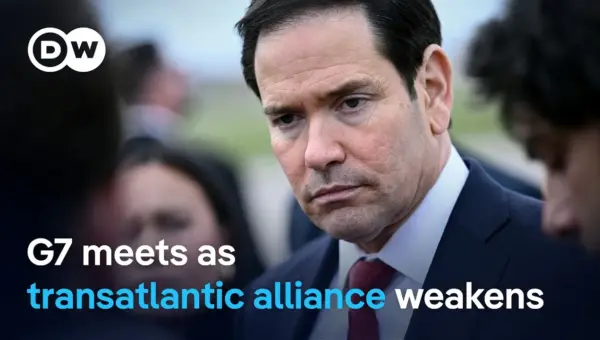
G7 Allies Clash Over Iran War Strategy, Urge Focus on Russia
G7 foreign ministers met in Paris, revealing deep divisions over the U.S. war with Iran. European allies urged the U.S. to pressure Russia, linking its actions to the conflict and fearing support for Ukraine will wane.

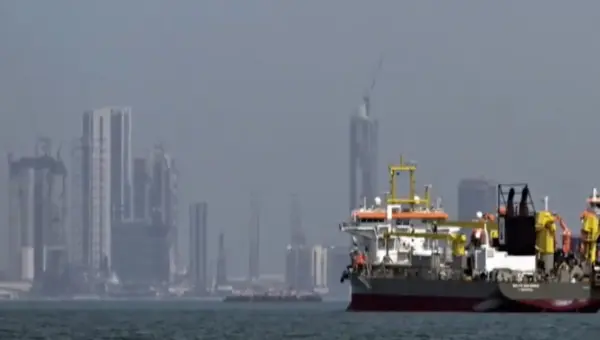
Iran Blocks China Ships, Exposing Beijing’s Weak Grip
Iran's recent decision to block Chinese ships at the Strait of Hormuz is exposing the limits of Beijing's influence in the Middle East. This action is causing delays and cancellations for Chinese manufacturers, turning a perceived geopolitical win into an economic strain.
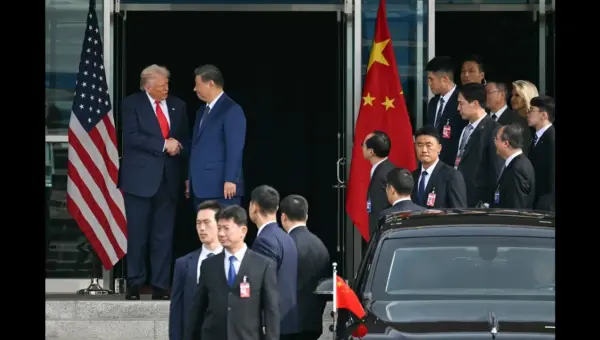
Trump’s “Walk Away” Tactic Signals Tougher Stance on China
Retired Air Force Brigadier General David Stillwell believes President Trump's strategy of being willing to walk away from negotiations puts pressure on China. This tactic, combined with US global actions and strengthened alliances, signals a more assertive American foreign policy.