US Faces Growing Threats from Russia, China, Iran
U.S. intelligence chiefs have detailed a broad range of threats in the 2026 Annual Threat Assessment, citing progress in border security and counter-narcotics while warning of escalating risks from Russia, China, and Iran. The report highlights advancements in missile technology and cyber warfare capabilities by rival nations, alongside ongoing concerns about international terrorism and transnational criminal organizations.

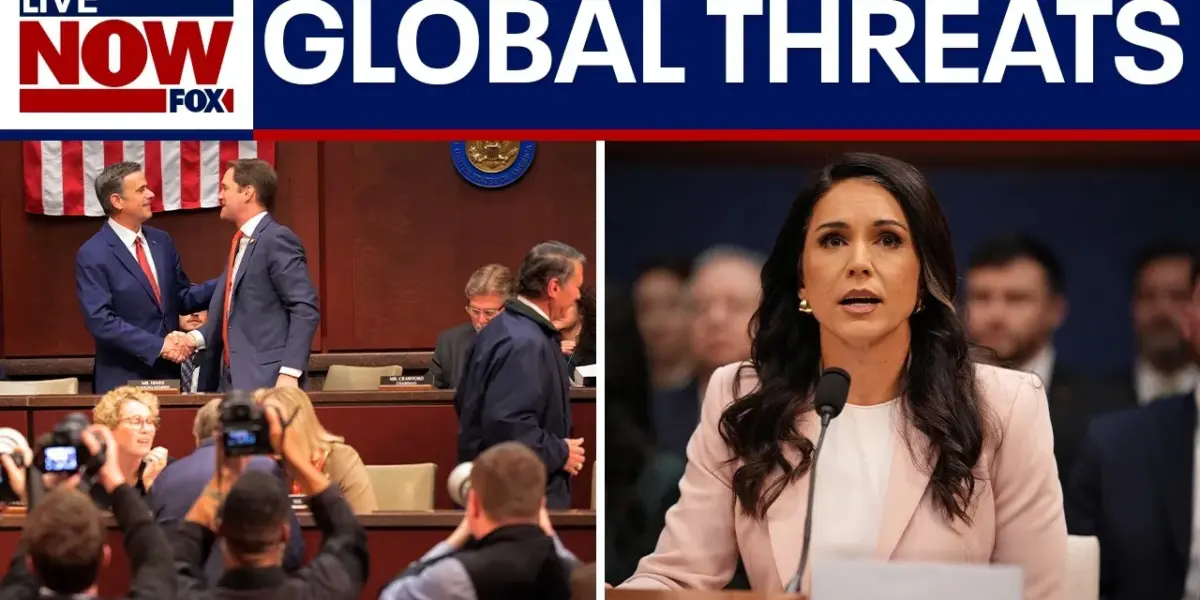
Intelligence Chiefs Detail Global Risks in 2026 Threat Assessment
WASHINGTON D.C. – The United States faces a complex and evolving array of threats, from international terrorism and drug cartels to sophisticated cyberattacks and the expansion of nuclear capabilities by rival nations. This assessment comes from the nation’s top intelligence leaders, including the Directors of the CIA, DIA, FBI, and NSA, who presented the 2026 Annual Threat Assessment.
The briefing, delivered by Director of National Intelligence (DNI) Avril Haines, outlined threats to the U.S. homeland and its global interests, following the priorities set by the President’s National Security Strategy. The report emphasized that these assessments represent the collective views of the intelligence community, not personal opinions.
Homeland Security Efforts Show Positive Results
The report highlighted significant progress in homeland defense, particularly at the U.S.-Mexico border. Strict enforcement of U.S. policies has reportedly acted as a deterrent, leading to a substantial decrease in illegal immigration. Data from Customs and Border Patrol indicates an 83.8% drop in monthly encounters in January 2026 compared to January 2025.
However, underlying causes of migration, such as instability in countries like Cuba and Haiti, are expected to persist. Transnational criminal organizations (TCOs) exploit chaos for profit, continuing to profit from illegal immigration flows. These groups also pose a direct threat to Americans through the production and trafficking of illegal drugs.
Fentanyl Crisis Mitigation and Cartel Operations
Under President Trump’s leadership, efforts to combat the fentanyl crisis have shown promising results. Fentanyl overdose deaths have decreased by 30% between September 2024 and September 2025. Aggressive targeting of TCOs and efforts to reduce the inflow of fentanyl precursors are credited with this impact.
Mexico-based cartels like the Sinaloa Cartel and Jalisco New Generation Cartel dominate the production and smuggling of fentanyl, heroin, methamphetamine, and cocaine into the U.S. Colombian TCOs and armed groups are major players in cocaine trafficking to the U.S. and European markets, with potential expansion into the Asia-Pacific region.
Gangs like MS-13 maintain a strong presence in the U.S., using violence for intimidation and engaging in crimes such as murder, extortion, and drug trafficking, which fuels instability. As counter-pressure increases, these TCOs are expected to adapt by shifting production and trafficking routes.
Terrorism Threats: Islamist Groups and State Actors
The intelligence community also identified a geographically diverse set of Islamist terrorist actors aiming to spread their ideology globally and harm Americans. While groups like Al-Qaeda and ISIS are organizationally weaker than in the past, the spread of Islamist ideology, sometimes linked to the Muslim Brotherhood, poses a threat to freedom and Western principles.
These groups use ideology for recruitment and financial support to advance their goal of establishing an Islamic caliphate. The report noted increasing examples of this in Europe. President Trump’s designation of certain Muslim Brotherhood chapters as foreign terrorist organizations is seen as a mechanism to protect Americans.
ISIS has shifted towards information operations to spread propaganda and inspire attacks within the West. Counterterrorism operations continue in Iraq, Somalia, Yemen, and Syria, degrading the ability of groups like Al-Qaeda and ISIS to reconstitute and launch large-scale attacks.
Strict U.S. border enforcement and deportations have reduced access for potential terrorists. In 2025, there were at least three Islamist terrorist attacks in the U.S., with law enforcement disrupting 15 additional plots. Roughly half of the disrupted plotters had online contact with foreign terrorist organizations abroad.
Nation-State Threats: Missile Development and Cyber Warfare
Beyond terrorism, state actors present broader risks. Russia, China, North Korea, Iran, and Pakistan are researching and developing advanced missile delivery systems. These systems, with both nuclear and conventional payloads, could put the U.S. homeland within range. The intelligence community assesses that the number of such missiles could exceed 16,000 by 2035, up from over 3,000 currently.
China and Russia are developing systems designed to penetrate U.S. missile defenses. North Korea’s intercontinental ballistic missiles (ICBMs) can already reach U.S. soil, and the nation is committed to expanding its nuclear arsenal. Pakistan’s long-range ballistic missile development could potentially include ICBMs capable of striking the U.S. homeland.
Iran has demonstrated technology that could be used to develop a viable ICBM before 2035, though ongoing operations may impact this timeline. The report also highlighted the growing threat in the cyber domain, with China, Russia, Iran, and North Korea, along with non-state ransomware groups, seeking to compromise U.S. networks and critical infrastructure for intelligence gathering and financial gain.
North Korea’s cyber program is sophisticated, having stolen an estimated $2 billion in cryptocurrency in 2025 alone to fund its regime and weapons programs. Ransomware groups are shifting to faster, high-volume attacks that are harder to mitigate. The advancement of artificial intelligence is expected to accelerate cyber threats, enabling both attackers and defenders to improve their speed and effectiveness.
Shifting Geopolitical Focus: The Arctic
The report also touched upon the growing strategic importance of the Arctic. Russia and, to a lesser extent, China are strengthening their presence in the region through increased maritime trade, resource extraction, and military activity. Russia is deploying more military forces and building new infrastructure, asserting its “polar great power status.”
China, while not an Arctic nation, is pursuing its strategic and economic interests in the region. The rapid advancement of artificial intelligence capabilities is noted as a defining technology that will significantly alter the threat landscape in both cyber and other domains.
Looking Ahead
The 2026 Annual Threat Assessment underscores the multifaceted nature of national security challenges facing the United States. As geopolitical tensions rise and technology rapidly evolves, intelligence agencies will continue to monitor and adapt to these dynamic threats. The interplay between state-sponsored cyber warfare, the persistent threat of terrorism, and the expansion of advanced weaponry by rival nations will be critical areas to watch in the coming years.
Source: DNI Gabbard on Iran, China & Russia (YouTube)

Related Articles


US Must Block China’s Tech Access for Security
US national security experts are raising alarms about China's access to advanced AI chips, arguing it threatens strategic advantages. This, coupled with charges against Chinese entities for fentanyl precursor sales and a ban on foreign routers, signals a growing effort to prioritize security over business ties.
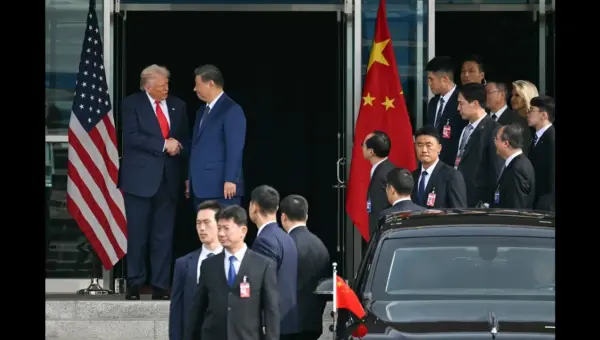
Trump’s “Walk Away” Tactic Signals Tougher Stance on China
Retired Air Force Brigadier General David Stillwell believes President Trump's strategy of being willing to walk away from negotiations puts pressure on China. This tactic, combined with US global actions and strengthened alliances, signals a more assertive American foreign policy.

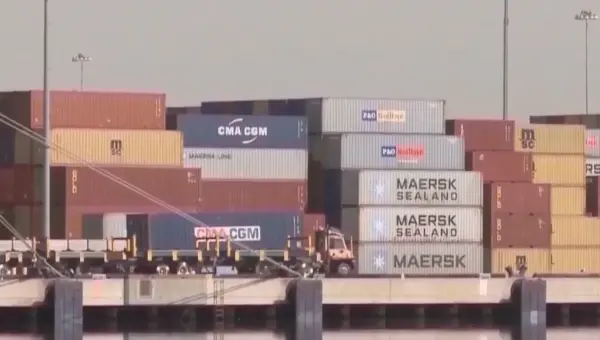
China Fights Back: Tariffs Loom Ahead of Trump Visit
China is retaliating against US trade investigations that could lead to higher tariffs. This escalating trade tension occurs just before a planned visit by President Trump. The dispute involves accusations of unfair practices and impacts global supply chains.