US Faces Confusion as Trump’s Conflicting Iran Messages Emerge
U.S. forces are searching for a missing servicemember after an F-15 jet was shot down over Iran, amidst conflicting reports about the war's progress. President Trump's claims of "decimating" Iran clash with intelligence assessments of ongoing missile capabilities and Iranian resilience.

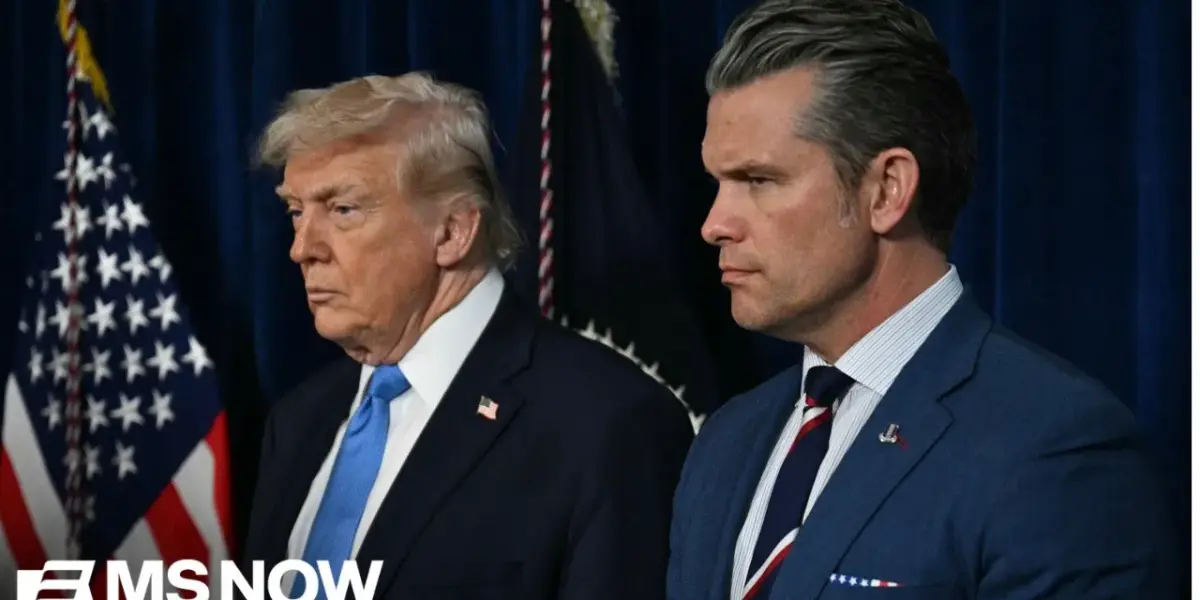
US Jet Downed, Search Underway Amid Conflicting Reports
A U.S. F-15 fighter jet was shot down over southern Iran early yesterday, sparking a search for one missing American servicemember. One crew member was rescued.
This marks the first time Iranian forces have successfully downed a U.S. fighter jet in the five weeks of ongoing conflict.
Separately, Iran is believed to have downed a second aircraft, an A-10 Warthog, with its pilot safely rescued. A Black Hawk helicopter involved in the search for the missing F-15 crew member was fired upon, injuring several personnel.
The incidents occurred less than 48 hours after President Trump declared in a national address that the U.S. had “completely decimated Iran.” These conflicting events and messages are sowing confusion about the war’s progress and timeline.
Conflicting Messages on Military Success
President Trump has presented a strong image of U.S. military dominance, stating on Wednesday that Iran’s navy and air force were “gone” and their anti-aircraft equipment “annihilated.” He claimed the U.S. was unstoppable and that Iran had “no military” to counter the U.S. forces.
However, U.S. intelligence assessments, as reported by CNN, suggest a different reality. These reports indicate Iran maintains significant missile launching capabilities, with roughly half of its missile launchers still intact. Thousands of attack drones also remain in Iran’s arsenal.
“Unfortunately, President Trump isn’t the first U.S. president to think he was getting into a short and sharp war and it ended up being longer and harder.”
Mara Carlin, Former Assistant Secretary of Defense
Mara Carlin, former Assistant Secretary of Defense, noted that while Iran’s military is weakened, even a small percentage of success can have a significant impact on the conflict, as seen in the recent events.
Intelligence Questions Pentagon’s Claims
Reporting from The New York Times, based on U.S. intelligence, has cast doubt on the extent of the U.S. military’s success in degrading Iran’s arsenal. Intelligence reports show that Iranian operatives have been able to repair and return bunkers and silos to operation shortly after being struck.
Mark Mazzetti of The New York Times explained that while the Navy and Air Force have seen significant degradation, the missile force remains a threat. Iran’s ability to reinforce and move its missiles caught planners by surprise, and missile launches have not decreased as significantly as claimed.
The question of “freedom of the skies,” which the U.S. claimed to have, has also been challenged by the downing of multiple aircraft. This raises concerns about the broader implications for the ongoing conflict.
Confusion Over War Goals and Exit Strategy
The conflicting messages from the administration have left many struggling to understand the U.S. objectives and the plan for ending the war. While President Trump has reportedly sought an “off-ramp” to declare victory, he also continues to promise further military action against Iran.
The administration has been criticized for not clearly articulating the reasons for the conflict or a clear strategy for its conclusion. A speech by the President on Wednesday was expected to provide clarity but instead offered a “muddled picture” of escalating bombing campaigns alongside a desire for a swift end.
This lack of clear communication extends to President Trump’s social media posts, which often offer brief, cryptic messages like “Keep the oil, anyone?” This has further fueled public confusion about the ultimate goals and the endgame of the military engagement.
Professional Military vs. “Amateurish” Leadership
Experts have pointed to a disconnect between the professionalism of career military personnel and what they describe as the “amateurishness” of the President and his political appointees in managing the war. There is concern about how this impacts the morale and effectiveness of the professional military.
Mara Carlin highlighted that military planners present options and risks to the President, but the ultimate decisions rest with civilian leadership. As long as these decisions are legal, the military is expected to follow them, regardless of whether they align with professional assessments or decades of experience.
The lack of apparent preparation, such as deploying sufficient naval assets to secure the Strait of Hormuz, has also been questioned, especially given the known risks associated with the region.
What’s Next?
The focus now shifts to the ongoing search for the missing U.S. servicemember and the potential for further escalation. The effectiveness of Iran’s remaining military capabilities, particularly its missile program, will be closely watched. The administration’s ability to clarify its objectives and provide a coherent strategy for ending the conflict will be crucial in navigating the uncertain path ahead.
Source: ‘Amateurishness’ of Trump: Inside the President’s conflicting messages on Iran sowing confusion (YouTube)

Related Articles

US Rescues Airman, Uniting Congress in Rare Bipartisan Praise
Washington reacted with widespread relief and bipartisan praise following the successful rescue of a U.S. service member held in Iran. The operation united lawmakers, demonstrating American resolve and capability in a complex geopolitical landscape. This event highlights the enduring importance of military power and its impact on regional dynamics.


Trump’s Golf Habit Drains Millions from Taxpayers
Donald Trump's golf trips have cost taxpayers over $100 million in just 14 months, a rate significantly faster than his previous term. This analysis highlights concerns about the use of public funds and potential conflicts of interest when presidential stays at private properties incur charges for government services.

Trump’s Budget Plan Sparks Outrage, Strains Party
Donald Trump's proposal for a $1.5 trillion defense budget, nearly double current spending, is drawing sharp criticism. The plan involves deep cuts to domestic programs like healthcare and education, contrasting with his past calls for ending foreign wars.