US Explores Kurdish Alliance to Undermine Iran Regime
Reports indicate the U.S. may be seeking military assistance from Kurdish fighters in Iraq to counter Iran, potentially avoiding direct troop deployment. Experts suggest this strategy could aim to destabilize Iran or provide crucial ground support, but raises significant geopolitical concerns and questions about trust.

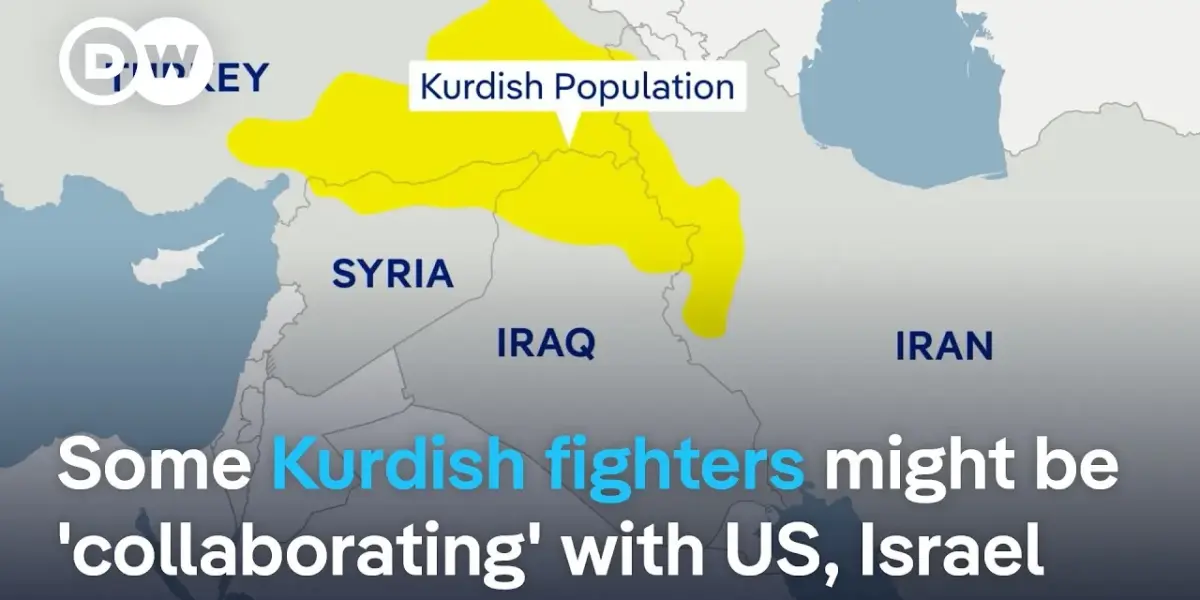
US Reportedly Seeks Kurdish Military Support Against Iran
Recent reports suggest the United States is exploring a strategic alliance with Kurdish militia groups in Iraq, potentially enlisting their support for operations against the Iranian regime. This development comes amidst escalating tensions and follows recent drone and missile attacks by Iran on Kurdish regions in northern Iraq, specifically targeting what Iran claims are anti-separatist forces. The aftermath of these attacks, with cleanup operations underway in places like Erbil, highlights the volatile security situation in the autonomous Kurdistan region.
Kurdish Fighters: A Potential ‘Boots on the Ground’ Solution?
The speculation centers on whether Kurdish militia groups, numbering in the thousands and operating along the Iran-Iraq border, could serve as a viable ground force in a potential conflict with Iran. This possibility gains traction if the U.S. seeks to avoid deploying its own troops, a move that faces significant political headwinds domestically. While regional Kurdish leaders in Iraq have publicly stated their commitment to avoiding military escalation, at least one Kurdish leader has indicated preparedness for various war scenarios and a willingness to play a leading role in the current situation within Iran.
Allegations of CIA and Mossad Coordination
Further fueling these reports are claims that intelligence agencies, including Mossad and the CIA, are in communication with militants from several Iranian Kurdish factions. These factions are reportedly being considered to spearhead a ground offensive against the Iranian government. Phone calls between former President Donald Trump and the chairman of the Democratic Party of Iranian Kurdistan have been acknowledged, though the White House has denied that these discussions pertained to arming Kurdish forces for an offensive against Tehran. A White House spokesperson clarified that calls with Kurdish leaders in northern Iraq were related to U.S. bases in the region, dismissing reports of an agreed-upon plan as entirely false.
“We have prepared all war scenarios and regarding the current situation in Iran, we are ready to move in and play a leading role.”
— Anonymous Kurdish leader in Iraq
Expert Analysis: A Strategy of Dissolution or Ground Support?
Dr. Sarah Kermanian, a researcher specializing in Kurdistan from the University of Sussex, offers a nuanced perspective on the driving forces behind these potential U.S. strategies. She suggests two primary possibilities. Firstly, the U.S. may be seeking to “outsource” a ground offensive to local actors if a conflict necessitates troop deployment, given the lack of appetite for U.S. boots on the ground. Secondly, Kermanian posits that these leaks could be part of a deliberate strategy, possibly aligned with Israeli objectives, to instigate severe conflict within Iran’s Kurdish region (Rojhelat). The aim, she suggests, might be to destabilize Iran and push it towards becoming a failed state, rather than solely toppling the current regime.
Kermanian points to the timing of these leaks, noting that they place Kurdish groups under increased scrutiny from the Iranian government, potentially leading to securitization and troop deployments to Rojhelat. This, she argues, fits a pattern of putting Kurdish factions in a precarious position, especially given Iran’s ongoing attacks on Kurdish party bases within Iraq.
Kurdish Capacity and Political Ambitions
When questioned about the capability of these Iranian Kurdish groups to exert significant pressure on the Iranian regime, Kermanian acknowledges their armed forces enable them to apply some pressure. However, she emphasizes that their primary agenda, based on past statements and party doctrines, is self-defense and the pursuit of democratic goals and self-governing initiatives, not necessarily leading a war for regime change. Such a role, she warns, would disproportionately burden the Kurds with the costs of regime change.
Geopolitical Repercussions and Unintended Consequences
The potential for Kurdish emboldenment following any military success against the Iranian regime raises significant geopolitical concerns. Dr. Kermanian highlights that this could lead to increased autonomy demands not only within Iran but also potentially in neighboring countries like Turkey and Syria. Turkey, a NATO member, has historically opposed the formation of Kurdish autonomy and could view such developments as a threat, potentially using the situation to expand its strategic depth into Iran. Similarly, Syria’s government, in its process of stabilization, might be concerned about regional Kurdish aspirations. The implications for regional stability are multifaceted, with the Kurdish question often being securitized by various actors, including Iranian opposition groups seeking to consolidate their own national narratives.
Trust and Future Commitments
A critical question remains regarding the Kurds’ trust in potential U.S. commitments, especially given past experiences, such as the U.S. withdrawal from Syria, which left Kurdish allies feeling abandoned. Kermanian stresses that any collaboration must be accompanied by genuine U.S. commitments to supporting a democratic transition in Iran. She also notes that the coalition of Kurdish parties has not yet officially approved any agreement, and their decision will hinge on a careful assessment of risks versus potential benefits. The Kurds are acutely aware that their security may be at risk regardless of their direct involvement, and any alliance must be based on strategic necessity rather than naive belief in U.S. backing.
Looking Ahead
The unfolding situation presents a complex web of geopolitical interests, potential military strategies, and long-standing Kurdish aspirations. The coming weeks will be crucial in determining whether the U.S. formally pursues a military partnership with Kurdish groups, how the Iranian regime responds to perceived threats, and whether any potential conflict could lead to the broader destabilization of the region. The official stance of the coalition of Kurdish parties will be a key indicator of the path forward.
Source: US reportedly seeking military help of Kurdish fighters to bring about dissolution of Iranian regime (YouTube)

Related Articles
Iran War’s Shockwaves: Energy Crippled, Regime Fractured, Ukraine Responds
The Iran war's sixth day reveals critical energy market disruptions, a fractured Iranian regime increasingly controlled by the IRGC, and Ukraine's surprising emergence as a provider of drone defense technology. The conflict's ripple effects are reshaping global security and economics.


Iran War Funding Sparks Market Volatility Fears
Potential $50 billion in Iran war funding and escalating Middle East tensions are creating significant market uncertainty. Analysts warn of increased volatility in stocks, Bitcoin, and oil prices, while the Federal Reserve faces renewed inflation concerns. Regulatory developments in crypto also add to the complex market outlook.
Panetta: Middle East War Cycle Fails to Solve Real Problems
Former U.S. Secretary of Defense Leon Panetta has criticized the ongoing military actions in the Middle East, calling them a "continuing cycle of war" that fails to address the region's core problems. He stressed the critical need for clear objectives and strategy, warning that "you can't bomb your way to regime change."