US Exit From NATO: Europe Must Step Up or Face Crisis
If the U.S. leaves NATO, Europe would struggle to replace its capabilities in the short term. Years of underinvestment in European defense have exposed critical weaknesses. The alliance's future depends on European nations stepping up to strengthen their own security.


Can NATO Endure Without American Might?
The question of NATO’s survival without the United States is a serious one. If the U.S. were to leave the alliance, the immediate impact would be significant. Europe would struggle in the short term to replace the crucial support and capabilities America provides. This isn’t to say European nations can’t eventually build up their own defenses to fill the gap. However, this process cannot happen instantly; it would take considerable time and effort.
It’s hard to imagine any leader, even one as critical of NATO as Donald Trump, would consider it responsible to abruptly end U.S. involvement. Yet, the core message for Europeans remains clear: they must take on more responsibility and invest more resources into their collective security. The alliance’s future strength depends on this commitment from its European members.
Underinvestment Exposes Defense Weaknesses
Donald Trump has made remarks about Europe lacking a navy. While countries like the UK certainly have a Royal Navy, and also an Air Force and Army, these forces have suffered from years of underfunding. Since the end of the Cold War, many European nations have taken ‘peace dividends,’ meaning they cut defense spending assuming a period of reduced global conflict. This strategy has led to a noticeable decline in military readiness and capability across the continent.
Now, as global tensions rise, the consequences of this long-term underinvestment are becoming painfully clear. The weaknesses in European defense capabilities are being exposed. While Trump’s rhetoric can be alarming, it highlights a genuine issue that European leaders must address. Taking his words too literally might cause unnecessary panic, but ignoring the underlying message would be a grave mistake.
A Strategic Goal for European Security
The current situation demands a clear response from European nations. A key strategic goal should be to ensure the United States remains an active partner in NATO. Even if the U.S. reduces its direct involvement, its continued presence is vital for the alliance’s stability. This goal is achievable if European countries commit to strengthening their own defense capabilities and increasing their contributions to the alliance.
Why This Matters
The strength and unity of NATO are critical for global security. For decades, the alliance has served as a cornerstone of defense for its member nations. A significant reduction in U.S. commitment could destabilize Europe and potentially embolden adversaries. It forces European countries to confront the reality of their defense spending and strategic priorities. The need for greater European self-reliance in defense is now more apparent than ever.
Historical Context and Background
NATO was formed in 1949, primarily as a collective defense against the Soviet Union during the Cold War. The U.S. has always been its most powerful member, providing significant military and financial backing. Following the collapse of the Soviet Union, NATO’s role evolved, expanding to include new members and engaging in new missions. However, the alliance has always relied on the substantial capabilities and leadership of the United States. Concerns about burden-sharing within NATO have been present for many years, often surfacing during discussions about defense spending among member states.
Implications, Trends, and Future Outlook
If the U.S. were to significantly scale back its NATO commitments, the alliance would face immense pressure. European nations would need to rapidly increase defense spending and coordinate their military efforts more effectively. This could lead to a more integrated European defense force, but the transition would be fraught with challenges. Trends suggest a growing awareness in Europe about the need for greater strategic autonomy. However, achieving this autonomy requires overcoming political hurdles and substantial financial investment. The future outlook for NATO without robust U.S. engagement depends heavily on the willingness and ability of European members to step up and fill the void.
Source: Can NATO survive without the US? 'It would struggle in the short term' (YouTube)

Related Articles

Trump Signals New World Order Amidst Iran Conflict
Former President Donald Trump has signaled a major shift in U.S. foreign policy, questioning NATO's role and proposing a "new world doctrine" that emphasizes self-reliance among allies. This comes as military operations in Iran near completion, but lingering uncertainty is causing market volatility and driving up oil prices.
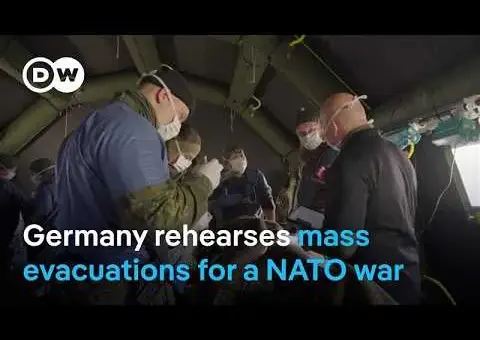
Germany Tests War Readiness: Can It Evacuate 1,000 Wounded NATO Soldiers Daily?
Germany recently held its largest medical exercise in decades, Quadriga 2026, to test its capacity to evacuate up to 1,000 wounded NATO soldiers daily from the alliance's eastern flank. The drill simulated real-world conditions, from battlefield injuries in Lithuania to hospital transfers across Germany, exposing both strengths and critical weaknesses in the nation's war readiness.
Trump’s NATO Threats Spark Global Unease, Ex-Envoy Warns
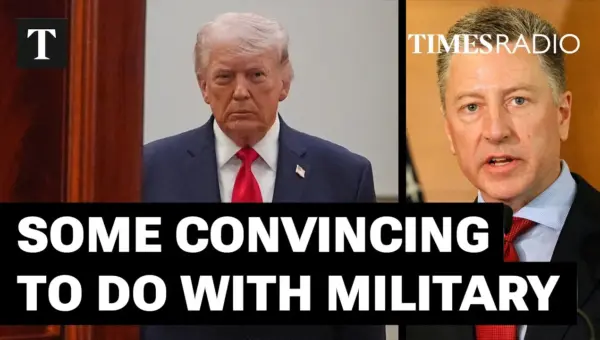
Former Ambassador Kurt Volker warns that President Trump's questioning of NATO and the ongoing conflict with Iran are creating global instability. The war's unclear outcome benefits Russia and potentially China, while straining U.S. relations with European allies. Volker suggests Trump's NATO threats are a tactic to pressure allies, but legal and political hurdles make withdrawal difficult.