US Escalates Iran War, Trump Hints at Swift End
The US military has intensified its offensive against Iran with record strikes, even as President Trump suggests the conflict could end soon. Defense Secretary Pete Hegseth highlighted the destruction of Iran's navy as a key objective, while Tehran vows to block oil exports if attacks continue. Expert analysis reveals potential divergence in war aims between the US and Israel.

US Intensifies Strikes on Iran as War Enters Critical Phase
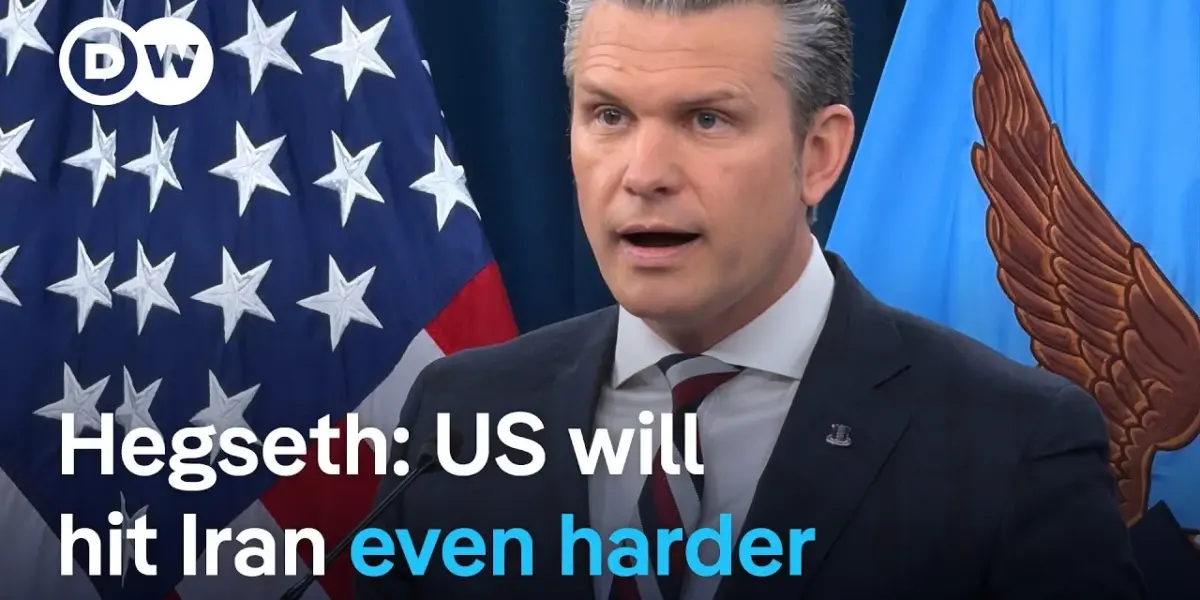
Washington D.C. – The United States military has dramatically escalated its offensive against Iran, with Defense Secretary Pete Hegseth announcing Tuesday would mark the most intense day of strikes to date in Operation Epic Fury. The commitment to continued, heightened military action comes as President Donald Trump offered a seemingly contradictory assessment, suggesting the conflict could conclude “very soon.” The dual messaging underscores the complex and evolving nature of the war, now in its eleventh day.
Naval Power: A Top Priority for US Forces
Speaking alongside top US General Dan Kaine, Hegseth detailed the strategic objectives, highlighting the destruction of Iran’s naval capabilities as a primary goal. “Today will be yet again our most intense day of strikes inside Iran. The most fighters, the most bombers, the most strikes, intelligence more refined and better than ever,” Hegseth stated, emphasizing the increasing sophistication and intensity of the American military campaign.
General Kaine corroborated the focus on Iran’s navy, with footage released by the US military showing Tomahawk missiles being launched. The transcript indicates that a significant portion of Iran’s naval fleet, estimated at 51 ships, has already been sunk, resting on the seabed.
Conflicting Signals on War’s Duration
President Trump’s public statements have presented a mixed picture regarding the war’s timeline. On Monday, he declared, “We’re achieving major strides toward completing our military objective, and some people could say they’re pretty well complete. We’ve wiped every single force in Iran out very completely.” He later elaborated in a press conference, suggesting the war could be over in “days” and “very soon,” though without providing specific details.
This optimistic outlook on the conflict’s duration, however, contrasts sharply with the ongoing military operations and threats. Trump has previously warned Iran of “death, fire, and fury” if it continues to disrupt oil exports through the Strait of Hormuz. Following his remarks about the war’s potential swift conclusion, oil prices, which had surged past $100 a barrel, saw a notable dip, falling to nearly $90.
Iran Vows Retaliation and Control Over Oil Exports
Tehran has pushed back against the US narrative, with Iran’s Revolutionary Guard (IRGC) issuing a defiant statement on state television. The IRGC spokesperson declared that Iran would determine the war’s end and vowed to prevent “even one liter of oil to leave the region” if attacks on its territory persist. The Strait of Hormuz, through which approximately one-fifth of the world’s oil passes, remains effectively closed due to the conflict, contributing to soaring global fuel prices.
Trump reinforced his stance on oil security via his Truth Social platform, warning, “If Iran does anything that stops the flow of oil within the Strait of Hormuz, they will be hit by the United States of America 20 times harder than they have been hit thus far.”
Shifting Leadership and Divergent War Aims
The conflict unfolds against a backdrop of political change within Iran, with large rallies held in support of Ayatollah Ali Khamenei’s son, Mostaba, who has reportedly been appointed the new supreme leader. President Trump expressed disappointment with this succession, suggesting it would perpetuate existing problems.
Dr. Sussanab-Ranchar Jamie, a senior lecturer in modern Middle Eastern history at the University of St. Andrews, provided expert analysis on the mixed messaging and strategic divergences. “It seems that one of the key theaters of the war is starting to become the Strait of Hormuz,” she observed, noting that Iran’s actions are more about messaging and creating uncertainty in insurance markets than a physical blockade.
Dr. Jamie also pointed to a lack of clarity regarding US war aims. “We haven’t seen much in terms of attacks on Iran’s nuclear installations… We still haven’t seen anything comparable to that yet,” she stated, contrasting the current operation with past actions. The question of whether the US aims to bring down the Islamic Republic politically remains ambiguous, particularly as Trump has expressed a preference for working with figures within the existing system rather than supporting a complete regime change, a stance that appears to diverge from Israel’s objectives.
Israel’s Position and the Unresolved Nuclear Question
A significant point of contention appears to be the alignment of war aims between the US and Israel. “The Israelis have never really claimed that they’re after some form of a a moderate Islamic Republic,” Dr. Jamie noted, suggesting Israel’s objective is the outright dismantling of the current regime. The lack of coordinated strategy on key objectives, such as targeting nuclear installations, remains a notable feature of the conflict.
Both nations have called for popular uprisings within Iran, but there is no clear indication that such movements are materializing on the scale needed to influence the conflict’s outcome.
Future Outlook: Oil Markets and Regional Stability
The immediate future of the conflict appears heavily tied to the situation in the Strait of Hormuz and its impact on global oil markets. While Trump’s statements have offered some relief to oil prices, the lack of concrete details leaves the situation volatile. Escorting tankers through the strait could alleviate economic pressure on the US to end the conflict quickly.
Long-term implications are significant. The conflict has moved Iran’s threats of striking American allies and bases from rhetoric to reality, potentially souring relationships with Gulf states. The unresolved Iran-Israel conflict, coupled with a potentially hardened Iranian regime if it survives, poses a continuing threat to regional stability.
Source: Iran war will go on for as long as Trump decides, says Hegseth | DW News (YouTube)

Related Articles
Trump’s Iran War Stumbles: Officials Admit Confusion
The Trump administration's strategy in its conflict with Iran is under fire for perceived confusion and a lack of understanding of complex geopolitical issues. Key figures have made contradictory statements, and the credibility of official pronouncements is being questioned amidst escalating tensions.


US Launches Intense Airstrikes Against Iran, Oil Prices Fluctuate
The U.S. military launched its most intense day of airstrikes against Iran, targeting over 5,000 sites with increased fighter jets and bombers. The operation aims to counter Iran's threats to oil tankers and regional stability, which led to significant oil price fluctuations. Despite the U.S. action, Iran reportedly continues to launch attacks on neighboring countries.


US Strikes Iran; Gas Prices Surge Amid Strait of Hormuz Tensions
U.S. forces have launched intensive strikes on Iranian ships near the Strait of Hormuz, escalating tensions and causing global oil prices to surge. President Trump issued a stern warning to Iran against disrupting shipping, while rising gas prices impact American drivers, farmers, and businesses. The conflict's duration and economic fallout remain key concerns.