US Escalates Iran Strikes Amid Casualty Surge, Oil Price Volatility
The U.S. has intensified its military strikes in Iran amidst rising U.S. service member casualties and significant oil price volatility. Conflicting messages from the administration on the war's endgame and timeline are fueling uncertainty, while regional tensions and market reactions to the conflict in the Strait of Hormuz remain critical.

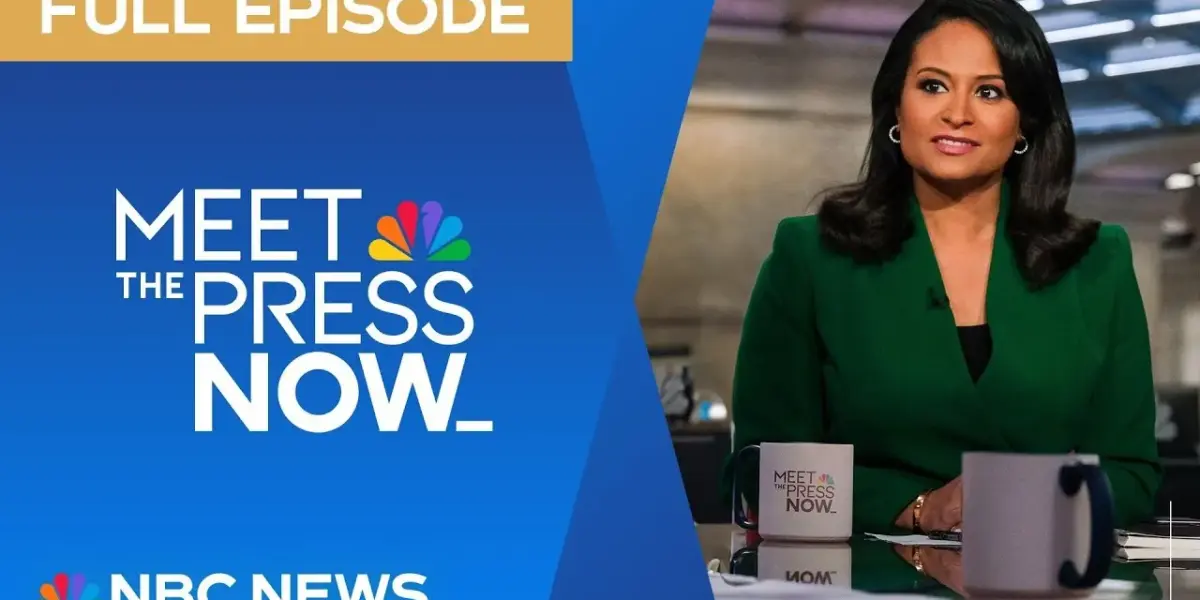
US Intensifies Strikes on Iran, Reports 140 Service Member Injuries
The United States has ramped up its military actions against Iran, with Defense Secretary Hegseth stating that the current day would be the “most intense day of strikes inside Iran” to date, involving the highest number of fighters, bombers, and refined intelligence. This escalation comes as the Pentagon reports approximately 140 U.S. service members have been wounded since the commencement of Operation Epic Fury, renewing questions about the administration’s strategy and endgame in the ongoing conflict.
Conflicting Messages on War’s Endgame Fuel Uncertainty
Amidst the escalating military operations, conflicting messages have emerged regarding the duration and objectives of the U.S. involvement. While President Trump has described the war as “very complete,” Defense Secretary Hegseth indicated that the current actions are “only just the beginning.” White House Press Secretary Karoline Leavitt clarified that President Trump will ultimately determine when Iran is in a position of “unconditional surrender,” a definition that offers the President maximum flexibility in deciding the war’s continuation or conclusion. The administration has also suggested that the end of the war is linked to Iran no longer posing a credible threat to the United States and its allies, though the specifics of achieving this objective remain open to interpretation.
“President Trump will determine when Iran is in a place of unconditional surrender, when they no longer pose a credible and direct threat to the United States of America and our allies.”
This ambiguity surrounding the war’s timeline and ultimate goals has raised concerns among the public and political observers, particularly as the number of U.S. casualties rises. The initial timeline suggested by the President, ranging from four to six weeks, appears to be evolving, leading to a lack of clear public understanding about the expected duration of U.S. involvement.
Oil Market Turmoil Amidst Strait of Hormuz Tensions
The ongoing conflict has significantly impacted global oil prices, which have experienced considerable volatility. The situation has been further complicated by mixed signals regarding the flow of oil through the critical Strait of Hormuz. Energy Secretary Chris Wright initially posted on social media that the U.S. Navy had successfully escorted an oil tanker through the Strait, a statement that was quickly deleted and subsequently clarified by White House Press Secretary Karoline Leavitt, who confirmed that no such escort had taken place.
President Trump has issued stern warnings on social media, stating that if Iran interferes with oil flow in the Strait of Hormuz, it will face severe retaliation. Iran’s Revolutionary Guard has responded defiantly, vowing to prevent any oil exports from the region until U.S. and Israeli strikes cease. These competing claims and threats have contributed to the market’s uncertainty, with oil prices currently around 25% higher than before the conflict began, and gasoline prices up approximately 20% on average.
U.S. Casualties and Battlefield Developments
Courtney Kube, NBC News Senior National Security Correspondent, reported that the day’s operations were expected to be the most intense yet, with a potential increase in manned aircraft conducting strikes as U.S. and Israeli forces push further into Iran. Regarding casualties, Kube detailed that out of the 140 wounded service members, the majority (108) have already returned to duty, though at least eight remain seriously injured. A significant portion of these injuries are believed to have stemmed from initial Iranian missile and drone barrages, with potential for delayed-manifesting injuries like traumatic brain injuries.
The transcript also touched upon a controversial incident involving a strike on an elementary school in southern Iran on the first day of the war. President Trump suggested Iran might have used a Tomahawk missile on its own school, a claim that other officials did not corroborate. Kube noted that Iran does not possess Tomahawk missiles, and the U.S. military has advanced capabilities to determine the origin of such strikes, leaving the exact cause of the school bombing under investigation.
Regional Alliances and International Reactions
Keir Simmons, NBC News Chief International Correspondent, discussed the complex role of Gulf Cooperation Council (GCC) countries. While these nations host U.S. bases, they have historically been hesitant to engage in offensive actions. Simmons indicated that these countries are increasingly frustrated with Iran but are wary of being drawn further into a regional conflict. Senator Lindsey Graham’s call for greater GCC military involvement was described as potentially unhelpful by Simmons, given the delicate situation and the risk of wider escalation.
The relationship between the U.S. and Israel regarding broader objectives in the region was also questioned. Simmons highlighted differing ambitions, citing Israeli strikes on Iranian oil infrastructure that reportedly frustrated the U.S., which was aiming to protect it. The ongoing Israeli military operations in Lebanon were also mentioned as a point of consideration.
Congressional Funding and War Powers Debate
Republican Speaker of the House Mike Johnson indicated that supplemental funding for the military is “inevitable,” though the timetable remains undetermined. However, securing bipartisan support in the Senate for such a bill could be challenging, with Senate Minority Leader Chuck Schumer calling for public hearings into the war.
Senator Roger Marshall (R-Kansas) defended the President’s actions, citing the War Powers Act which allows for 60 days of leeway following notification to Congress. He expressed support for the President’s goals of “annihilating Iran’s missile systems, their nukes, their navy, and they’re unable to fund or arm terrorists.” While Marshall expressed a desire to avoid ground troops, he did not rule out various options. The conversation also briefly touched upon potential sanctions relief related to Russia and the ongoing debate surrounding election integrity legislation.
Looking Ahead: The Evolving Conflict and Its Ramifications
As the conflict in Iran continues, all eyes remain on the White House for clearer articulation of the administration’s strategic objectives and exit strategy. The fluctuating oil prices, the ongoing U.S. military operations, and the potential for regional escalation present significant challenges. Future developments will likely hinge on Iran’s response, the effectiveness of U.S. and allied military actions, and the administration’s ability to navigate domestic and international pressure for de-escalation and a clear resolution.
Source: Meet the Press NOW — March 10 (YouTube)

Related Articles


US Service Members Hurt in Iran War; Trump Issues Mine Threat
At least 140 U.S. service members have been injured in the ongoing conflict with Iran, the Pentagon confirmed. President Trump issued a stern warning against Iran mining the Strait of Hormuz, threatening unprecedented military consequences. Meanwhile, a manhunt is underway in Canada after a shooting at the U.S. Consulate in Toronto.
US Claims Civilian Casualty Avoidance: A Contested War Record
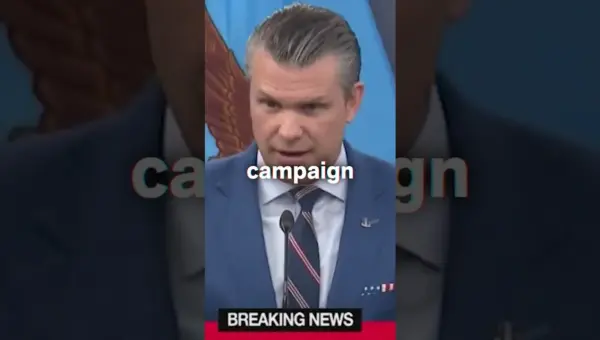
Pete Hegseth claims the US is unparalleled in avoiding civilian casualties, but recent events and historical context suggest a more complex and contested reality. The article delves into these claims, examining specific incidents and the broader implications for U.S. foreign policy and global standing.

President’s Iran Bombing Claim Sparks Fierce Media Scrutiny
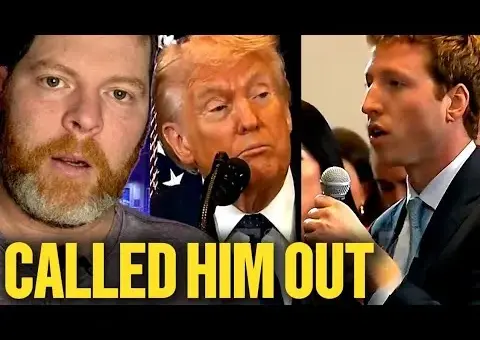
A journalist's direct challenge to the President's claim about Iran bombing its own school with a Tomahawk missile exposes a potential pattern of misinformation. The analysis explores the implications for international trust, domestic impact, and the crucial role of independent media in seeking truth.