US Escalates Iran Assault: War Extends Beyond Initial Timelines
The United States is signaling a prolonged military campaign against Iran, extending beyond initial four to six-week estimates. Ambassador John Bolton stated the operations will continue until key Iranian military and nuclear targets are destroyed, aiming to destabilize the regime. This extended engagement carries significant geopolitical and economic implications for regional stability and global energy markets.

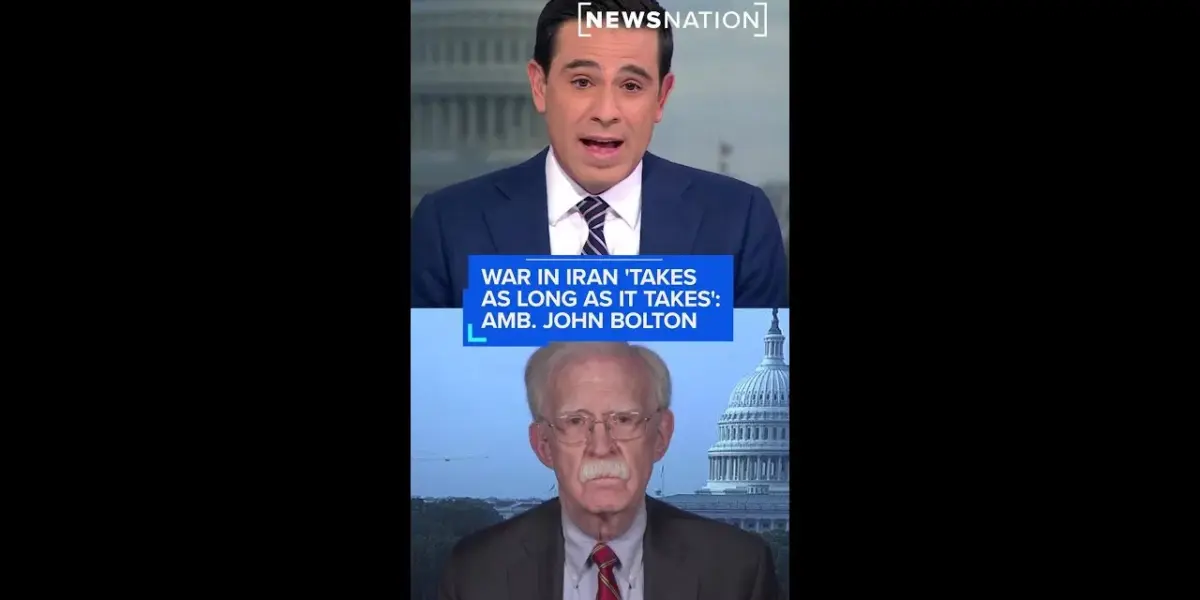
US Signals Extended Military Campaign Against Iran
The United States appears ready to continue its military actions against Iran for an extended period, moving beyond initial expectations of a short, swift operation. This prolonged strategy suggests a deeper objective than simply degrading immediate threats. The administration has indicated that the campaign, which began with a focus on striking specific targets, may last longer than the initially discussed four to six weeks.
Motivations Behind the Prolonged Campaign
Ambassador John Bolton, speaking on NewsNation, suggested that the timeline for military operations is not fixed. He stated that the strikes will continue regardless of ongoing negotiations or diplomatic efforts. The goal is to systematically dismantle key elements of Iran’s military and security apparatus. This includes targeting the Revolutionary Guard, the Quds Force, and the Basij militia, along with their affiliates.
The scope of the operation is also expanding. Damage assessments from initial bombings may reveal new facilities. Intelligence gathered from imagery could point to previously unknown sites. These discoveries could lead to further strikes, extending the duration of the campaign. The focus is on Iran’s nuclear program, ballistic missile development, and the production of missiles and drones. Additionally, the U.S. aims to neutralize threats to maritime security, such as anti-ship missiles and fast boats capable of mining the Strait of Hormuz.
Amb. Bolton’s Perspective on Objectives
“We just keep systematically destroying the Revolutionary Guard, uh, the Quds force, the Besiege militia, their two big subsidiaries, the nuclear program, the ballistic missile program, the production facilities for missiles and drones, uh, and and certainly uh anti-ship missiles and other devices, swift boats and and so on that can mine the straight of Hormuz. We just keep doing it until everything uh we can find has been destroyed.”
Bolton emphasized a ‘take as long as it takes’ approach. This suggests that the military objective is not time-bound but rather condition-bound. The operations will continue until all identified targets are destroyed. The ultimate hope is that this sustained pressure will destabilize the Iranian regime from within, leading to its collapse. Bolton believes signs of this instability are already emerging at the highest levels of government, though he acknowledges there is still a significant way to go.
Addressing Public Impatience
The ambassador addressed potential public impatience with the ongoing conflict. He used the analogy of children in a car asking “Are we there yet?” to illustrate that the mission is not yet complete. This highlights the administration’s commitment to seeing the campaign through to its intended conclusion, even if it requires a longer commitment than initially anticipated.
Global Impact and Future Scenarios
This extended military engagement in Iran carries significant geopolitical implications. By targeting the Revolutionary Guard and its associated forces, the U.S. aims to cripple Iran’s ability to project power regionally and develop advanced weaponry. The focus on the Strait of Hormuz also underscores the strategic importance of this vital waterway for global energy transport. Disruptions or threats to this chokepoint could have far-reaching economic consequences for oil-producing nations and importing countries alike.
The potential destabilization of the Iranian regime, as hoped for by Bolton, could lead to a power vacuum. This could create opportunities for internal reform or, conversely, lead to increased regional instability as various factions vie for control. Neighboring countries, such as Saudi Arabia, the UAE, and Israel, have long viewed Iran’s regional influence and nuclear ambitions with concern. A weakened or collapsed Iranian state could alter regional alliances and security calculations dramatically. However, such a scenario also risks empowering extremist groups or leading to prolonged internal conflict within Iran.
Historical Context
The current U.S. actions can be seen in the context of decades of strained relations between the U.S. and Iran. Following the 1979 Iranian Revolution, diplomatic ties were severed, and mutual suspicion became the norm. U.S. policy has often aimed to contain Iran’s influence and prevent it from acquiring nuclear weapons. Previous administrations have employed sanctions, diplomatic pressure, and covert actions. This current military campaign represents a significant escalation of direct U.S. military involvement, moving beyond the more indirect methods used in the past.
Economic Leverage and Dependencies
While the transcript focuses on military actions, economic factors are intrinsically linked. Sanctions have long been a tool used by the U.S. and its allies to pressure Iran. The effectiveness of these sanctions is debated, but they aim to limit Iran’s revenue and its ability to fund its military programs. Conversely, Iran’s oil exports are a significant factor in global energy markets. Any further disruption to Iran’s economy or its ability to export oil, whether through direct action or regime instability, would impact global energy prices and supply chains. The control over the Strait of Hormuz is a critical element, as approximately 20% of global oil consumption passes through it daily.
Future Outlook
The ‘as long as it takes’ approach signals a long-term commitment from the U.S. One scenario is the gradual degradation of Iran’s military capabilities, leading to a negotiated settlement or internal reform. Another is the complete collapse of the regime, with unpredictable consequences for regional stability. A less likely scenario involves a protracted conflict that draws in other regional actors or leads to significant international backlash against the U.S. The success of this strategy will likely depend on a combination of military effectiveness, the resilience of the Iranian regime and its population, and the broader geopolitical response from international powers.
Source: War in Iran 'takes as long as it takes': Amb. John Bolton (YouTube)

Related Articles

G7 Leaders Clash Over Trump’s Iran Policy Amidst Global Crisis
World leaders at a G7 meeting voiced sharp criticism of Donald Trump's Iran policy, citing concerns over the Strait of Hormuz and a looming global recession. Disagreements emerged regarding strategy and accusations of misinformation, highlighting deep divisions.

Trump’s Oil Market Influence Wanes Amidst Global Instability
Former President Donald Trump's attempts to influence oil markets have reportedly failed, raising concerns about his diminishing credibility. Analysts compare his approach to "the boy who cried wolf," suggesting a loss of trust among market participants. The discussion also touched upon the use of personal devices for government communication and the vetting of political candidates amidst controversial remarks.


Trump’s War Talk Distracts as World Burns
As global conflicts escalate and economic pressures mount, Donald Trump's focus on past grievances and symbolic wins overshadows pressing issues. His rhetoric, including questionable claims about ending wars and strategic use of terminology to bypass Congress, raises concerns about leadership and national priorities.