US Economy Faces Triple Threat: War, AI, and Wall Street Cracks
The U.S. economy faces a critical juncture, threatened by escalating geopolitical conflict, rapid AI-driven job market changes, and a brewing crisis in private credit markets. These factors could collectively challenge economic growth and the dollar's global standing.

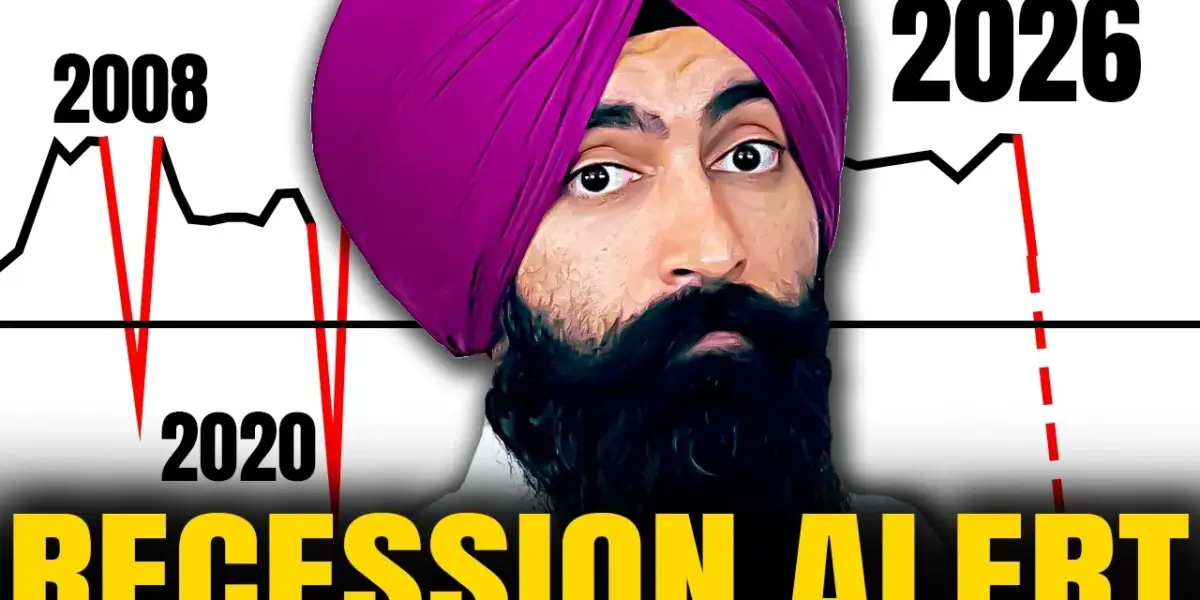
US Economy Navigates Multifaceted Risks: War, AI, and Financial Sector Strains
The United States economy is currently confronting a confluence of significant challenges, including geopolitical conflict, rapid advancements in artificial intelligence, and growing instability within the private credit market. These interwoven factors are raising concerns about the nation’s economic trajectory, with some analysts questioning the potential for a recession in the coming years.
Wall Street’s Private Credit Woes Escalate
A significant development on Wall Street involves the struggles within the private credit sector. Major firms such as BlackRock, Morgan Stanley, and Blackstone have reportedly begun restricting investor withdrawals from their private credit funds. This action stems from substantial losses these funds have incurred, particularly from loans made to businesses with negative cash flow. Reports indicate that as much as 40% of businesses borrowing from these funds were operating at a loss. The situation intensified in late 2025 with several high-profile bankruptcies, leaving hedge funds unable to recoup loan principal and interest payments. This has led to a liquidity crisis, forcing firms like Blackstone and subsequently Blue Owl and BlackRock to halt redemptions to prevent systemic collapse. This mirrors concerns reminiscent of the lead-up to the 2008 financial crisis, where isolated issues in hedge funds eventually contributed to a broader market meltdown. The potential for contagion to the traditional banking sector, which has significant exposure to these private credit markets, remains a key area of concern.
Geopolitical Tensions and Oil Price Shocks
The escalating conflict in the Middle East, specifically the United States’ involvement with Iran, has introduced another layer of economic uncertainty. The blockade of the Strait of Hormuz, a critical chokepoint for global oil transport accounting for approximately 20% of the world’s oil supply, has triggered a surge in oil prices. Analysts from Moody’s have warned that if oil prices remain at elevated levels, such as $100 per barrel, gasoline prices could approach $4 per gallon, leading to accelerated inflation. This inflation erodes consumer purchasing power, potentially impacting consumer spending, Gross Domestic Product (GDP), and employment. While increased defense spending associated with wartime can stimulate economic activity by boosting government expenditure and creating jobs in the defense sector, it also exacerbates the nation’s already substantial national debt. In 2025, interest payments on the national debt reportedly surpassed the entire military budget. The need for the government to finance this increased spending, without raising taxes, will likely necessitate further borrowing and potentially money printing, which could devalue the dollar and fuel inflation.
AI’s Accelerating Impact on the Labor Market
Artificial intelligence (AI) presents a third major economic force, poised to reshape the job market at an unprecedented pace. A study by MIT suggests that AI could already replace 11.7% of the U.S. labor market, potentially impacting wages totaling $1.2 trillion across sectors like finance, healthcare, and professional services. Unlike previous technological revolutions, which allowed decades for adaptation, the current AI advancements, exemplified by the rapid adoption of tools like ChatGPT since its release in late 2022, are compressing the timeline for adjustment. Experts predict significant job displacement in the short term, particularly for white-collar roles, as businesses leverage AI to enhance productivity and reduce operational costs. While AI is expected to create new jobs in the long term, the immediate challenge lies in the workforce’s ability to adapt and acquire new skills. This rapid shift could lead to decreased consumer spending if incomes do not keep pace with productivity gains, potentially acting as a drag on economic growth.
The Dollar’s Reserve Status Under Scrutiny
The interplay of these factors raises fundamental questions about the U.S. dollar’s status as the world’s primary reserve currency. The dollar’s global dominance, established after World War II, relies heavily on international confidence in its value and the stability of the U.S. economy. However, increasing geopolitical instability, significant government spending and debt, and the potential for inflationary pressures could erode this confidence. Concurrently, emerging economic blocs, such as the BRICS nations (Brazil, Russia, India, China, South Africa), are actively working to strengthen their own currencies and reduce reliance on the U.S. dollar for international trade, often by increasing their gold reserves. A sustained loss of faith in the dollar could lead to its devaluation, driving up import costs and impacting the broader economy in ways not seen in generations.
Market Impact and Investor Considerations
The convergence of these economic headwinds creates a complex and uncertain outlook. While the technical definition of a recession involves two consecutive quarters of economic contraction, the current environment suggests a heightened risk. The historical GDP growth figures, from $21.4 trillion in 2020 to an projected $31.1 trillion in 2025, now face potential reversal depending on how these challenges unfold. Investors are advised to consider strategies that can navigate this volatility.
What Investors Should Know:
- Diversification is Key: In times of uncertainty, diversifying across asset classes is crucial. Gold, historically a safe haven, may see increased demand. Broad market exposure through ETFs like the S&P 500 (e.g., SPY) offers a way to invest in the largest U.S. companies.
- Defensive Strategies: Dividend-paying stocks and funds (e.g., SCHD) can offer a more stable income stream and potentially greater resilience during economic downturns.
- Long-Term Perspective: The principle of ‘Always Be Buying’ (ABB), a systematic approach to investing regularly regardless of market conditions, has historically proven effective for long-term wealth building.
- Sector-Specific Opportunities: Geopolitical events may create opportunities in sectors like defense (e.g., ITA ETF), while the AI revolution will likely spur investment in technology and related industries.
- Risk Management: It is vital to conduct thorough due diligence, as all investments carry risk, and past performance is not indicative of future results.
The economic landscape is shifting rapidly. Understanding these interconnected forces—geopolitical conflict, AI disruption, financial sector stress, and currency dynamics—is essential for investors seeking to protect and grow their capital in the coming years.
Source: Is The US About To Enter A Recession In 2026? (YouTube)

Related Articles

G7 Allies Clash Over Iran War Strategy, Urge Focus on Russia
G7 foreign ministers met in Paris, revealing deep divisions over the U.S. war with Iran. European allies urged the U.S. to pressure Russia, linking its actions to the conflict and fearing support for Ukraine will wane.

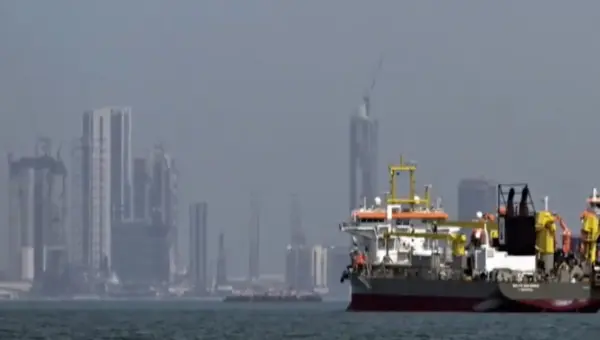
Iran Blocks China Ships, Exposing Beijing’s Weak Grip
Iran's recent decision to block Chinese ships at the Strait of Hormuz is exposing the limits of Beijing's influence in the Middle East. This action is causing delays and cancellations for Chinese manufacturers, turning a perceived geopolitical win into an economic strain.
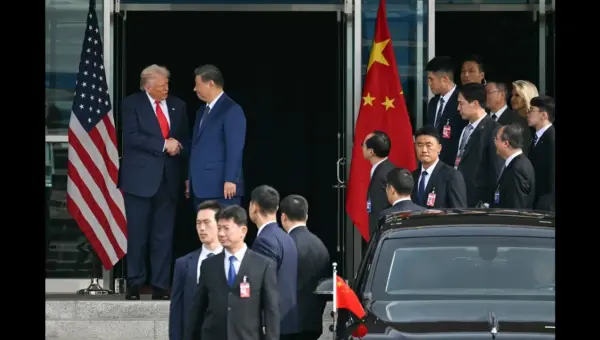
Trump’s “Walk Away” Tactic Signals Tougher Stance on China
Retired Air Force Brigadier General David Stillwell believes President Trump's strategy of being willing to walk away from negotiations puts pressure on China. This tactic, combined with US global actions and strengthened alliances, signals a more assertive American foreign policy.