US Eases Sanctions on Russian Oil Amid Global Supply Concerns
The United States has temporarily lifted sanctions on Russian oil already at sea to bolster global supply amid rising prices and tensions in the Strait of Hormuz. Experts also discuss China's support for Iran and new domestic laws impacting ethnic minorities.

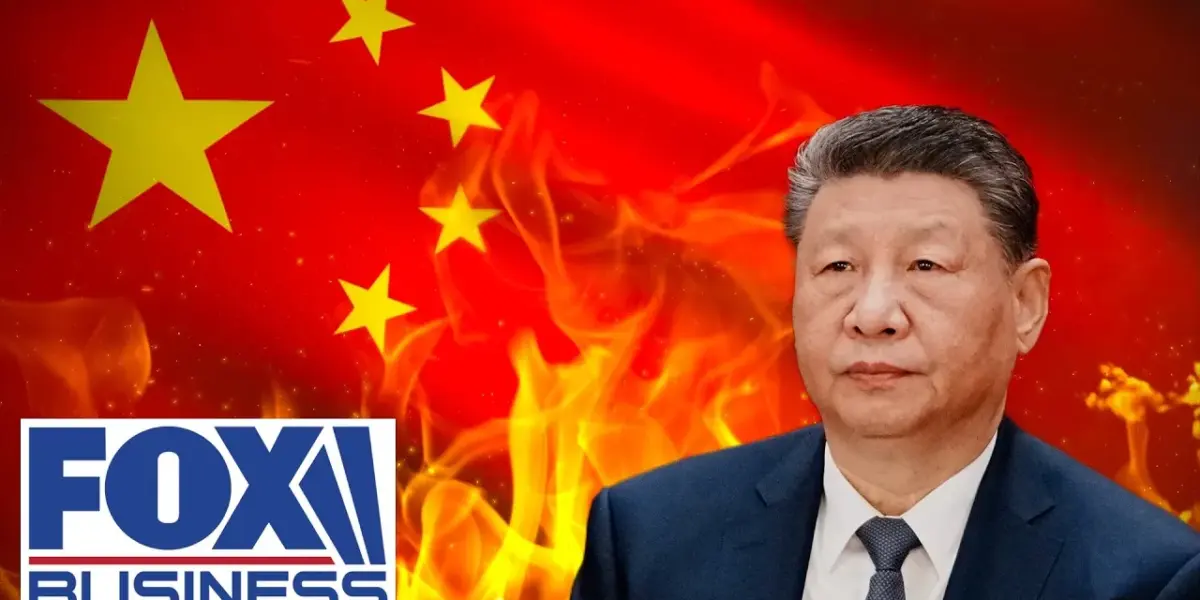
US Temporarily Lifts Sanctions on Russian Oil to Boost Global Supply
In a significant move aimed at alleviating global oil market pressures, the United States has temporarily lifted sanctions on Russian oil that is already at sea. This decision comes as oil prices hover above $90 a barrel, influenced by geopolitical tensions in the Persian Gulf and Iran’s threats to disrupt shipping lanes.
Millions of Barrels Released to Market
Estimates suggest that approximately 124 million barrels of Russian oil, currently in transit across 30 different locations, will now be permitted for sale on the open market. The U.S. Treasury Secretary defended the action as a narrowly tailored, short-term measure designed to increase global supply without significantly benefiting the Russian government, which derives most of its energy revenue from taxes at the point of extraction.
“This is a narrowly tailored short-term measure that applies only to oil already in transit and will not provide significant benefit to the Russian government.”
The U.S. is also temporarily waiving the Jones Act, a regulation requiring U.S.-built, owned, and operated ships for goods movement between American ports. The Oil and Gas Association suggests this waiver could have a greater impact on prices than the coordinated global release of 400 million barrels from emergency reserves. The addition of Russian oil is estimated to provide a five to six-day supply buffer to the market.
Strait of Hormuz Tensions Escalate
The situation in the Persian Gulf remains volatile, with Iran continuing to target ships and threatening to shut down the Strait of Hormuz, a critical chokepoint for global oil transit. The Department of Defense has stated that Iran possesses the capability to harm friendly forces and commercial shipping, and that Iran is currently the sole obstacle preventing unimpeded traffic through the strait.
Iran’s new Supreme Leader has indicated an intention to use the Strait of Hormuz as leverage to maintain power. This escalating tension is a primary driver of the current high oil prices, with traders closely watching for any developments that could impact the flow of oil through the strategic waterway.
China’s Role in Supporting Iran
Gordon Chang, an expert on China and Iran, highlighted China’s ongoing role in financially supporting Iran through oil purchases. Chang stated that China continues to receive oil shipments from the Persian Gulf, even as other tankers face disruptions. He argued that the U.S. should exert pressure on China-bound tankers, asserting that if Iran is closing the Strait to U.S. tankers, China should not be allowed to benefit.
While this action could potentially push oil prices higher in the short term, Chang suggested it might also shorten the conflict by distancing China from Iran.
China’s New Law and Human Rights Concerns
Chang also addressed a new law recently passed in China, which threatens ethnic minorities who do not conform to the country’s common language and culture. He described the law as largely symbolic, codifying existing policies and, according to Uyghur accounts, effectively “codifying genocide.” Chang believes China’s actions align with the definition of genocide under international convention.
Internal Instability Within China
Despite the assertive foreign policy, Chang expressed skepticism about the stability of the Communist Party’s rule within China. He pointed to evident turmoil between civilian and military leadership during recent events in Beijing, citing extensive purges that have left the military in disarray. This internal disarray, he posits, may temporarily preclude large-scale military operations, such as an invasion of Taiwan’s main island, until the command structure is reconstituted.
However, Chang cautioned that Chinese forces could still potentially seize smaller islands close to the mainland without significant leadership. The current situation, he concluded, represents positive news in that a full-scale amphibious assault on Taiwan appears to be off the table for the immediate future.
What to Watch Next
All eyes will remain on the Strait of Hormuz and the ongoing geopolitical maneuvers between Iran, the U.S., and China. Additionally, the impact of the temporarily lifted sanctions on Russian oil and the Jones Act waiver will be closely monitored for their effect on global energy markets. Internally, developments within China’s military and political leadership will continue to be a key focus for geopolitical analysts.
Source: 'CODIFIES GENOCIDE': Gordon Chang makes EXPLOSIVE accusation over China’s new law (YouTube)

Related Articles


US Must Block China’s Tech Access for Security
US national security experts are raising alarms about China's access to advanced AI chips, arguing it threatens strategic advantages. This, coupled with charges against Chinese entities for fentanyl precursor sales and a ban on foreign routers, signals a growing effort to prioritize security over business ties.
Iran Blocks China Ships, Exposing Beijing’s Weak Grip
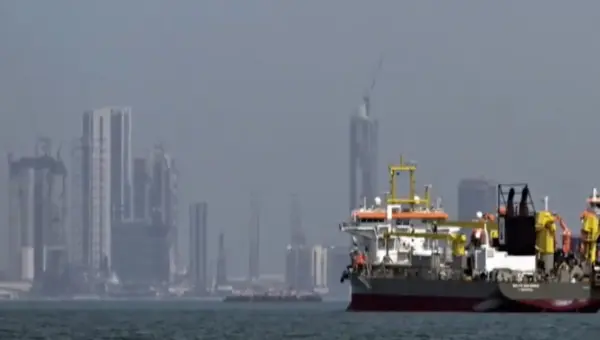
Iran's recent decision to block Chinese ships at the Strait of Hormuz is exposing the limits of Beijing's influence in the Middle East. This action is causing delays and cancellations for Chinese manufacturers, turning a perceived geopolitical win into an economic strain.
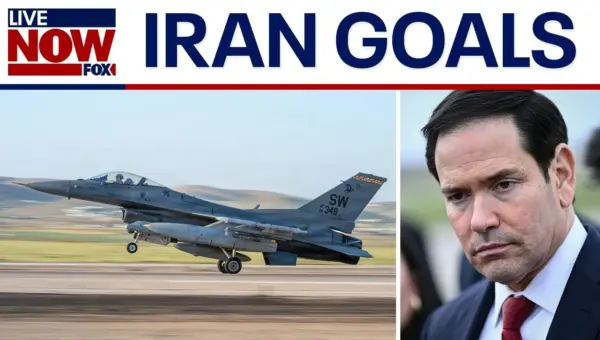
Rubio: US Can Achieve Iran War Goals Without Troops
Senator Marco Rubio outlined a strategy to counter Iran without deploying U.S. ground troops, focusing on weakening the regime and enhancing maritime security. He also criticized Cuba's economic system and expressed concerns about West Bank violence.