US Drone ‘Lucas’ Sparks Russian Panic With Unjammable Tech
The US drone 'Lucas' is causing alarm in Russia due to its potential for unjammable satellite communication. This low-cost, mass-producible weapon challenges Russia's reliance on GPS jamming, signaling a significant shift in drone warfare tactics and capabilities.

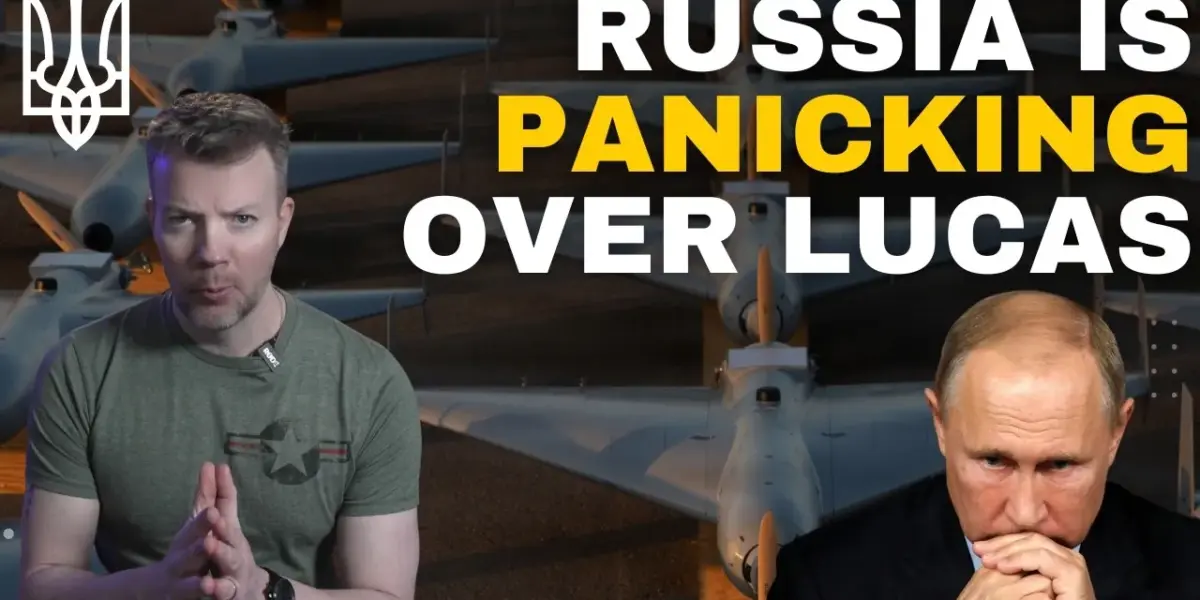
US Drone ‘Lucas’ Sparks Russian Panic With Unjammable Tech
A new American drone, dubbed ‘Lucas,’ has sent ripples of alarm through Russian military circles, not for its explosive payload alone, but for a critical technological advantage that threatens to undermine a cornerstone of Russia’s electronic warfare strategy. The Low-Cost Uncrewed Combat Attack System, or Lucas, represents a significant evolution in drone warfare, leveraging resilient satellite communication to overcome the jamming tactics that have become a hallmark of Russian operations.
The ‘Costco Version’ of Long-Range Strike
Developed by Spectre Works, Lucas is designed to be a mass-producible, expendable weapon system, starkly contrasting with the multi-million dollar price tags of traditional platforms like the MQ-9 Reaper. With an estimated unit cost of around $35,000, Lucas offers a “Costco version” of long-range strike capabilities, making it an economically viable option for deployment in large numbers. Open-source intelligence suggests the drone is approximately 10 feet long with an 8-foot wingspan and a maximum takeoff weight of around 180 pounds. Its versatility is highlighted by its launch capabilities, which include catapults, rocket-assisted systems, trucks, and even ships, as demonstrated in tests from the USS Santa Barbara.
A Direct Response to Iranian Design
Lucas reportedly saw its first combat deployment on February 28, 2026, during Operation Epic Fury, where US forces employed it against Iranian targets. The Pentagon did not shy away from framing this as a deliberate response, using a drone explicitly modeled on Iran’s own Shahed 136 design. The Shahed 136 has been a significant weapon in the Ukraine conflict, notorious for its ability to strike Ukrainian cities and infrastructure at scale. Its strategy relied on overwhelming air defenses with sheer volume, forcing Ukraine to expend scarce interceptor missiles and accept that some drones would inevitably reach their targets. Russia’s drone strategy in Ukraine was, in essence, a numbers game: produce enough cheap drones to exhaust Ukraine’s missile supply.
From Training Target to Combat System: Warp Speed Development
The development of Lucas appears to have been remarkably swift, a stark contrast to the often-glacial pace of traditional military acquisition. Spectre Works was already producing a Shahed-inspired target drone, the FLM136, for threat emulation training. This existing familiarity with the Shahed’s design, coupled with access to captured airframes from Ukraine, likely accelerated the transition from a training tool to a combat-ready weapon. Lucas was publicly unveiled in July of the previous year and saw combat less than eight months later – a timeline considered exceptionally fast in defense circles. This rapid development cycle is further underscored by the fact that the US government owns the intellectual property outright, allowing for potential scaling across multiple manufacturers.
The ‘Unjammable’ Satellite Link: Russia’s Nightmare Scenario
The true source of Russian consternation, however, lies not just in the drone’s design but in its communication system. Russian military bloggers have focused on the presence of a satellite communications terminal on the Lucas drone, suspecting it utilizes Star Shield, the military variant of SpaceX’s Starlink. This connectivity offers a potential solution to Russia’s most effective tactic against drones: GPS jamming and spoofing. Traditional GPS systems rely on relatively weak signals from satellites in medium Earth orbit, making them susceptible to jamming by ground-based electronic warfare systems that can overpower these signals. Russia has effectively employed this tactic in Ukraine, creating large zones of GPS denial and forcing Ukraine and its allies into a constant game of adaptation.
Star Shield vs. GPS Jamming: A New Physics Problem
Star Shield, like its commercial counterpart Starlink, operates differently. Its constellation of satellites is in low Earth orbit, much closer to the ground, and moves at high speeds. This means a Lucas drone isn’t communicating with a single, fixed satellite but is constantly handing off between multiple satellites in a dynamic network. Jamming a single satellite link is feasible, but disrupting an entire constellation’s footprint across a region, with satellites constantly changing position and geometry, presents a significantly more complex challenge. Furthermore, communication satellites generally transmit stronger signals than navigation satellites, and the closer proximity of Starlink satellites further enhances this advantage. The need for a jammer to overpower a stronger, closer signal is compounded by the sophisticated anti-jamming measures inherent in Star Shield, including spread spectrum modulation and encrypted, frequency-hopping communication protocols that change constantly.
Scale of the Challenge: Hundreds of Jammers Required
The sheer scale of the effort required to effectively jam Star Shield connectivity is daunting. A Chinese military simulation studying the Taiwan contingency suggested that suppressing Starlink services would require at least 935 synchronized airborne jammer drones, or up to 2,000 with lower-power jammers. This indicates that countering Star Shield is not a matter of deploying a few truck-mounted jammers but necessitates a fleet-scale, coordinated effort involving hundreds of platforms, each of which becomes a potential target for air defenses. The complexity is further amplified by encryption and key management systems that are top-secret, making it exceedingly difficult to spoof or jam the signal without direct access to the underlying cryptographic keys.
A ‘Genuine Revolution in Military Affairs’
The implications are profound. A Russian military blogger noted that American long-range strike weapons equipped with Star Shield could achieve precision strikes anywhere on the planet, comparable to the accuracy of FPV drones, effectively rendering GPS jamming obsolete. This capability has been described as a “genuine revolution in military affairs.” Moreover, Starlink’s software is continually evolving, with reports suggesting updates that allow terminals to derive positioning from multiple satellites, even if GPS is degraded. This adaptive capability means that even if Russia could mount a massive jamming effort, the drones might simply find alternative ways to navigate.
Why This Matters
The introduction of Lucas, particularly with its suspected Star Shield integration, signifies a critical shift in the drone warfare landscape. It directly challenges Russia’s established electronic warfare advantage, which has been a key enabler of its operations in Ukraine. By fielding a low-cost, mass-producible drone with resilient, unjammable connectivity, the US is forcing a re-evaluation of battlefield economics and tactics. Defenders are now faced with the prospect of intercepting swarms of drones that are far more difficult to disrupt, forcing them into costly defensive actions. This development validates Ukraine’s own experience with mass-produced drones and highlights the potential for such systems to fundamentally alter the character of warfare. The convergence of Ukraine’s battlefield lessons, American manufacturing scale, and advanced, resilient connectivity presents a strategic challenge that Russia was not prepared for.
Implications, Trends, and Future Outlook
The trend line is clear: the future of drone warfare will likely involve a combination of expendability, mass production, and robust, adaptable communication systems. Russia’s proposed solution of developing a multi-trillion dollar anti-satellite mega-project to counter Starlink satellites is, by most accounts, an unfeasible aspiration given its current economic standing. Instead, Russia faces the daunting task of developing a comprehensive suppression architecture that can survive and operate effectively against a highly resilient network. The US military’s ability to rapidly field new technologies like Lucas, coupled with its industrial capacity, suggests a continued evolution of capabilities that will outpace adversaries who rely on older doctrines and less adaptable technologies. The arms race in drone technology is accelerating, and systems like Lucas are setting a new benchmark.
Historical Context and Background
The current drone arms race echoes historical shifts in military technology, where innovations in one area have forced rapid adaptation across the board. The development of effective air defenses in World War I, for instance, led to the evolution of strategic bombing. Similarly, the widespread adoption of precision-guided munitions in the late 20th century spurred advancements in electronic warfare and countermeasures. The Shahed 136’s effectiveness in Ukraine demonstrated the disruptive potential of low-cost, mass-produced strike drones. Lucas represents the next logical step in this evolution, integrating lessons learned from both the battlefield and the laboratory into a weapon system designed for the realities of modern conflict. The rapid fielding of Lucas also highlights a potential shift in military acquisition culture, where speed and adaptability are becoming paramount, especially in response to peer or near-peer threats.
Conclusion: A New Era of Drone Warfare
The panic among Russian mill bloggers is not an overreaction; it is a rational response to a technological development that directly threatens a key pillar of their military doctrine. Lucas, with its combination of affordability, mass-producibility, and, crucially, its potential for unjammable satellite connectivity, represents a significant leap forward. It forces adversaries to confront a new set of challenges, moving beyond the relatively straightforward problem of GPS jamming to a far more complex and resource-intensive task of disrupting a dynamic, encrypted, and resilient network. As this technology proliferates, the battlefield will continue to evolve, demanding constant innovation and adaptation from all actors involved.
Source: The Drone That Has Russia Panicking (YouTube)

Related Articles


Ukraine Strikes Cripple Russian Oil Exports
Ukrainian drone strikes are crippling Russia's oil exports and damaging its economy, leading to falling domestic support for President Putin. The targeted attacks on refineries and terminals aim to cut off war funding and have significant geopolitical consequences.


US Military Pursues Secret Tech, Lunar Base Plans Emerge
Reports indicate the US military and defense contractors are exploring advanced technologies, possibly reverse-engineering unknown craft. Concurrently, NASA plans a lunar base, while millions of UAP-related files are allegedly deleted, raising transparency concerns. These developments could reshape global power dynamics.


Ukraine Gains AI Drone Edge: Russia’s Jamming Weakened
Ukraine is integrating advanced AI drone software from Shield AI, significantly boosting its capabilities against Russian jamming. The Hivemind system enables autonomous flight and swarm tactics, challenging traditional military doctrine and potentially weakening Russia's electronic warfare advantage.