US Dragged Into Iran War: Critics Slam Trump, Rubio Over Justifications
Critics are questioning the U.S. entry into military conflict with Iran, citing a lack of clear objectives and intelligence discrepancies. Revelations suggest Israel may have influenced the decision, leading to bipartisan backlash and concerns about American citizens stranded in the Middle East.

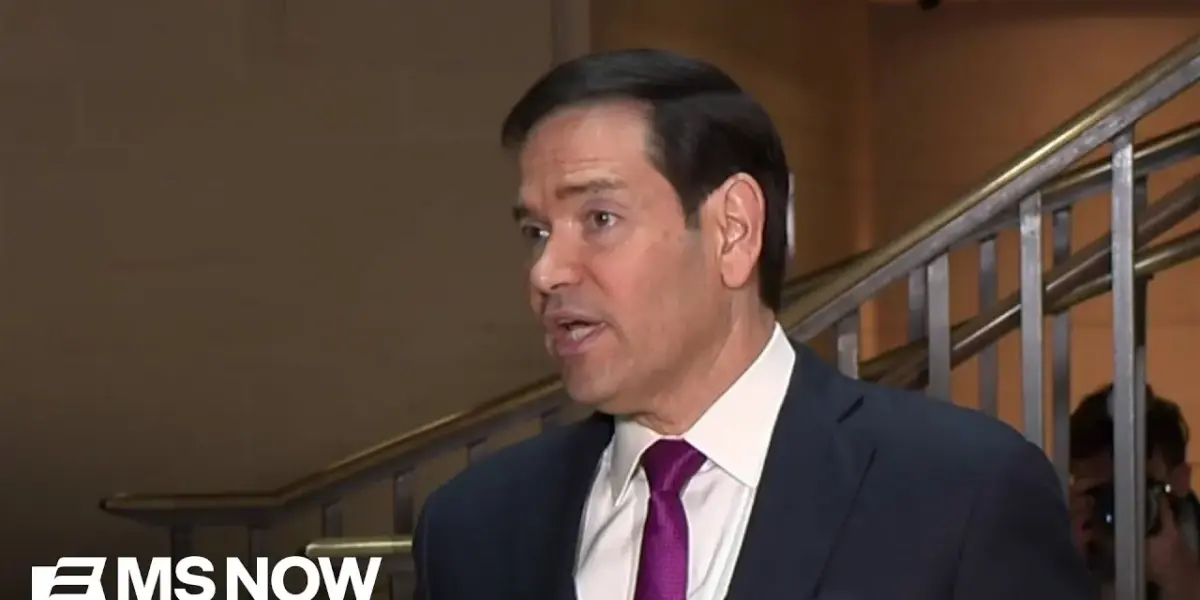
US Embroiled in Iran Conflict Amidst Political Turmoil
The United States finds itself embroiled in a burgeoning national security crisis and an intense political schism following the Trump administration’s decision to engage in military action against Iran. Critics argue that the nation was plunged into conflict without clear objectives, timelines, or metrics for success, raising serious questions about the decision-making process. Adding to the controversy, Donald Trump’s former Secretary of State has reportedly revealed that the U.S. was “essentially dragged into war by Israel.” This revelation has sent shockwaves through the political spectrum, prompting sharp criticism from both sides of the aisle.
Rubio’s Remarks Spark Outrage Over War Justification
Senator Marco Rubio’s comments suggesting the U.S. acted preemptively due to fears of an impending Iranian attack on Israel, which would then precipitate an attack on American forces, have drawn significant backlash. Top Democrats, including Senator Mark Warner, the top Democrat on the Senate Intelligence Committee, have vehemently disputed the notion of an imminent threat to the United States. “There was no imminent threat to the United States of America by the Iranians,” Warner stated. “There was a threat to Israel, and if we equate a threat to Israel as the equivalent of an imminent threat to the United States, then we are in uncharted territory.” This sentiment highlights a fundamental disagreement over the rationale for engaging in hostilities.
Internal Dissent and Bannon’s Scrutiny
Even within conservative circles, questions are being raised. Steve Bannon, a prominent figure on the right, expressed bewilderment and concern over the perceived lack of coordination and the administration’s rationale. “Our government’s job is not to look out for Iran or Israel, it’s to look out for us,” Bannon remarked, questioning the shift from Trump’s previous anti-war rhetoric. “What is happening to the man that I supported, you supported, the man that denounced what happened in Iraq, the man that said no more foreign wars, no more regime change, and we’re a year in, a year in, and we’re in another war? And we’ve got American troops being killed.”
Trump’s Defense and Intelligence Discrepancies
When directly questioned about whether Israel forced his hand, Donald Trump offered a cryptic response: “No. I might have forced their hand.” He elaborated that his administration was engaged in negotiations and that, in his opinion, Iran was poised to attack first. “It was my opinion that they were going to attack first. They were going to attack. If we didn’t do it, they were going to attack first. I felt strongly about that. It was my opinion.” However, this personal assessment stands in stark contrast to the intelligence assessments presented to Congress. Senator Warner, after receiving briefings from top national security officials, reiterated, “There was no imminent threat to the United States by the Iranians.” Reports from The New York Times, citing investigative correspondent Mark Mazzetti, suggest that the administration’s initial rationales for the strikes, including claims of Iran nearing a nuclear weapon or possessing missiles capable of hitting the U.S., were found to be unfounded and not supported by intelligence.
Escalating Crisis and Stranded Americans
The conflict shows no signs of de-escalation, with over 800 reported casualties across the Middle East, including six U.S. service members. The U.S. embassies in Saudi Arabia and Kuwait have been shuttered following Iranian attacks, and the U.S. consulate in Dubai was recently struck by a drone, though no injuries were reported. The Trump administration has issued urgent advisement for Americans in 16 Middle Eastern countries to evacuate, yet faces criticism for not providing adequate means for their departure. The U.S. Embassy in Jerusalem stated it is “not in a position at this time to evacuate or directly assist Americans in departing Israel.” This has left an estimated 500,000 to 1 million Americans in the region in a precarious situation, with Senator Chris Murphy condemning the administration’s “lack of readiness for what comes next” as “unforgivable incompetence everywhere.” While the State Department later announced facilitated charter flights from the UAE, Saudi Arabia, and Jordan, the initial response has been widely criticized.
Economic Repercussions and International Isolation
Adding to the escalating tensions, President Trump announced the potential deployment of the Navy to escort ships through the Strait of Hormuz, a critical chokepoint for global oil supply. Iran’s threats to attack vessels transiting the strait have already sent oil prices soaring, signaling potential widespread economic disruption. The decision to engage militarily without broader international consensus has also led to diplomatic isolation. “Alongside not explaining to Americans what the war would be about, the U.S. also didn’t explain to allies,” noted Ann Applebaum, columnist for The Atlantic. European allies, who possess significant experience and capabilities in the region, were not adequately consulted or brought into the decision-making process. This lack of inclusion has hindered a unified international response, with many European nations opting to remain on the sidelines. The suddenness of the U.S. actions even led to Spain refusing the use of its bases for potential military operations, underscoring the diplomatic fallout.
Looking Ahead: The Path to De-escalation
As the situation in the Middle East continues to develop, the focus remains on the administration’s strategy for de-escalation and its long-term foreign policy objectives. The economic ramifications, the safety of American citizens abroad, and the fractured domestic and international political landscape present significant challenges. The coming days and weeks will be crucial in determining whether the U.S. can navigate this complex crisis and restore stability to the region, or if the conflict will continue to spiral, demanding further justifications and potentially greater costs.
Source: ‘Economic, political and foreign policy crisis’: Trump and Rubio scramble to justify Iran strikes (YouTube)

Related Articles


B-52s Unleash Fury: Iran’s Air Defenses CRUMBLED
The deployment of B-52 bombers over Iran signals a potential shift in air superiority, with reports of 1,700 targets struck in 72 hours. Despite Iran's continued missile and drone attacks, the U.S. and Israel appear to be systematically dismantling its air defenses and targeting key facilities, including an alleged secret nuclear site.

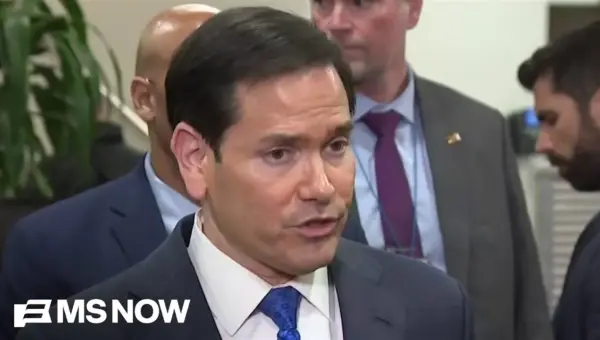
US Consulate in Dubai Hit by Drone; Americans Urged to Register for Evacuation
A drone strike hit the U.S. Consulate in Dubai, causing a fire and highlighting regional instability. Amidst this, the U.S. is urgently working to evacuate 1,500 Americans from the Middle East, facing challenges with airspace closures. Officials are calling for all Americans needing assistance to register immediately.
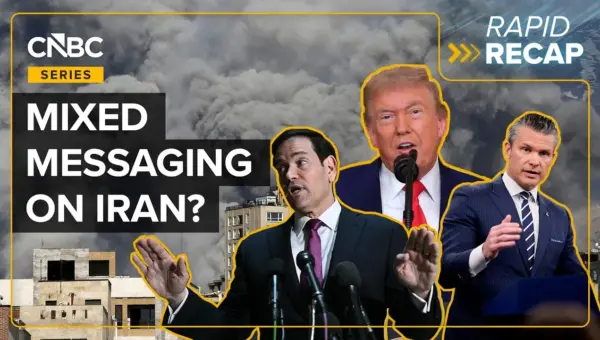
Iran Tensions Flare: US Vows “Annihilation” Amid Nuclear Fears
The Trump administration has adopted an aggressive tone towards Iran, vowing military action and highlighting concerns over the nation's nuclear ambitions. Officials cited "imminent threats" and Iran's development of missiles and drones as justifications for a preemptive stance.