US Divided on Iran Strategy Amid Regional Tensions
A deep rift in U.S. Congress over Iran policy is evident, with Republicans and Democrats clashing on the effectiveness of military actions and the strategy to curb Iran's nuclear ambitions. This division impacts regional stability and U.S. global standing.


US Divided on Iran Strategy Amid Regional Tensions
The United States faces a deep split in Congress over how to handle Iran. This disagreement centers on the effectiveness of recent U.S. military actions and the best approach to stopping Iran’s nuclear program. While some argue that recent strikes have weakened Iran’s military capabilities, others believe these actions have failed to change Iran’s core behavior and have even strengthened the regime. This debate highlights a major challenge for U.S. foreign policy: finding a unified strategy for a complex and volatile region.
Clash Over Military Action and Nuclear Goals
The core of the debate revolves around the impact of U.S. military actions against Iran. Republican Congressman Mike Lawler argued that recent strikes have significantly diminished Iran’s missile capabilities and weakened its leadership, including the IRGC. He pointed to the elimination of top Iranian officials and the destruction of naval assets as proof of success. Lawler also stressed that Iran has been a threat for decades, constantly seeking nuclear weapons and supporting proxy groups like Hamas and Hezbollah.
Conversely, Democratic Congressman Adam Smith expressed skepticism about the effectiveness of the current approach. He stated that despite military actions, Iran’s nuclear program has not been significantly set back. Smith believes that the primary goal of changing Iran’s posture has not been achieved. He criticized the idea that bombing infrastructure like train stations and power plants will alter Iran’s fundamental direction, suggesting that a negotiated settlement is necessary.
Historical Context and Policy Debates
The discussion touches upon past U.S. policies towards Iran. Lawler criticized the Obama administration’s approach, particularly the Iran nuclear deal and the sending of cash to Iran, suggesting it emboldened the regime. He also contrasted this with President Trump’s actions, which he believes created a pathway for a better deal by taking a stronger stance. Smith, while acknowledging progress in reducing Iran’s missile capabilities, maintained that the fundamental issue of the nuclear program remains unresolved.
The debate also touches on the War Powers Resolution, a U.S. law that limits the president’s ability to commit armed forces without congressional approval. While Smith downplayed the legal aspect, focusing on policy, Lawler implied that the president acted without sufficient congressional input. This suggests a broader tension between the executive and legislative branches regarding the use of military force.
Economic Leverage and Regional Security
Economic factors are also part of the discussion. Lawler brought up the closure of the Strait of Hormuz, a vital oil shipping route, and the subsequent rise in gas prices, linking it to the ongoing conflict. He suggested that past U.S. policies, including sanctions relief under the Biden administration, have inadvertently funded Iran’s aggressive actions. Smith countered by referencing financial dealings under previous administrations, including Trump’s policies and the lifting of oil sanctions.
The safety of Israel is a significant concern. Lawler highlighted that Israel remains under constant threat from Iran and its proxies, questioning why Democrats would hesitate to support defensive measures like the Iron Dome missile defense system. This points to the complex regional security dynamics, where Iran’s actions directly impact its neighbors and U.S. allies.
Future Scenarios and Partisan Divide
The conversation revealed a deep partisan divide, with both sides accusing the other of rooting for failure or engaging in political theater. Lawler accused Smith of capitulating to the far left of his party, while Smith suggested Lawler was creating straw man arguments. This partisan animosity makes it difficult to form a cohesive U.S. strategy.
Looking ahead, the disagreement suggests continued friction in U.S. policy towards Iran. One potential future scenario is that the U.S. remains divided, leading to inconsistent policies that fail to achieve long-term goals. Another possibility is that a unified strategy emerges, but the path to achieving it is fraught with political challenges. The outcome will likely depend on whether Congress can overcome its internal divisions and agree on a clear path forward, balancing military pressure, diplomatic engagement, and economic sanctions.
Global Impact
This internal U.S. debate has significant global implications. A divided U.S. approach can embolden Iran and its allies, potentially leading to increased regional instability. It can also weaken the credibility of U.S. foreign policy and its ability to deter aggression. Finding common ground on Iran is crucial not only for U.S. security interests but also for global peace and stability, especially concerning the proliferation of nuclear weapons and the security of vital international trade routes.
Source: Ceasefire allows Iranians another opportunity to take country back: Activist | CUOMO (YouTube)

Related Articles
Iran Truce Deal: What’s Next for Middle East Tensions?
Iran, the US, and Israel have reportedly agreed to a conditional two-week ceasefire, which includes reopening the vital Strait of Hormuz. Experts express caution about the truce's longevity, while analyzing its potential impact on Iran's proxies and the political landscape.

Iran Halts Attacks as US, Israel Seek Iran Deal
Iran has halted aerial attacks following a U.S. decision to suspend its own strikes for two weeks, brokered by Pakistan. While Israel supports the move, the ceasefire excludes Lebanon. The U.S. aims for a long-term peace deal and to keep the Strait of Hormuz open.
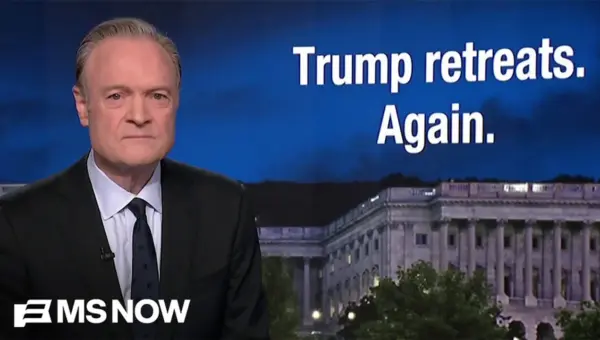
Trump’s ‘Civilization Will Die’ Threat Leaves Historic Stain
A recent statement by former President Donald Trump, threatening that "a whole civilization will die tonight," has been described as a permanent stain on American history. The article contrasts this unprecedented declaration with historical norms and explores the erosion of respect for the presidency.