US Deploys Secret Drone Amidst Escalating Iran Conflict
The US military has reportedly deployed its highly secretive RQ-180 drone in operations against Iran, marking a significant escalation. The drone, whose existence is not officially confirmed by the US government, is described as the most advanced of its kind. This deployment coincides with extensive strikes on Iranian infrastructure and military sites, including key oil export hubs.


US Deploys Secret Drone Amidst Escalating Iran Conflict
The United States military has reportedly deployed one of its most advanced and secretive drones, the RQ-180, in operations targeting Iran. This development comes as the conflict intensifies, with significant strikes reported on Iranian infrastructure and military sites. The use of such a classified asset signals a major escalation in the ongoing military actions.
On April 7th, reports indicated that key locations in Iran, including Carg Island, were heavily targeted. Carg Island is a critical hub for Iran’s oil exports, with 90-95% of its oil trade passing through. The strikes focused on bunkers and air defense systems, but avoided direct hits on oil infrastructure and landing docks. This strategy suggests a preparation for a potential ground invasion, as intact landing docks would facilitate the movement of ground forces.
This was not the first time Carg Island was hit. The initial attack occurred in March, and despite Iranian efforts to resupply the area, US forces struck it again. This repeated targeting indicates a strategic effort to degrade Iran’s capabilities and potentially pave the way for further military action.
Wider Strikes Across Iran
Beyond Carg Island, air strikes were also reported in Yazad, targeting a munition storage facility and IRGC (Islamic Revolutionary Guard Corps) facilities. Industrial zones were also hit, causing significant smoke plumes. In Parchin, strikes believed to be from bunker busters hit underground facilities, causing massive smoke and destruction.
An aerospace facility in Tehran, responsible for designing Iran’s ballistic missile technology, was also destroyed. Further strikes hit the Iranian Ministry of Intelligence facility in Shiraz and an airport in Tehran. These attacks suggest a broad effort to dismantle Iran’s military and technological infrastructure.
The transcript also mentions strikes near railways, with warnings for civilians to stay away from train stations and railways. This indicates that bridges and power plants, which President Trump had previously threatened to destroy if the Strait of Hormuz was not kept open, may have been targeted. The city of Isfahan, known to house a facility with highly enriched uranium, also saw strikes on access roads and defenses, though the facility itself was not directly hit.
The Secret Weapon: RQ-180 Drone
Footage has emerged of what is believed to be the RQ-180 drone returning from a mission in Iran. The US government does not officially confirm the existence of this drone, making its appearance in operational footage a significant revelation. The RQ-180 is described as the most technologically advanced drone ever built, capable of stealth, long endurance (up to 24 hours), and extensive intelligence gathering.
Its ability to operate in highly contested and defended areas, such as Iran, Russia, or China, makes it an invaluable asset for reconnaissance and intelligence, surveillance, and reconnaissance (ISR) missions. The appearance of the RQ-180 is reportedly the third time it has been spotted, providing concrete evidence of its existence and its deployment in active conflict zones. The drone’s stealth capabilities would allow it to penetrate sophisticated air defense systems undetected.
Broader Regional Impact
The conflict is not confined to Iran. Saudi Arabia reported being hit by an Iranian ballistic missile attack that targeted its oil and energy infrastructure in Jubail. Footage shows a missile penetrating Saudi air defenses and striking an industrial facility, causing widespread damage and engulfing the site in flames. This attack could pressure Saudi Arabia to further escalate its involvement against Iran.
Israel has also faced missile attacks, with some ballistic missiles reportedly bypassing its air defenses. While most are intercepted, the repeated instances suggest vulnerabilities in Israel’s defense systems. Additionally, the Israeli consulate in Turkey came under attack from gunmen, with three attackers reportedly killed in the exchange of gunfire.
The ongoing operations also involve heavy bombers. B-1 and B-52 bombers have been seen taking off for missions to Iran. B-52s flying from England were noted to be carrying numerous AGM-158 JASSM cruise missiles, indicating a significant offensive capability being deployed.
Historical Context and Background
The current military actions appear to be an intensification of long-standing tensions in the region. The Strait of Hormuz is a crucial waterway for global oil transport, and any disruption there has significant economic implications. Iran’s nuclear program, particularly its enrichment of uranium, has been a major point of international concern for years, leading to sanctions and diplomatic efforts.
The involvement of various regional and international players, including Russia and China, adds complexity. Reports suggest that Russian planes continue to fly into Iran, allegedly carrying humanitarian aid but suspected of delivering weapons. The transcript specifically mentions the possibility that Russian-supplied man-portable air-defense systems (MANPADS) were used in a recent incident involving an F-15. Calls to crater runways at Iranian airports aim to disrupt these supply lines.
Why This Matters
The deployment of the RQ-180 drone and the extensive strikes on Iranian infrastructure represent a significant escalation in the conflict. The potential for a ground invasion, the targeting of strategic assets like Iran’s oil infrastructure and nuclear program, and the involvement of multiple regional powers create a volatile situation. The successful penetration of Saudi and potentially Israeli air defenses by Iranian missiles highlights the evolving threat landscape.
The use of highly classified technology like the RQ-180 underscores the advanced capabilities the US is bringing to bear. It also raises questions about the secrecy surrounding such operations and the information available to the public. The conflict’s ripple effects are felt globally, impacting energy markets, international relations, and regional stability.
Implications, Trends, and Future Outlook
The current trajectory suggests a continued and possibly widening conflict. The effectiveness of the strikes on Iranian military and industrial targets will determine the next phase of operations. If Iran retaliates significantly, it could draw in more regional powers, potentially leading to a wider war.
The trend of advanced drone technology, particularly stealth and ISR capabilities, is clearly on display. The RQ-180’s confirmed operational status points to a future where such assets play an even more critical role in modern warfare. The ongoing challenges faced by air defense systems in intercepting advanced missile technology also indicate a need for continuous innovation in defensive capabilities.
The international community will be closely watching for diplomatic efforts to de-escalate the situation. However, the current military actions suggest that diplomatic channels may be taking a backseat to kinetic operations. The long-term implications for regional security and global energy markets remain uncertain but are likely to be substantial.
Source: U.S. Military Uses SECRET WEAPON On Iran – Bombers IN THE AIR (YouTube)

Related Articles


US Replicates Iran’s Deadly Drone, But Makes It Smarter
The US has reverse-engineered Iran's Shahed drone, creating its own Lucas version. While externally similar, the Lucas boasts advanced terrain-matching navigation, allowing it to strike with pinpoint accuracy even without GPS. This highlights a trend towards affordable, high-tech drone warfare.
US Aims to Cripple Iran’s Power Grid to Secure Strait of Hormuz
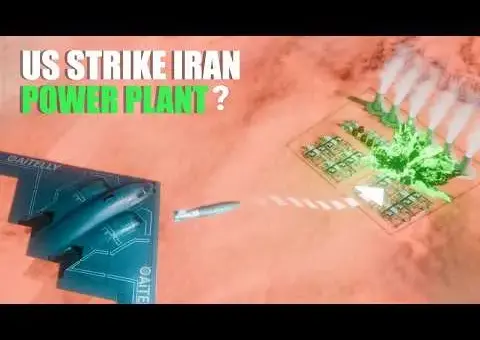
A new US strategy reportedly targets Iran's power grid, including major plants like Damavand, to force open the Strait of Hormuz. The plan involves multi-stage air attacks using advanced bombers and precision munitions to cripple energy infrastructure and cause cascading failures.
US Air Power Strikes Iran, Warns on Strait of Hormuz
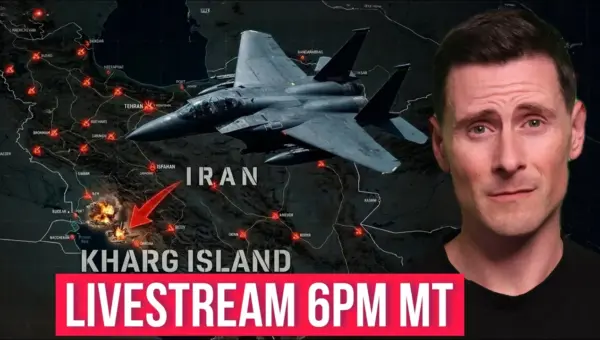
The U.S. military has conducted air strikes on Kharg Island, Iran, targeting military assets. This action follows President Trump's ultimatum for Iran to reopen the Strait of Hormuz. The U.S. warns of further infrastructure action if Iran fails to comply.