US Deploys Marines to Middle East Amid Rising Tensions
The U.S. has deployed a Marine Expeditionary Unit to the Middle East aboard the USS Tripoli amid escalating regional tensions. The move brings specialized amphibious capabilities to counter Iran. Meanwhile, exiled Iranian prince Reza Pahlavi expressed readiness to lead a transition, while damage to U.S. assets in Saudi Arabia and Houthi missile claims add to the instability.

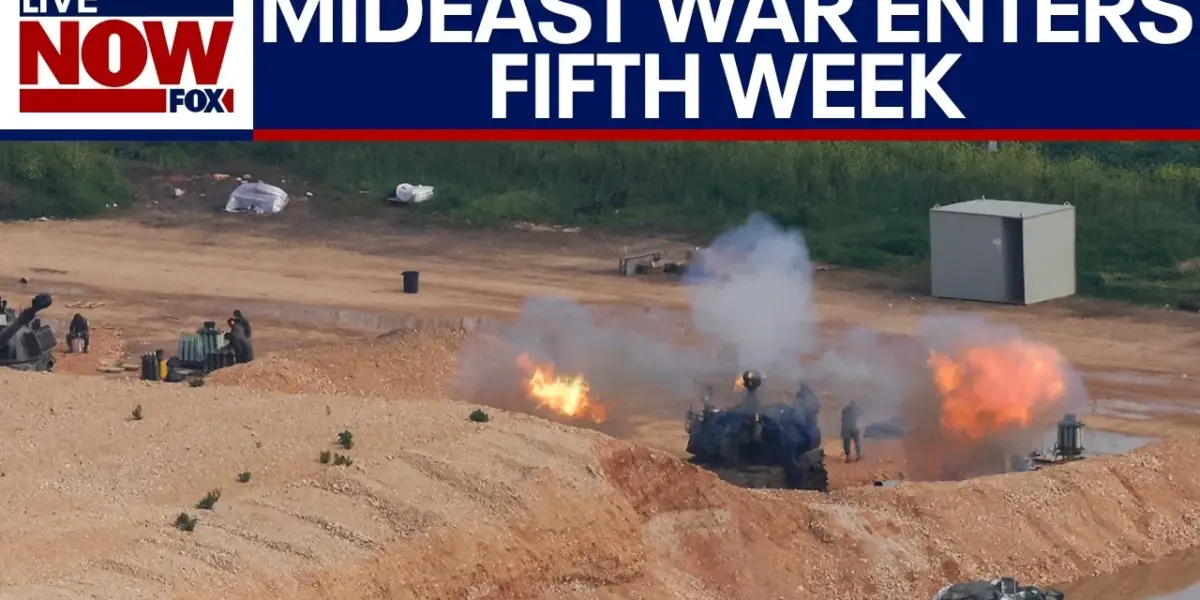
The United States has officially deployed a Marine Expeditionary Unit (MEU) to the Middle East aboard the USS Tripoli, marking a significant escalation in its military presence as the conflict in the region enters its fifth week. The deployment aims to bolster regional security and potentially counter Iranian influence, bringing specialized capabilities and a substantial force of approximately 2,200 to 2,500 Marines and sailors.
Naval Power Arrives in Strategic Waters
The arrival of the USS Tripoli, carrying the 11th Marine Expeditionary Unit, signals a proactive stance by U.S. Central Command (CENTCOM). While the Tripoli itself is noted for its capabilities as a “lightning carrier” – capable of launching various vertical takeoff and landing aircraft like the F-35 stealth fighter and Osprey tilt-rotor helicopters – it is part of a larger three-ship MEU formation. These units are designed as self-contained packages, equipped with ground combat elements, air support squadrons, logistical support, and command staff.
“It’s a very capable thing,” explained retired Marine intelligence officer Hal Kemper. “It’s got a ground combat element about 800 Marines. It’s got a composite squadron, a very large combat service support or logistics element, and then this very robust command element.” This comprehensive force is trained for specialized missions, including amphibious raids and maintaining pressure on potential adversaries.
Strategic Implications for Iran
The deployment is seen as a strategic move to keep Iran off balance. With Iran controlling significant coastlines and numerous islands in the Strait of Hormuz and the Persian Gulf, the MEU’s ability to conduct amphibious operations presents a complex defensive challenge for Tehran. “From the Iranian perspective, they got a massive coastline that they’re protecting across the Persian Gulf, the Indian Ocean… They have got a huge defensive problem and we have just made it a lot harder because now we can attack anywhere and we can hit anything and they don’t know what we’ll go for,” Kemper noted.
The arrival of the MEU is further reinforced by the impending arrival of the 11th MEU and an immediate response force from the 82nd Airborne Division. This build-up creates a formidable “specialized boots on the ground” capability, designed to project power and deter aggression in a volatile region.
Opposition Voice Emerges
Amidst the military movements, political developments are also gaining attention. Reza Pahlavi, the exiled Iranian crown prince, recently spoke at CPAC in Texas, declaring his readiness to lead a transition of power away from the current Islamic Republic. He stated that he would call on the Iranian people to rise up when the “right moment arrives.”
Kemper discussed the potential triggers for such a moment, suggesting it could occur if Iran’s Revolutionary Guard Corps is significantly weakened and unable to control street protests. He also indicated that there is likely more coordination among opposition groups than publicly acknowledged. “I do believe that there is a lot more communication going on with the opposition and a lot more coordination with the opposition… the protesters in Iran than anyone believes,” Kemper said. Pahlavi has been laying groundwork for such a transition, reportedly preparing a shadow government composed of both expatriates and individuals within Iran.
Damage to Critical US Assets in Saudi Arabia
The situation is further complicated by recent attacks attributed to Iran and its proxies. Reports indicate that a recent Iranian missile strike on Prince Sultan Air Base in Saudi Arabia damaged a U.S. E-3 Sentry aircraft. This airborne warning and control system (AWACS) is crucial for managing airspace, tracking threats like drones and missiles, and coordinating air operations over vast distances.
The Wall Street Journal and the Associated Press reported that the strike also wounded over two dozen U.S. troops. Kemper highlighted the significance of the E-3 Sentry, describing it as a “stalwart” aircraft with “phenomenal radar capability.” He expressed concern over the damage, stating, “So that is a loss. If it’s damaged, hopefully it isn’t destroyed.”
Kemper also pointed out the vulnerability of large U.S. aircraft, such as the E-3 Sentry and KC-135 refuelers. “They’re big planes. there is no hardened hanger that you can park them into anywhere. They got big wingspans and so when they’re out there they’re on the airfields and they’re they’re out in the open and with the proliferation of drones and these ballistic missiles, cruise missiles, they are they are susceptible to being targeted,” he explained. The increasing range of drones and missiles makes defending such assets increasingly challenging.
Houthis Enter the Conflict
Adding another layer of complexity, the Houthi movement in Yemen has claimed responsibility for its first missile attack on Israel since the current war began. While the Israeli military reported intercepting the missile, the Houthi action signifies a broader engagement by Iran’s regional allies, often referred to as the “axis of resistance.”
Kemper suggested that the Houthis, like Hezbollah and Shiite militias in Iraq, had been waiting to see how the conflict unfolded before committing. “I think they’re all waiting. Now the Houthis have now is it concern that they’re firing on Israel? Yes. What’s the bigger concern that they threatened the Bab el-Mandeb Strait, the Gulf of Aden, and the Red Sea?” he questioned. The potential disruption of these vital maritime choke points raises significant concerns for global trade and insurance industries, potentially driving up shipping costs and risks.
Looking Ahead
The ongoing deployment of U.S. forces, coupled with political aspirations from Iranian opposition figures and the expanding involvement of regional proxies, sets a tense stage for the coming weeks. The effectiveness of the newly arrived MEU in deterring aggression and the potential for further escalation by Iran and its allies remain key points to watch. The strategic implications of these developments, particularly concerning maritime security and the possibility of direct confrontation, will continue to shape the conflict’s trajectory.
Source: War in the Middle East enters fifth week (YouTube)

Related Articles
US Deploys Troops, Shakes Global Oil Markets
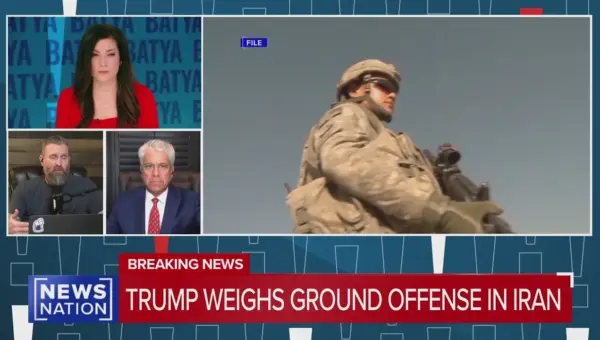
The U.S. has deployed 2,000 soldiers to the Middle East, aiming to establish a strategic base. This move, coupled with rising oil prices, creates market uncertainty and impacts everyday Americans. The veteran community holds mixed views, while the strategy also targets China's energy deals.
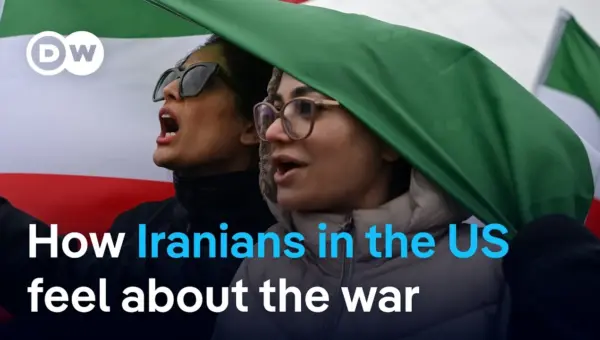
Iranian Americans Divided Over US-Israel Actions in Iran
Iranian Americans are deeply divided over the U.S. and Israel's actions concerning Iran, with many fearing foreign intervention and its impact on civilians. The conflict has strained communication with loved ones inside Iran due to internet blackouts, intensifying anxiety.
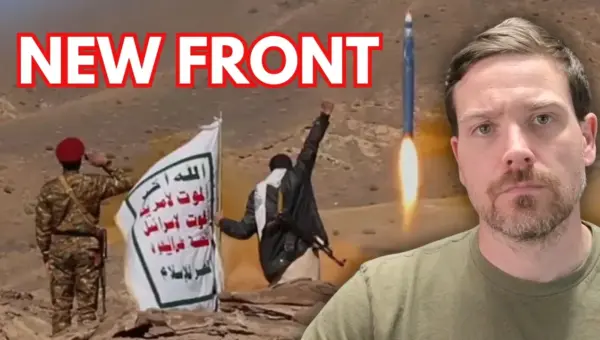
Houthis Join War, Expanding Conflict as US Sends Troops
The Houthi group from Yemen has joined the war, firing missiles at Israel and expanding the conflict. Simultaneously, the US is increasing its military presence in the region with thousands of Marines arriving and more troops potentially on the way. This escalation raises concerns about key shipping routes and the difficulty of achieving a peaceful resolution.