US Deploys Marines to Middle East Amid Rising Tensions
The Pentagon's deployment of a Marine Expeditionary Unit to the Middle East signals rising geopolitical tensions, with significant implications for oil prices and stock markets. Concerns are mounting over munition stockpiles and potential recessionary pressures as global events unfold.

US Deploys Marines to Middle East Amid Rising Tensions
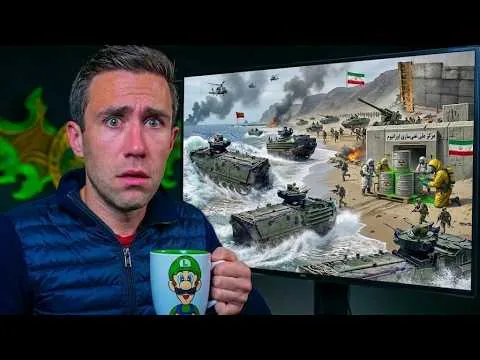
The Pentagon has announced the deployment of a Marine Expeditionary Unit (MEU) to the Middle East, a move signaling a potential escalation in regional geopolitical tensions. While the immediate objective remains unclear, the deployment of these specialized forces, capable of amphibious assaults and water-based raids, suggests a strategic shift beyond air power alone in addressing the volatile situation, particularly concerning the Strait of Hormuz.
Understanding the Marine Expeditionary Unit (MEU)
A Marine Expeditionary Unit is a self-contained, sea-based military force. In peacetime, it comprises approximately 2,200 personnel, a number that can swell to around 4,400 during wartime. MEUs are renowned for their amphibious assault vehicles and are typically deployed as part of an Amphibious Ready Group, a collection of three ships. These vessels often possess flight decks capable of supporting various aircraft, including Ospreys, transport helicopters, and F-35 fighter jets. A unique feature is the well deck at the rear of the ship, which can be flooded to allow amphibious vehicles to launch directly into the water, effectively transforming the ship into a mobile base for ground operations.
Strategic Rationale and Market Implications
The deployment of ground troops, rather than relying solely on air power, could serve multiple strategic purposes. Firstly, it may act as a deterrent against Iranian coastal strikes. The presence of a significant number of American troops along the Strait of Hormuz could discourage overt aggression. Secondly, these forces could be tasked with securing hijacked vessels or preventing Iran from engaging in naval activities such as mine-laying, thereby asserting control over key maritime passages. This strategic development, however, suggests a worsening rather than an improving situation, a sentiment reflected in recent market movements, particularly in oil prices.
Oil Prices and Stock Market Correlation
A notable correlation has emerged between fluctuations in oil prices and the performance of major stock indices. A modest $2 increase in Brent crude oil prices, for instance, has been observed to coincide with a significant drop in the NASDAQ 100 index (QQQs), with the index falling to a critical support level around $595. This sensitivity highlights the interconnectedness of geopolitical events, energy markets, and equity performance. Investors are increasingly watching these dynamics, as a sustained rise in oil prices could negatively impact broader market sentiment and economic outlook.
Munitions Depletion and Defense Spending
Concerns are mounting over the rapid depletion of critical munitions, including Tomahawk cruise missiles, by the U.S. military. Reports indicate that in the last five years, only 322 Tomahawks were purchased, with a substantial number, approximately 124, expended in 2024 and 2025 against Houthi and Iranian nuclear facilities. Further estimates suggest that an additional 168 missiles may have been fired in the initial 100 hours of recent operations. This rapid drawdown, coupled with potentially limited stockpiles—estimated to be as low as 30 missiles remaining in the region—raises questions about the U.S. military’s long-term readiness and could necessitate significant future defense spending increases, potentially around $50 billion.
Geopolitical Ripples and International Relations
The geopolitical landscape is further complicated by allegations that Russia may be providing support to Iran. This comes at a time when the U.S. has eased sanctions on Russian oil sales, a move ostensibly aimed at stabilizing global oil prices. However, it has also been suggested that this policy shift could inadvertently provide Russia with increased revenue, some of which might be channeled to Iran. This complex interplay of sanctions relief, energy markets, and geopolitical alliances adds another layer of uncertainty to the global economic outlook.
Recession Risks and Central Bank Policy
The confluence of rising oil prices, concerns over private credit markets, and geopolitical instability is drawing parallels to the 2008 financial crisis. Bank of America’s analysis points to similarities between the current environment and the period between August 2007 and July 2008, when oil prices doubled and private credit issues emerged. The International Monetary Fund (IMF) has also highlighted the exposure of banks to private credit firms, suggesting potential systemic risks within the financial sector. Adding to these concerns, the European Central Bank is reportedly considering interest rate hikes this summer, a move reminiscent of July 2008, which was later followed by significant rate cuts amid a deepening recession. These developments have led some analysts, including Goldman Sachs, to increase their probability forecasts for a recession, from 20% to 25%.
Federal Reserve Outlook and Market Expectations
Market expectations for Federal Reserve rate cuts this year have been significantly recalibrated. What began with expectations of multiple cuts has now shifted, with many investors anticipating no cuts at all in the near future. The upcoming Federal Reserve meeting will be closely watched for any signals regarding future monetary policy. Analysts predict that Federal Reserve Chair Jerome Powell will likely emphasize a data-dependent approach, focusing on inflation trends and broader economic indicators. Given the ongoing geopolitical uncertainties and potential inflationary pressures from rising energy costs, the Summary of Economic Projections may indicate a more hawkish stance, potentially signaling higher rates or fewer cuts than previously anticipated. This scenario could pose further challenges for equity markets.
Market Technicals and Investor Caution
Technical indicators also suggest a cautious market environment. The S&P 500 has recently fallen below its 100-day moving average, a technical signal that has historically preceded periods of market weakness. This, combined with the elevated geopolitical risks and potential economic headwinds, underscores the need for investor vigilance. While some analysts believe the current oil price shock may be transitory and have a limited impact on GDP, the compounding effect of high interest rates and potential financial sector vulnerabilities suggests a more complex and potentially riskier environment than initially perceived.
Market Impact
- Geopolitical Risk Premium: The deployment of troops and ongoing tensions in the Middle East are likely to sustain a geopolitical risk premium in oil prices, impacting energy costs and potentially inflation.
- Equity Market Sensitivity: Stock markets, particularly growth-oriented indices like the NASDAQ 100, remain highly sensitive to oil price fluctuations and broader economic sentiment.
- Defense Sector: Increased defense spending and a focus on munition replenishment could benefit defense contractors.
- Interest Rate Outlook: The Federal Reserve’s stance on interest rates, influenced by inflation and economic data, will be a key driver for market performance.
What Investors Should Know
- Correlation Watch: Monitor the correlation between oil prices and major stock indices. Significant moves in either direction can signal broader market trends.
- Munitions and Defense: Be aware of reports regarding U.S. munition stockpiles and potential increases in defense spending, which could impact the defense sector.
- Recession Indicators: Keep an eye on key economic indicators and analyst forecasts for recession probabilities, as well as central bank policy shifts.
- Strait of Hormuz Significance: Understand the strategic importance of the Strait of Hormuz and how events there can influence global energy markets and shipping.
- Fed Policy Signals: Pay close attention to Federal Reserve communications, particularly regarding inflation, employment, and future interest rate decisions.
Source: Amphibious Assault *Troops* ENROUTE to Iran | CRAP (YouTube)

Related Articles

G7 Allies Clash Over Iran War Strategy, Urge Focus on Russia
G7 foreign ministers met in Paris, revealing deep divisions over the U.S. war with Iran. European allies urged the U.S. to pressure Russia, linking its actions to the conflict and fearing support for Ukraine will wane.

Iran Blocks China Ships, Exposing Beijing’s Weak Grip
Iran's recent decision to block Chinese ships at the Strait of Hormuz is exposing the limits of Beijing's influence in the Middle East. This action is causing delays and cancellations for Chinese manufacturers, turning a perceived geopolitical win into an economic strain.
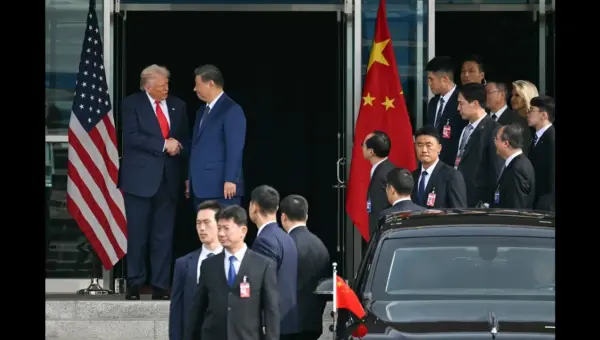
Trump’s “Walk Away” Tactic Signals Tougher Stance on China
Retired Air Force Brigadier General David Stillwell believes President Trump's strategy of being willing to walk away from negotiations puts pressure on China. This tactic, combined with US global actions and strengthened alliances, signals a more assertive American foreign policy.