US Debt Interest Payments Surpass Trillions, Signaling Fiscal Shift
US government interest payments are projected to exceed $1 trillion in 2025, becoming the second-largest federal expense. This fiscal shift, driven by deficit spending and rising rates, poses challenges to the dollar's value and underscores the need for investor diversification.


US Interest Payments Soar Past $1 Trillion, Outpacing Key Sectors
The United States government is facing an unprecedented fiscal challenge, with interest payments on its national debt now exceeding $1 trillion for the first time in history, according to a recent report. This landmark figure, projected for 2025, positions interest payments as the second-largest government expenditure, surpassing outlays for crucial sectors such as veterans’ benefits, Medicaid, Medicare, and defense. Only Social Security is expected to command a larger portion of the federal budget.
This dramatic escalation in debt servicing costs is more than just a budgetary footnote; it represents a significant shift in the government’s financial landscape. The annual interest expenditure has tripled in just the last five years. Notably, the growth rate of these interest payments outpaces the performance of major asset classes, including the stock market and precious metals like gold and silver, the latter of which has seen gains exceeding 160% over the same five-year period.
Understanding the Drivers of Soaring Interest Costs
Several factors contribute to this burgeoning interest burden:
- Increased Borrowing: The U.S. government has consistently spent more than it collects in tax revenue, leading to substantial deficit spending. This gap necessitates borrowing, which has ballooned the national debt to approximately $38-39 trillion.
- Rising Interest Rates: As interest rates have climbed, the cost of servicing existing and new debt has increased significantly.
- Debt Monetization Concerns: The transcript highlights the role of the Federal Reserve in potentially creating money to lend to the government. While the Fed is an independent entity, its actions in managing the money supply can influence inflation and the value of the dollar. When more money is created without a corresponding increase in goods and services, the value of each dollar can diminish, leading to inflation.
The Dilemma: Why Fixing the Debt is Politically Fraught
The conventional approach to managing debt involves cutting expenses or increasing revenue. However, for the U.S. government, both options present considerable economic and political hurdles:
- Cutting Spending: Reductions in government spending can lead to job losses through layoffs, contract cancellations, and decreased funding for various programs. This can trigger economic pain and widespread public discontent, making it a politically unpalatable choice. The economy has become reliant on government expenditure, which is a component of Gross Domestic Product (GDP). Slashing spending could negatively impact economic growth metrics.
- Increasing Revenue: Raising taxes, whether through income, corporate, or other levies, can reduce disposable income for individuals and potentially stifle business investment. While proponents argue that economic growth can naturally increase tax revenues, direct tax hikes often face strong opposition.
The government’s reluctance to aggressively tackle the debt stems from the immediate economic consequences and public backlash associated with either austerity or higher taxation. This creates a cycle where deficit spending continues, further exacerbating the debt problem.
Market Impact and Investor Considerations
The escalating interest payments and the government’s fiscal trajectory have significant implications for investors and the broader economy:
- Devaluation of the U.S. Dollar: Persistent deficit spending and the potential for increased money creation can lead to a devaluation of the U.S. dollar, which is a fiat currency. Unlike hard assets like gold, fiat currencies can be printed, potentially diminishing their long-term value if not managed prudently.
- Inflationary Pressures: As mentioned, increased money supply without a corresponding rise in productivity can fuel inflation, eroding the purchasing power of savings.
- Asset Diversification: In an environment of potential currency devaluation and inflation, investors are encouraged to consider a diversified asset portfolio. This includes assets that have historically shown resilience or growth during periods of economic uncertainty, such as stocks, real estate, and potentially commodities like gold.
- Long-Term Wealth Building: Relying solely on savings in cash may not be sufficient to build wealth over the long term if the growth rate of savings does not outpace inflation. Investing in a diversified range of assets can offer a hedge against currency debasement and provide opportunities for capital appreciation.
The current fiscal situation suggests a continuation of government spending and potential money supply expansion. This environment underscores the importance for individuals to actively manage their financial future through strategic investment and asset allocation, rather than solely relying on traditional saving methods.
Source: The U.S. Is Quietly "Revaluing" Its Debt – And Almost No One Noticed (YouTube)

Related Articles


Russia’s Hidden Debt Crisis: A Silent Drain on Citizens
Russia is reportedly accumulating significant debt through complex financial schemes, which critics argue are subtly draining resources from its citizens. The government's reliance on borrowing, coupled with inflation and rising interest rates, is placing a growing burden on ordinary Russians.

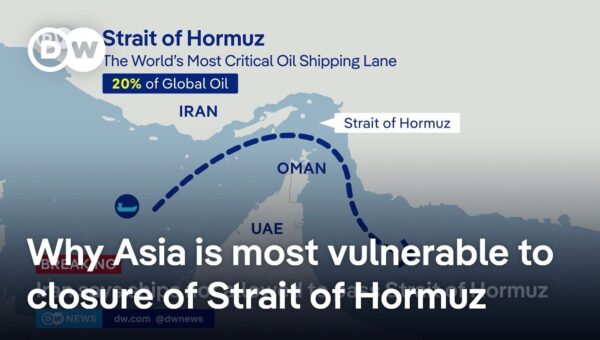
Iran Strait of Hormuz Blockade Threatens Global Oil Prices
Iran's Revolutionary Guard has issued warnings against ships passing through the Strait of Hormuz, a critical global oil chokepoint. This potential blockade threatens to disrupt 20% of the world's crude oil flow, potentially spiking energy prices and fueling global inflation. Experts warn of significant market reactions and widespread economic consequences.


Shrinkflation and Greedflation: Why Your Goods Cost More
Consumers are increasingly facing smaller products at higher prices due to shrinkflation and greedflation. This article explores the tactics companies use, their impact on consumers, and potential regulatory and consumer-led solutions.