US Considers Ground Troops as Iran Conflict Intensifies
Middle East powers convene in Pakistan for peace talks as the month-long war intensifies. The US is reportedly considering ground troops amid escalating strikes on Iran, while experts caution against air power's political pitfalls and highlight the risks of a prolonged conflict.

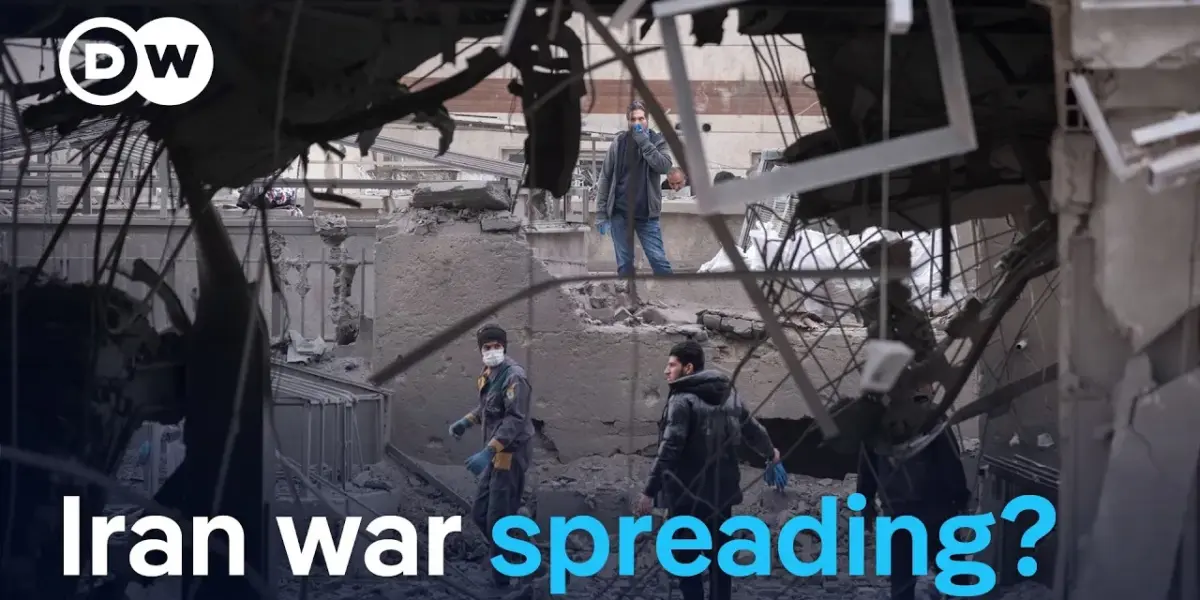
Middle East War Enters Critical Phase Amidst Diplomatic Talks
As a month-long war in the Middle East rages on, representatives from key regional powers have gathered in Pakistan for urgent talks aimed at brokering peace. However, the discussions begin against a backdrop of escalating conflict, with reports indicating that the United States is considering the deployment of ground troops. This development follows intense strikes by both Israel and the US deep inside Iran, with the nation’s capital, Tehran, bearing the brunt of the attacks.
Intensified Strikes and Shifting Strategies
The Israel Defense Forces (IDF) have released details of their operations, claiming to have targeted ballistic missile production and storage facilities, as well as air defense systems and observation posts within Tehran. In response, several Gulf states have reported their air defense systems intercepting Iranian missile and drone strikes. This heightened military activity occurs as the war enters its second month, prompting calls for an end to the fighting even within Israel, where protests against the conflict have led to violent clashes and arrests.
US Administration’s Stance and Iranian Doubts
The Trump administration, meanwhile, has expressed confidence that the war is nearing its end. Vice President JD Vance stated that the majority, if not all, of the US military objectives have been achieved. He emphasized the administration’s goal of ensuring a lasting peace, asserting, “We’re taking care of business. We’re going to be out of there soon and gas prices are going to come back down.” However, the Iranian regime remains skeptical. Iran’s parliament speaker, Mohammad Bagher Ghalibaf, accused the US of engaging in deceptive diplomacy, publicly offering negotiations while secretly planning a ground invasion.
Escalation Trap: The Risks of Air Power
Experts warn of the dangers of relying solely on air power. Robert Pape, a professor of political science at the University of Chicago specializing in international security, explained that while air strikes can be tactically successful, they often prove politically self-defeating. “When you have a foreign military power intercede in the politics of a country, the tension between society and government, that changes the political game inside of the a country,” Pape noted. He added that air power is “incredibly seductive to try to use air power even though the record is brutal.” This strategy, he argued, tends to trap countries as opponents retaliate.
“History has been brutal to this strategy of air power alone toppling governments. And what it does is it tends to get countries in a trap because the opponent lashes back. doesn’t just sit there and take it. They lash back and now Iran controls the straight of hormones. 20% of the world’s oil more than any other country on the planet.”
Ground Operations and Political Spin
Adding to the complexity, US Central Command has confirmed the arrival of 3,500 amphibious forces in the region. Reports from The Washington Post, citing unnamed government sources, suggest the Pentagon is preparing for weeks of ground operations in Iran. Pape described this as a potential “stage three the ground dilemma,” where strategic failures and Iranian retaliation draw the US deeper into operations it initially sought to avoid, potentially leading to casualties.
Lebanon Conflict and Journalist Deaths
The conflict has also spilled over into Lebanon, where three journalists were killed in Israeli strikes on the country’s south. Lebanese authorities have condemned the killings as war crimes. Israel, however, alleges that at least one of the reporters was a member of a Hezbollah combat unit. Christian Bahl, regional representative at the Henrich Böll Foundation in Lebanon, expressed concern, noting a pattern of targeting journalists and medical personnel, with claims of military involvement often lacking concrete proof. He stated, “Maybe he was part of an Hispaah. There are Hispa affiliated media units. But that doesn’t make him a target.”
Regional Dynamics and Geopolitical Stakes
The war has significant geopolitical implications, particularly concerning the Strait of Hormuz, through which approximately 20% of the world’s oil passes. Experts suggest Iran could leverage its control over the strait to exert influence over global energy markets and pressure regional states. Fawaz Gerges, a professor of Middle Eastern politics, highlighted that Iran has been preparing for potential ground operations, decentralizing decision-making and empowering local commanders. “The Iranians have been preparing for the American Israeli war for a long time,” Gerges stated, emphasizing Iran’s resilience and adaptability.
Differing Goals and Uncertain Futures
While the US administration, particularly President Trump, appears eager to conclude the conflict, Israel’s stated goals, according to analysts like Merve Zenko, seem to lean towards degrading Iran’s strategic infrastructure and creating conditions for regime change. Zenko noted, “Netanyahu seems to be going for state collapse, chaos.” The coordination between the US and Israel remains complex, with the US administration sending mixed signals about its objectives. As the situation evolves, the potential deployment of US ground troops marks a critical juncture, raising concerns about a prolonged and costly engagement.
What to Watch Next
All eyes are now on Pakistan, where diplomatic efforts to de-escalate the conflict will continue. Simultaneously, the world will be watching the movements of US ground forces and Iran’s response. The coming weeks will be crucial in determining whether diplomacy can prevail or if the region is headed for a wider, more devastating ground war.
Source: Iran war: US ground troops considered as strikes hit Tehran and Lebanon (YouTube)

Related Articles


Pope Condemns War-Waging Leaders, Citing ‘Blood-Soaked Hands’
Pope Francis has strongly condemned leaders who initiate wars, stating that God rejects the prayers of those with "hands full of blood." His remarks come amid disturbing reports of civilian casualties and alleged war crimes in the Middle East, with the conflict fueling global economic instability and uncertainty.


US Faces Global Trade Shift as Auto Jobs Flee
The US is losing its global edge in auto manufacturing as jobs move to Europe, a shift overshadowed by internal culture wars and fears of foreign billionaires. Critics argue this distraction prevents Americans from addressing real economic decline and rising costs, while allies reassess their ties to a nation perceived as increasingly divided and economically vulnerable.


War’s Shadow: How Conflict Fuels Economic Pain
International conflicts are directly fueling economic hardship, driving up prices and destabilizing markets. The piece questions government priorities, suggesting war spending comes at the cost of domestic needs like healthcare and economic stability.