US Considers Boots on Ground in Iran Amid Escalating Conflict
The United States is reportedly considering deploying troops on the ground in Iran, signaling a potential escalation of the ongoing conflict. As the war expands into Lebanon and discussions turn to Kurdish involvement, Richard Engel reports from Tel Aviv on the intensifying regional tensions and Russia's alleged support for Iran.


US Weighs Direct Ground Intervention in Iran Conflict
In a significant development signaling a potential escalation of the ongoing conflict, the United States is reportedly considering the deployment of troops on the ground in Iran. This consideration, revealed through new reporting, suggests a shift in strategy as the war, now in its second week, intensifies with widespread strikes and expanding fronts.
Pentagon Sources Reveal “Boots on the Ground” Discussions
Sources close to the Pentagon have indicated that President Trump is seriously contemplating the idea of putting U.S. “boots on the ground” in Iran. While the term often evokes images of large-scale troop mobilizations akin to the Iraq War, NBC News Pentagon reporter Courtney Kubie emphasized that this may not be the scenario being considered. Instead, discussions appear to focus on smaller contingents of U.S. troops, potentially for specialized operations or strategic support.
Kubie’s reporting suggests that these conversations are not limited to regime change operations, which are notoriously difficult to achieve through air power alone. Other strategic uses for ground troops are reportedly being discussed, including potential involvement in securing resources or facilitating agreements, drawing parallels to past operations, such as the extraction of Nicolas Maduro in Venezuela.
“This, in fact, is serious conversations that the president is now having about sending smaller contingents of US troops on the ground there as this war progresses.”
The White House, in response to the reporting, issued a statement suggesting the story was based on assumptions from anonymous sources not privy to national security discussions. However, officials maintain that the President is keeping all options open and is seriously considering the possibility of deploying troops as part of the ongoing conflict, though not necessarily in the immediate future.
Richard Engel Reports from Tel Aviv Amidst Renewed Strikes
NBC News Chief Foreign Correspondent Richard Engel provided an on-the-ground perspective from Tel Aviv, where air raid sirens have been a near-constant presence. While Iran’s ability to launch effective assaults appears diminished, with reports indicating a significant drop in missile and drone fire, the situation remains tense.
Engel noted that Iran’s reduced offensive capabilities might be partly due to a strategic shift, directing more effective fire towards Gulf States with less robust air defense systems compared to Israel. He also highlighted the ongoing collaboration between Iran and Russia, with Moscow reportedly providing intelligence to help Iran target American military assets in the region. This development is seen as a significant factor that could further widen the scope of the regional conflict.
The call for Iran’s “unconditional surrender” from President Trump was also discussed, with Engel describing it as an unprecedented and potentially protracted demand for a sovereign nation. Such a demand, he suggested, could lead to a conflict lasting far longer than initially anticipated.
Lebanon Becomes New Front as Fighting Intensifies
The conflict has demonstrably spilled over into Lebanon, with the Israeli military launching strikes against Hezbollah sites in Beirut and its southern suburbs. Hundreds of thousands of Lebanese citizens are reportedly fleeing their homes as the Israeli Defense Forces (IDF) intensify their campaign against the Iran-backed paramilitary group, designated as a terror organization by the U.S.
Foreign correspondent Danielle Hamji reported from Beirut, witnessing the aftermath of devastating explosions in densely populated areas. The ongoing bombing campaign has led to mass displacement, with an estimated half a million people uprooted across Lebanon. The recent escalation began earlier in the week following the killing of Iran’s Supreme Leader, and fears are growing that the war will continue irrespective of developments in Iran itself.
The Role of Kurdish Forces in Potential Ground Operations
Discussions surrounding a potential ground invasion have also brought renewed focus on the Kurdish population within Iran. U.S. officials are reportedly engaging with Kurdish leaders about potentially arming them to act as a force against the Iranian regime. This outreach builds on a long history of U.S.-Kurdish cooperation, dating back to the 1970s when the CIA was involved in arming Kurdish rebels.
Michael Knights, an expert at the Washington Institute, explained that Iranian Kurds, who constitute about 10% of Iran’s population, are among the most suppressed Kurdish groups globally. He noted that while there is not complete unity among the various Kurdish populations across the region, Iranian and Iraqi Kurds maintain close connections. The concern is that Iran might retaliate against Iraqi Kurds if uprisings occur in Iranian Kurdistan. Knights also suggested that the U.S. could offer intelligence, planning, and air support to Kurdish forces engaged in ground operations.
AI and Propaganda in the Modern Information War
The transcript also touched upon the evolving landscape of modern warfare, extending beyond traditional military engagements to include propaganda and the use of artificial intelligence. The White House’s official accounts have been observed posting highly produced videos, often juxtaposing clips from entertainment with imagery of missile strikes, a tactic described as indicative of the current age of propaganda wars. Iran has also been noted for employing AI-generated images in its information campaigns.
Looking Ahead: A Widening Conflict?
As the conflict enters its second week, the prospect of direct U.S. ground involvement, the escalating situation in Lebanon, and the potential for increased Kurdish participation paint a picture of a rapidly widening regional war. The international community watches closely as diplomatic efforts, if any, struggle to keep pace with the escalating military actions and the increasingly complex geopolitical dynamics at play.
Source: Stay Tuned NOW Streaming Behind The Scenes! – March 06 (YouTube)

Related Articles

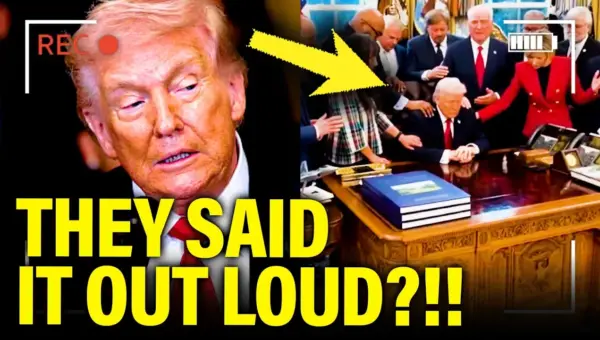
Holy War Justification: GOP Allies Reveal Disturbing Iran War Rationale
Republican allies of the Trump administration are reportedly framing the conflict with Iran as a 'holy war.' This disturbing justification, moving beyond previous explanations, raises serious concerns about the role of religious nationalism in foreign policy and its potential to undermine diplomatic solutions and the separation of church and state.
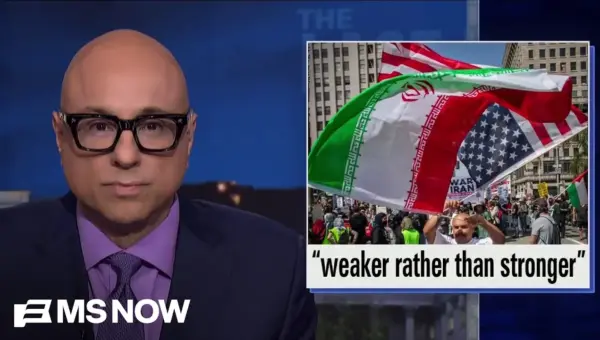
Trump’s War Sparks Public Outrage, Questions Nation’s Strength
President Trump's initiation of a war with Iran, lacking public support, has sparked widespread concern and damaged national morale. Critics argue the conflict is weakening the U.S. and is driven by a performative display of strength rather than strategic necessity.


Iran War: Regime Change, Not Nukes, Fuels US Conflict
The stated reason for the U.S. war with Iran centers on nuclear threats, but a deeper analysis of recent history and strategic shifts suggests regime change is the primary, unstated objective. This distinction has profound implications for the conflict's duration and global impact.