US Commandos Stage Daring Raid to Save F-15 Pilot
U.S. special operations forces executed a daring rescue deep inside Iran to save a downed F-15 weapon systems officer. The complex mission involved evasion, air support, and innovative intelligence tactics. It highlights the U.S. military's commitment to its personnel.

US Commandos Stage Daring Raid to Save F-15 Pilot
In a mission that sounds like it belongs in a Hollywood movie, U.S. special operations forces successfully rescued a downed American airman deep inside Iran. The airman, a weapon systems officer from an F-15 fighter jet, was behind enemy lines for over 24 hours after his aircraft was shot down. This incredible operation highlights the U.S. military’s commitment to leaving no one behind.
A Race Against Time
The incident began when a U.S. F-15 fighter jet crashed in western Iran, about 200 miles inside the country’s territory. The pilot and weapon systems officer (WSO) ejected. The pilot was quickly recovered. However, the WSO was not immediately found. U.S. forces had eyes on him from the start but could not reach him until the following night.
During the initial rescue attempt for the F-15 pilot, a U.S. A-10 attack aircraft was shot down. Thankfully, the A-10 pilot ejected safely and was also recovered. This meant that U.S. forces were now searching for one downed airman deep within a potentially hostile area.
The WSO managed to evade Iranian forces for more than a day. Reports indicate he even climbed a 7,000-foot ridge to hide. U.S. attack aircraft provided cover, dropping bombs and firing on Iranian convoys to keep them away from the airman’s location. As U.S. commandos closed in, they fired weapons to deter Iranian forces from reaching the rescue site, though they did not engage in a direct firefight.
A Complex and Risky Operation
This rescue was described as one of the most challenging and complex in U.S. special operations history. Factors like the rough, mountainous terrain, the airman’s potential injuries, and the speed at which Iranian forces were closing in made the mission incredibly dangerous. Iran had reportedly offered rewards for information leading to the airman’s capture, adding another layer of risk.
The separation of the two F-15 crew members after ejection is not unusual. High-speed ejections, the aircraft’s condition during the crash, weather, and the landing location can all cause pilots to land apart. The priority was always to find and recover both airmen safely.
Innovative Tactics and Resources
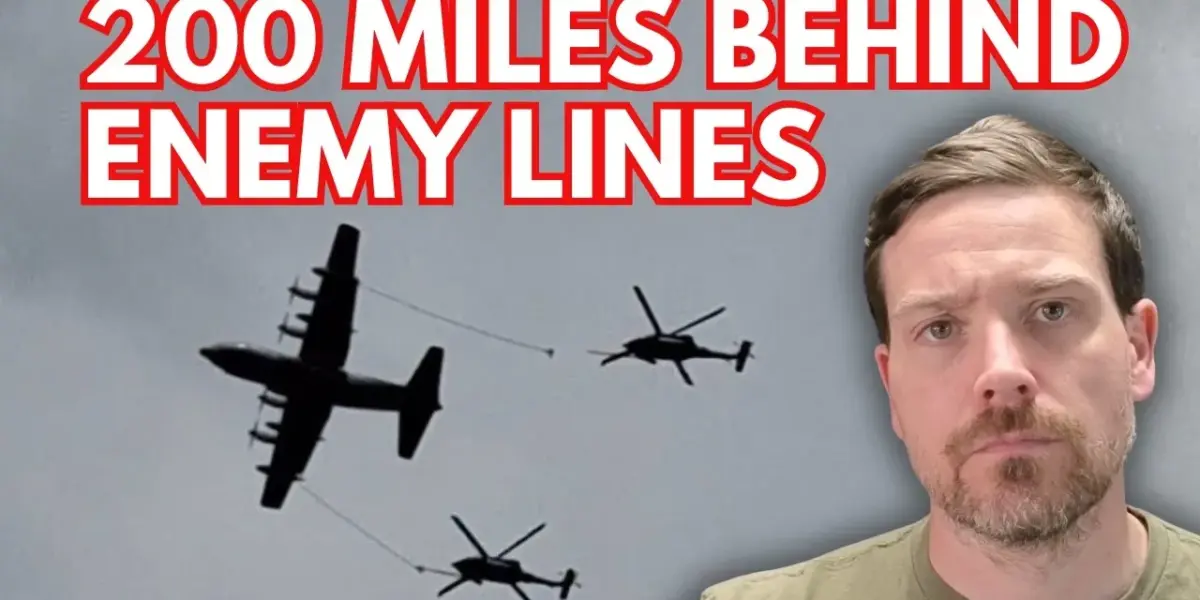
To support the rescue, the U.S. military established a temporary forward arming and refueling point (FARP) within Iran. This is essentially a temporary base where aircraft can land, refuel, and rearm. The operation involved landing C-130 transport planes to offload equipment and helicopters, like the MH-6 Little Bird, which were used to maintain a presence and conduct the rescue. This level of operation so close to a major city like Isfahan showcases remarkable logistical capability.
Adding to the complexity, the CIA reportedly used a deception campaign, spreading false information within Iran that U.S. forces had already found the airman. This confusion allowed the CIA’s intelligence-gathering capabilities to pinpoint the WSO’s exact location in a remote mountain crevice. Once located, the President ordered an immediate rescue, with U.S. Special Operations Command (SOCOM) executing the mission.
The Escape and Aftermath
Even the extraction faced challenges. Two of the transport planes and possibly a helicopter became stuck at the remote base during the egress. Rather than risk leaving the disabled aircraft behind, commanders decided to fly in three new planes to extract all personnel and the rescued airman. The two disabled planes were destroyed to prevent them from falling into Iranian hands.
The entire operation, from the initial downing of the F-15 to the successful extraction, happened during one night. This speed and efficiency were crucial to avoiding detection and ensuring the safety of all involved. Reports suggest no U.S. personnel were killed or even wounded during the rescue, which is an extraordinary outcome given the circumstances.
Why This Matters
This rescue operation is a powerful demonstration of the U.S. military’s capabilities and its unwavering commitment to its service members. It shows that even in the most dangerous situations, the U.S. will go to extraordinary lengths to bring its people home. The coordination between different branches and agencies, including the CIA and SOCOM, was critical to the mission’s success. It also underscores the importance of maintaining highly trained special operations forces capable of conducting complex missions in denied territory.
Implications and Future Outlook
While this operation is a success, it’s important not to overstate its implications for other scenarios. This was a highly specific, time-sensitive rescue mission during a single night. It should not be directly compared to larger objectives like taking territory or intercepting nuclear materials, which involve vastly different scales and complexities.
However, the success does build confidence in the U.S. military’s ability to operate deep within Iranian airspace. It highlights the advanced planning, intelligence, and tactical execution that are possible. The secrecy surrounding the operation is also vital; the less known about these tactics, the safer future missions will be.
Historical Context
Rescue missions behind enemy lines are a recurring theme in military history. From the Vietnam War’s POW rescue attempts to more recent operations in Afghanistan and Iraq, the U.S. has a long tradition of risking lives to save its own. This operation, however, stands out due to its execution deep within a sophisticated adversary’s territory, involving multiple aircraft, special forces, and intelligence assets working in concert under extreme pressure.
The establishment of a temporary air base and the use of deception tactics represent an evolution in how such missions can be planned and executed. The willingness to destroy valuable aircraft rather than let them be captured also speaks to the high stakes involved in protecting sensitive military technology and operational methods.
A Moment of Celebration, Not the End of Conflict
This rescue is undoubtedly a moment to celebrate the bravery and skill of the U.S. military personnel involved. It serves as a potent reminder of the sacrifices made by those in uniform. However, it’s crucial to remember that conflicts remain ongoing, and the battlefield continues to be a dangerous place. This success should be viewed as a testament to capability, not an indication that the broader challenges have ended.
Source: The Wild Mission That Saved a Downed F-15 WSO (YouTube)

Related Articles


Trump Threatens Iran, Shaking Global Stability
Former President Trump's aggressive Easter Sunday warning to Iran has ignited global concerns, highlighting a volatile intersection of politics, religion, and foreign policy. The analysis explores the motivations behind such rhetoric, the deep divisions within American society, and the potential for severe economic and geopolitical repercussions worldwide.


Trump’s Rhetoric Fuels Iran Tensions, Raises War Crime Alarms
Former President Donald Trump's aggressive Easter weekend social media posts directed at Iran have sparked international concern. His threats of military action and ultimatums, coupled with conflicting narratives about military engagements, have raised alarms about potential war crimes and a dangerous escalation of conflict. Critics accuse both Trump and segments of the media of downplaying the severity of his rhetoric.


Trump Threatens Iran: “Open Strait or Live in Hell”
President Trump issued a severe warning to Iran, threatening "hell" if the Strait of Hormuz is not reopened, while U.S. forces successfully rescued a downed airman. Experts suggest potential escalation and regional realignments are unfolding.