US Carrier Fire: Stealth Bombers Unleash Devastation on Iran
A fire aboard the USS Gerald R. Ford, confirmed as non-combat related, occurred amid intense U.S. airstrikes in Iran utilizing advanced bunker-buster bombs. Despite U.S. military dominance, Iran retaliates with threats to global oil supplies and proxy actions, highlighting a complex and volatile geopolitical standoff.

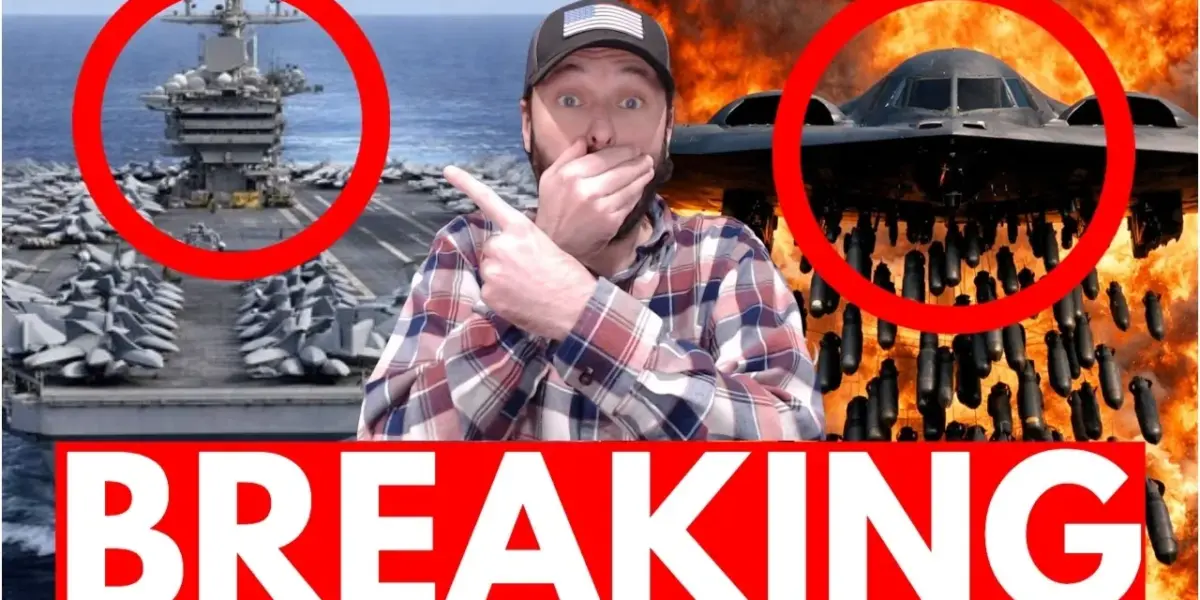
US Carrier Fire: Stealth Bombers Unleash Devastation on Iran
In a rapidly escalating conflict, the United States military has confirmed a fire aboard the USS Gerald R. Ford aircraft carrier. While initial speculation ran rampant with claims of a successful Iranian strike, official U.S. Naval Forces Central Command (US Fifth Fleet) statements clarify that the blaze originated in the ship’s main laundry spaces and was non-combat related. The fire, which occurred on March 12th, has been contained, with no damage to the ship’s propulsion plant, and the carrier remains fully operational. Two sailors sustained non-life-threatening injuries. This incident, while alarming, underscores the inherent risks and the potential for internal accidents even within the most advanced naval assets, particularly during extended deployments like the Ford’s current involvement in Operation Epic Fury in the Red Sea.
De-escalation Denied: Bunker Busters and Strategic Strikes
Simultaneously, the conflict has seen a significant escalation in U.S. offensive capabilities. Reports and visual evidence suggest the deployment of the GBU-57 Massive Ordnance Penetrator (MOP), a 30,000-pound bunker buster bomb, against secret underground Iranian facilities. Footage shows large-scale destruction at an IRGC base in Ahvaz, with subsequent images indicating the use of these colossal munitions on a fortified underground facility in Parviz. The implication of employing such specialized and powerful ordnance is clear: the U.S. is not merely engaging in conventional warfare but is systematically targeting Iran’s most hardened and strategically vital infrastructure, particularly its deep underground facilities, which are often associated with its nuclear and missile programs.
Further evidence of intensified air operations comes from the B-1 Lancer bombers reportedly being reconfigured in the UK to carry JDAM (Joint Direct Attack Munition) bombs. This shift from missile delivery systems to heavy-duty precision-guided bombs indicates a U.S. air superiority that allows for direct, unhindered strikes deep within Iranian territory. The removal of Iranian air defenses, as suggested by the ease with which these strikes are reportedly being conducted, paints a grim picture of Iran’s current defensive posture.
Iran’s Retaliation and Shifting Geopolitical Landscape
Despite the overwhelming U.S. military might, Iran and its proxies continue to demonstrate a capacity for retaliation. Hezbollah in Lebanon has unleashed rocket barrages on Israel, and an Iranian regime missile reportedly struck Jerusalem. The U.S. consulate in Erbil, Iraq, was also hit by a drone strike, underscoring the transnational nature of this conflict and the reach of Iranian-backed forces.
The new leader of Iran, Moshaba Kamei, has reiterated Iran’s threat to leverage its influence over the Strait of Hormuz, a critical chokepoint for global oil shipments. This poses a significant economic threat, with Iran’s stated intention to disrupt global oil supplies and potentially tank the global economy. This strategy highlights Iran’s asymmetric warfare approach, aiming to inflict maximum economic pain on adversaries and the global community when direct military confrontation is untenable.
Leadership Under Fire and Cryptic Threats
The conflict has also seen the elimination of key Iranian figures, with the Iranian air force commander reportedly killed in U.S. airstrikes. This decapitation strategy aims to degrade Iranian command and control capabilities.
In response to the escalating pressure, the head of Iran’s security state, Ali Larijani, issued a cryptic threat, suggesting that if the U.S. were to cut off Iran’s electricity, Iran could retaliate by plunging the region into darkness, creating an opportunity to hunt fleeing American military personnel. While the feasibility of such a threat is questionable, it signals Iran’s willingness to explore unconventional and disruptive tactics in the face of overwhelming conventional force.
President Trump’s Stance and Future Outlook
Former President Donald Trump has weighed in, emphasizing that while rising oil prices benefit the U.S. as a major producer, his primary objective is to prevent Iran from acquiring nuclear weapons and to swiftly end the conflict. This stance suggests a focus on strategic long-term goals over immediate economic gains, prioritizing regional stability and non-proliferation.
Why This Matters
The confirmation of a fire on the USS Gerald R. Ford, even if non-combat related, serves as a stark reminder of the inherent dangers and complexities of modern naval warfare. It highlights the constant vigilance required to maintain operational readiness and the potential for unexpected incidents to create significant disruption. The incident also fuels the ongoing narrative war, where misinformation can quickly spread and complicate the understanding of the conflict’s true nature.
The simultaneous deployment of GBU-57 bunker busters and the reported modifications to B-1 bombers signal a significant escalation in U.S. strategy, moving beyond containment to active degradation of Iran’s most sensitive military assets. This aggressive posture suggests a U.S. commitment to a decisive outcome, potentially aiming to neutralize Iran’s long-range strike capabilities and underground infrastructure rapidly.
Iran’s continued threats regarding the Strait of Hormuz and its capacity for retaliatory strikes, however limited, underscore the risks of a prolonged conflict. The potential for global economic disruption through oil supply manipulation remains a potent weapon in Iran’s arsenal, forcing global powers to balance military objectives with economic stability. The interplay between U.S. strategic bombing and Iran’s asymmetric threats creates a volatile and unpredictable geopolitical landscape.
Implications, Trends, and Future Outlook
The current trajectory suggests a conflict characterized by high-tech U.S. strikes against deeply entrenched Iranian assets, met with asymmetric responses and economic leverage from Iran. The reliance on advanced munitions like the GBU-57 indicates a trend towards precision strikes aimed at critical infrastructure, potentially to preemptively neutralize threats or degrade future capabilities. The reported ease of U.S. air operations points to a significant degradation of Iranian air defense systems, a trend that could define future air campaigns in the region.
The future outlook remains uncertain. A swift, decisive U.S. campaign could de-escalate tensions, but prolonged engagement risks wider regional destabilization and economic repercussions. Iran’s resilience and its network of proxies mean that even under severe pressure, it may continue to pose a threat through unconventional means. The international community will likely remain watchful, with global economic stability heavily dependent on the security of maritime trade routes, particularly in the Persian Gulf and the Strait of Hormuz.
Historical Context
The current conflict echoes historical patterns of proxy warfare and strategic competition in the Middle East. Iran’s utilization of asymmetric tactics, including threats to vital shipping lanes and support for regional militant groups, is a long-standing strategy aimed at countering a technologically superior adversary. The U.S. approach, involving the projection of overwhelming air and naval power, including the deployment of its most advanced weaponry, reflects a consistent strategy of seeking decisive military advantages to achieve strategic objectives in the region, reminiscent of previous U.S. military interventions and deterrence efforts.
Source: U.S. Aircraft Carrier ON FIRE – Stealth Bombers HAMMER Iran's Secret Base (YouTube)

Related Articles
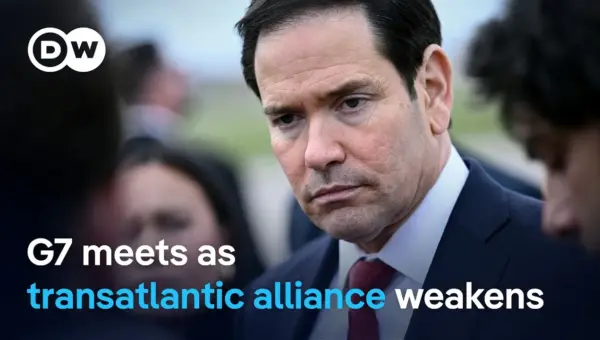
G7 Allies Clash Over Iran War Strategy, Urge Focus on Russia
G7 foreign ministers met in Paris, revealing deep divisions over the U.S. war with Iran. European allies urged the U.S. to pressure Russia, linking its actions to the conflict and fearing support for Ukraine will wane.
Iran Blocks China Ships, Exposing Beijing’s Weak Grip
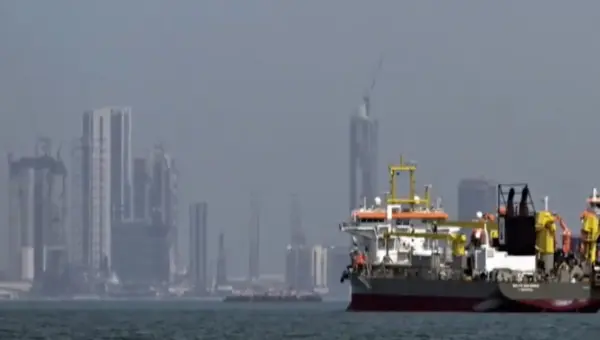
Iran's recent decision to block Chinese ships at the Strait of Hormuz is exposing the limits of Beijing's influence in the Middle East. This action is causing delays and cancellations for Chinese manufacturers, turning a perceived geopolitical win into an economic strain.
Trump’s “Walk Away” Tactic Signals Tougher Stance on China
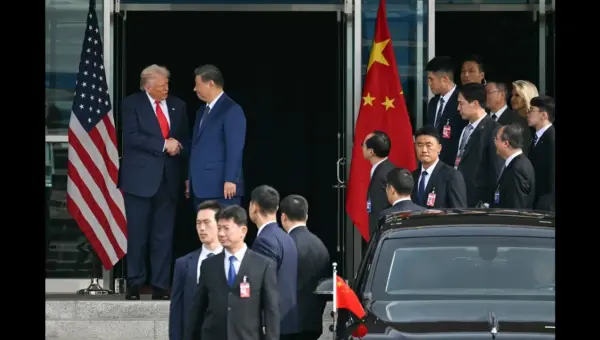
Retired Air Force Brigadier General David Stillwell believes President Trump's strategy of being willing to walk away from negotiations puts pressure on China. This tactic, combined with US global actions and strengthened alliances, signals a more assertive American foreign policy.