US Boosts Arctic Fleet: $8.6B Plan to Counter Russia, China
The U.S. is investing $8.6 billion to build 11 new polar icebreakers, aiming to counter Russia and China's growing Arctic presence. This initiative addresses the aging U.S. fleet and the increasing strategic importance of the Arctic as melting ice opens new trade routes.

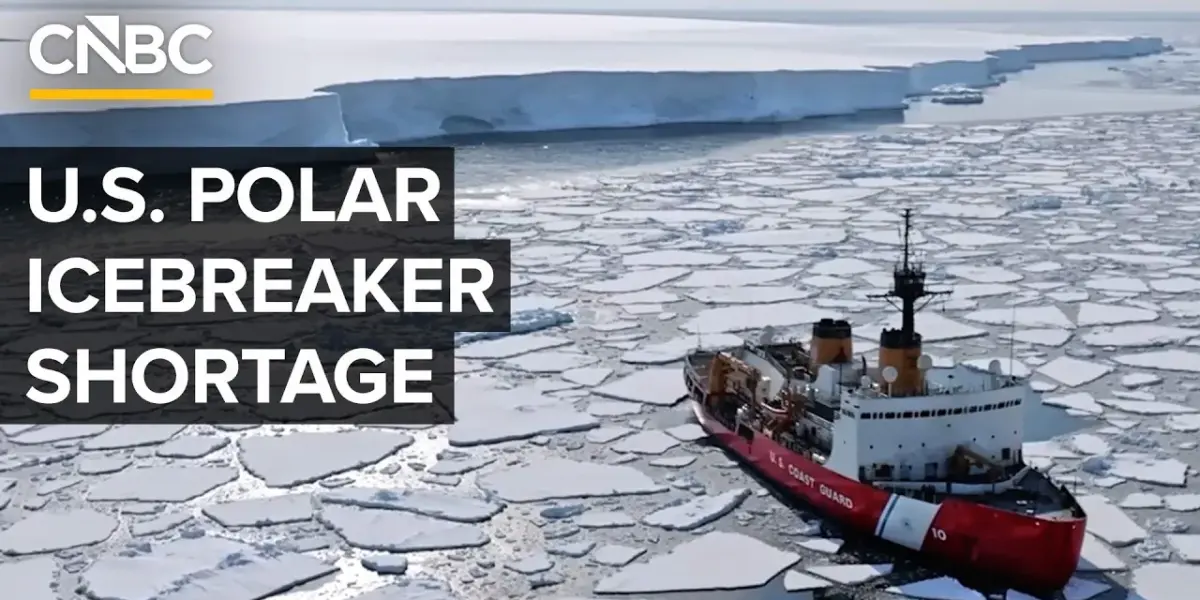
US Launches $8.6 Billion Arctic Icebreaker Initiative
The United States is embarking on a major effort to rebuild its aging icebreaker fleet, a critical move as melting Arctic ice opens new trade routes and raises national security concerns. The plan, announced under the Trump administration and set to unfold over the coming years, involves an $8.6 billion investment to construct 11 new polar icebreakers. This initiative aims to bolster U.S. presence and influence in the strategically vital Arctic region, where nations like Russia and China are rapidly expanding their capabilities.
Why Icebreakers Matter Now
Icebreakers are powerful ships designed to navigate and break through frozen waterways. While smaller domestic icebreakers, like the nearly 40-year-old U.S. Coast Guard vessel seen clearing a foot of ice on New York’s Hudson River, ensure vital commerce flows on rivers and the Great Lakes, larger polar icebreakers are essential for operations in the harsh Arctic and Antarctic environments. These vessels can cut through up to 21 feet of ice, providing safe passage for ships and enabling crucial scientific research and national defense activities.
The urgency for these ships has increased dramatically due to climate change. As global temperatures rise, Arctic sea ice is melting at an accelerating rate. This trend is opening up new shipping lanes, such as the Northwest Passage, which offers a much quicker route from Asia to the U.S. East Coast. Control over these passages is becoming increasingly important for global trade and geopolitical power.
The U.S. Lagging Behind
Despite the growing importance of the Arctic, the U.S. polar icebreaker fleet has fallen significantly behind. The United States currently operates only three polar icebreakers. One of these is nearly two decades past its designed operational life, and another, the Healy, commissioned in 1999, has experienced mechanical issues. The oldest, the Polar Star, is a 50-year-old vessel that recently completed a mission to Antarctica, a testament to its endurance but also its age.
In stark contrast, Russia boasts a fleet of over 48 icebreakers, many of which are nuclear-powered. China, a nation with growing Arctic interests, has at least four advanced icebreakers and plans for more. This disparity highlights a significant gap in U.S. ice-breaking capacity, leaving the nation at a disadvantage in a region of increasing strategic and economic importance.
The $8.6 Billion Plan and Production
The ambitious plan aims to rectify this situation by building 11 new polar icebreakers. Of these, four will be constructed by Bollinger Shipyards in Louisiana, and two by the shipbuilder C-Innovation at its facility in Texas. Two more will be built by Rauma Marine Constructions in Finland. The remaining three Arctic Security Cutters will be built by C-Innovation at its shipyard in Helsinki, Finland.
The first of these new vessels is expected to be delivered in 2028. Building the first icebreaker in Finland is projected to take about two years as production ramps up. The U.S. shipyards are set to receive significant investment, with plans to spend between $700 million and $1 billion to upgrade facilities and infrastructure in Texas. This effort aims to revive the U.S. icebreaker shipbuilding industry, which has not constructed a heavy icebreaker in 50 years.
Arctic Opportunities and Security Risks
The melting Arctic presents both economic opportunities and security challenges. The region is estimated to hold vast natural resources, including about $1 trillion in minerals and significant reserves of natural gas and oil. It also plays a critical role in global fisheries, making responsible management vital for economic prosperity.
However, increased accessibility also means increased vessel traffic and potential for geopolitical competition. The U.S. Coast Guard’s role in the Arctic includes maintaining military readiness, enforcing treaties, and ensuring freedom of navigation. Without sufficient icebreaking capabilities, the U.S. struggles to exert its presence and protect its interests in the region. The ability to operate in the Arctic is seen as crucial for maintaining infrastructure, military power, and global influence.
Market Impact and What Investors Should Know
The significant investment in new icebreakers signals a long-term commitment by the U.S. to Arctic security and economic development. This initiative will likely benefit U.S. shipbuilders and related industries involved in the construction and maintenance of these specialized vessels.
For investors, the development highlights the growing strategic importance of the Arctic. Companies involved in Arctic resource extraction, shipping, and defense contracting may see increased opportunities. The race to build icebreakers also underscores the ongoing geopolitical competition, particularly between the U.S. and its rivals like Russia and China, in strategically important regions.
The U.S. plan to revitalize its icebreaker fleet is a response to changing global dynamics and a recognition of the Arctic’s increasing significance. As the region continues to open up, the demand for icebreaking capabilities will only grow, making this a critical area to watch for both economic and security implications.
Source: How The U.S. Fell Behind In Polar Icebreakers And Trump’s $8.6 Billion Plan To Fix It (YouTube)

Related Articles


US Cardinal’s Papal Upset Redraws Vatican Influence
Pope Francis's election defied expectations, including his own, as an American cardinal believed an "American" Pope was unthinkable. The swift conclave surprised many, highlighting the unpredictable nature of papal selections and signaling a potential shift in the Church's global direction.


Mexico Navigates US-China Rivalry
Mexico is caught in a geopolitical tug-of-war between the United States and China. The nation must carefully balance its economic needs and strategic interests with both superpowers. This situation highlights Mexico's growing importance in global affairs.


Europe Strikes New Trade Deals, Eyes Global Influence
The European Union is actively forging new trade alliances, notably with South American nations like Brazil, to reduce reliance on China and the US. Driven by the need for critical resources like rare earth metals and the desire to boost its own industries, Europe is making strategic concessions and seeking new markets, despite facing internal criticism and a changing global economic landscape.