US Bombers Rule Iran’s Skies as Strikes Intensify
U.S. B-52 bombers are conducting overland operations deep within Iran, indicating a severe degradation of Iranian air defenses. Alongside intensified strikes on Hezbollah and IRGC targets, the U.S. is deploying advanced naval assets and leaving open the possibility of ground operations. The conflict's escalation raises concerns about wider regional instability.


US Bombers Rule Iran’s Skies as Strikes Intensify
In a significant escalation of military action, the United States and Israel have intensified their strikes against targets linked to Iran and its proxies. Recent reports highlight a massive explosion at a Hezbollah stronghold in Lebanon and direct hits on Iranian Revolutionary Guard Corps (IRGC) facilities within Iran itself. These actions, occurring around March 31st, signal a widening conflict and a clear message to Tehran.
Hezbollah Hit in Lebanon, IRGC Targeted in Iran
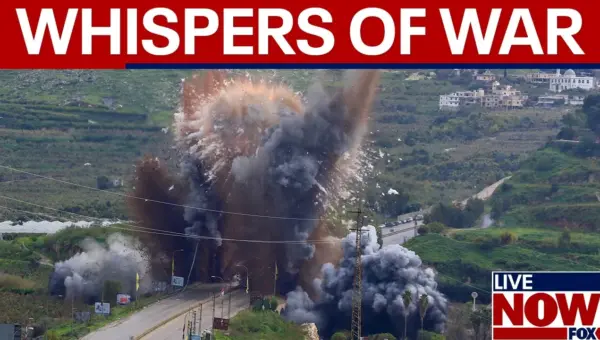
Video footage released on March 31st shows a powerful strike on a Hezbollah base in Lebanon. Hezbollah, described as a terror organization backed by Iran, has been attempting to launch attacks into Israel. The strike resulted in a massive explosion, completely destroying the targeted residential complex, which served as a Hezbollah stronghold. Reports indicate that IRGC members are also present in Lebanon, fighting alongside Hezbollah, suggesting a broader Iranian involvement in regional conflicts.
Simultaneously, Israeli forces have targeted IRGC strongholds within Iran. Footage captured missiles striking buildings in cities like Tyrron and Zongan, Western Iran. These buildings, used by military and government officials, were reportedly destroyed, leaving only structural beams. The aftermath of a U.S. strike in Tyrron also showed a completely destroyed building, with debris scattered widely.
Iran’s Air Defenses Overwhelmed, B-52s Operate Freely
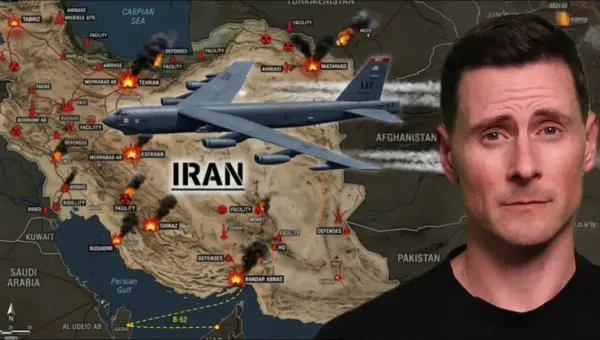
A critical development highlighted by U.S. military officials is the apparent weakness of Iran’s air defense systems. Chairman of the Joint Chiefs, Dan Kaine, stated that B-52 bombers are now conducting overland operations deep within Iranian territory. This is particularly significant because B-52s are not stealth aircraft and are easily detectable by air defenses. Their ability to fly freely over Iran suggests that the country’s air defenses have been severely degraded.
Kaine explained that over the past 30 days, forces have struck over 11,000 targets. With increased air superiority, the U.S. has begun B-52 missions over land. This allows for more dynamic targeting, meaning forces can hit changing enemy targets in real-time. The fact that these large bombers are operating without apparent threat over Iran is seen as a very negative sign for the Iranian regime and a positive development for the U.S. military.
U.S. Military Assets Surge into the Middle East
In parallel with the increased strikes, the U.S. is reinforcing its military presence in the Middle East. An Ohio-class submarine, capable of carrying 154 Tomahawk cruise missiles and deploying Navy SEALs, has been moved to the region. This deployment significantly increases the U.S. capacity for offensive operations, capable of inflicting immense damage and conducting special operations missions.
Admiral Brad Cooper stated that every branch of the U.S. military is achieving success. Naval forces have launched numerous cruise missiles and fighter jets. Air forces have extended their reach with refueling tankers and conducted high-volume air strikes. Soldiers and Marines have executed long-range strikes from land and maintained robust air defense. The Space Force has provided critical support, ensuring space superiority.
Boots on the Ground? Officials Leave Options Open
Secretary of War Pete Hegsth has not ruled out the possibility of deploying U.S. troops on the ground in Iran. During a press briefing, he emphasized the importance of not revealing military plans to adversaries. Hegsth stated that the U.S. cannot fight and win a war by telling the enemy what actions are off the table. He confirmed that there are multiple potential ground operation plans, and they could be executed if necessary.
Hegsth also shared an anecdote about meeting troops who are eager to continue the fight. When asked what they needed, a junior airman reportedly requested, “More bombs, sir, and bigger bombs.” Hegsth assured that the Pentagon intends to provide them, indicating high morale and readiness among U.S. forces. Photos released by the U.S. Marines show a Marine Expeditionary Unit training for potential ground operations, equipped with suppressed rifles, suggesting they are prepared for such a mission.
Senior Iranian Officials Targeted, New Leader’s Status Unclear
The conflict has also seen the elimination of several senior Iranian officials. One report mentions the killing of Jamshid Aga Aghayi, an adviser to the chief of staff of Iran’s armed forces, bringing the total of senior leaders killed recently to around ten. This strategy aims to disrupt Iran’s ability to coordinate counterattacks and potentially incite internal unrest.
Meanwhile, the whereabouts of Iran’s new Supreme Leader, Mashtaba Kani, remain unclear. Despite reports of letters allegedly written by him, his public appearances have been absent. While Russia’s ambassador stated Kani is in Iran and not Russia, his low profile has fueled speculation about his condition and influence within the Iranian government.
Why This Matters
The intensified strikes and the free movement of advanced U.S. bombers over Iranian airspace signal a significant shift in the regional conflict. The degradation of Iranian air defenses, coupled with the deployment of powerful U.S. naval assets like the Ohio-class submarine, indicates a U.S. strategy aimed at maximum pressure and potential preemption. The explicit mention of considering ground operations, while keeping plans secret, suggests a readiness to escalate further if deemed necessary.
Implications and Future Outlook
This escalation poses serious risks of wider regional conflict. Iran’s response, whether direct or through its proxies, remains a critical unknown. The targeting of senior leadership could destabilize the Iranian government but also provoke more aggressive actions. The U.S. military’s confidence and readiness, as expressed by its top officials, suggest a prepared and determined approach. The coming weeks will likely reveal whether these actions lead to de-escalation or further conflict, potentially involving direct confrontation or a significant ground operation.
Source: Israel VAPORIZES Major Target – B-52 Bombers DOMINATE Iran (YouTube)

Related Articles
B-52 Bombers Strike Iran’s Missile Hubs
U.S. B-52 bombers have conducted their first overland missions into Iran, striking key ammunition depots linked to the country's ballistic missile program. These operations mark a significant escalation, demonstrating U.S. air superiority and degrading Iranian air defenses.

Gulf Allies Urge US to Continue Iran Campaign: Report
Saudi Arabia and the UAE are privately urging the U.S. to continue its military campaign against Iran, believing the nation has not been sufficiently weakened. The conflict shows no sign of ending, with over 10,000 airstrikes launched, yet Iran's regime and key military capabilities remain intact. Regional allies are also increasing their involvement, adding further complexity to the escalating tensions.

Iran Strike Costs US $750M, Hints at Russian Aid
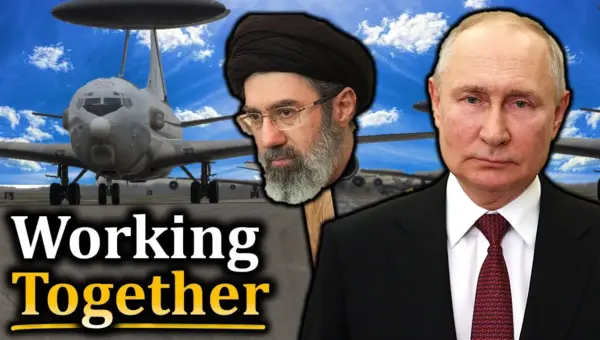
An Iranian strike on Prince Sultan Air Base destroyed at least $750 million in U.S. assets, including a vital AWACS aircraft. The attack, which injured ten personnel, raises questions about U.S. defenses and suggests potential Russian intelligence assistance to Iran.