US Blockades Hormuz Strait, Pope Francis Responds to Trump
The US military has initiated a blockade on Iranian ports and coastal areas, beginning at 10:00 a.m. Eastern Time, impacting the vital Strait of Hormuz. Meanwhile, Pope Francis has publicly responded to President Trump's criticisms, defending the Vatican's commitment to peace and reconciliation.

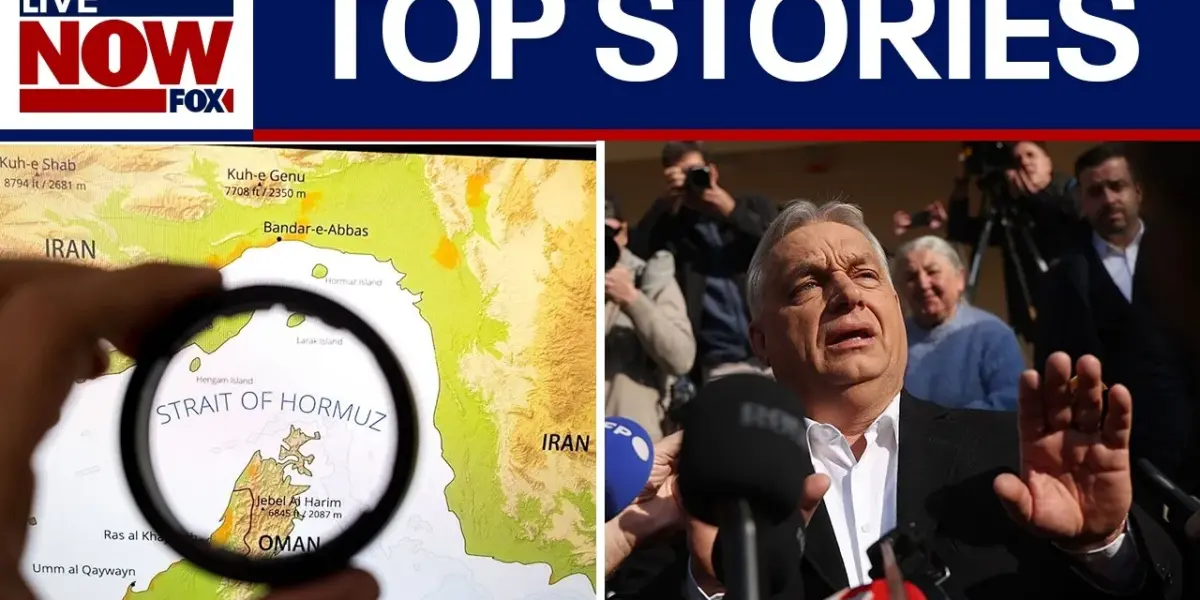
US Military Begins Hormuz Strait Blockade
The US military began a blockade of Iranian ports and coastal areas today, starting at 10:00 a.m. Eastern Time. This action follows President Trump’s earlier threat to completely block the strategic Strait of Hormuz. Early reports indicated that ships had already stopped crossing the vital waterway. The blockade aims to prevent Iran from selling oil, a move expected to be highly effective.
The situation has been developing for weeks, with US military preparations leading up to this announcement. The Strait of Hormuz is a critical chokepoint for global oil shipments, making any disruption there a significant international concern. The US military’s action is described as an application of international maritime law, countering what it calls Iran’s “quasi blockade” of the strait.
Previously, most ship traffic passed through the internationally recognized traffic separation scheme, which runs near the middle of the strait. This area is considered an international waterway under the UN Convention on the Law of the Sea. However, Iran had been directing ships to pass through its territorial waters on the northern side of the strait.
Professor Rocky Whites from the Fletcher School at Tufts University explained that a blockade is a recognized legal tool under the law of naval warfare. He noted that such blockades must be implemented impartially against all nations. This US action comes after peace negotiations in Pakistan broke down over the weekend.
Pope Francis Defends Peace Efforts, Criticizes Trump
Pope Francis has pushed back against criticism from President Trump regarding the Vatican’s stance on peace and the US-Iran conflict. Speaking to reporters aboard his plane en route to Algeria, the Pope stated that the Vatican’s appeals for peace and reconciliation are based on the gospel. He affirmed that he does not fear the Trump administration and will continue to speak out against war.
“I will not shy away from announcing the message of the gospel of inviting all people to look for ways of building bridges for peace and reconciliation,” Pope Francis said. He added that comparing his message to President Trump’s actions shows a misunderstanding of the gospel. “Blessed are the peacemakers,” he stated, emphasizing that his role is not political.
“I don’t want to get into a debate with him. I don’t think that the message of the gospel is meant to be abused in the way that some people are doing. And I will continue to speak out loudly against war, looking to promote peace, promoting dialogue and multilateral relationships among the states to look for just solutions to problems.”
These remarks were a direct response to comments made by President Trump both on his Truth Social platform and to reporters. Trump criticized the Pope, stating he did not believe the Pope was doing a good job. He specifically took issue with the Pope’s perceived stance on crime and nuclear weapons.
Trump Criticizes Pope, Discusses Iran and NATO
President Trump, speaking to reporters upon his arrival at Joint Base Andrews, expressed disappointment with Pope Francis. “I don’t think he’s doing a very good job. He likes crime, I guess,” Trump stated. He also mentioned his disapproval of a pope who he believes is okay with nuclear weapons or crime in cities, calling the Pope “very liberal.”
Regarding Iran, Trump asserted that the country is in a desperate and “very bad shape.” He claimed Iran’s military is destroyed, its navy is gone, and most of its missile and drone manufacturing capabilities are defeated. He reiterated that Iran will not obtain nuclear weapons.
“Their military is gone. Their missiles are largely depleted. The manufacturing capability for missiles and drones is largely defeated,” Trump said. He mentioned that Iran broke its promise to open the Strait of Hormuz, which led to a US strike on one of their facilities.
Trump also expressed strong disappointment with NATO, suggesting the alliance was not there for the US. “We pay trillions of dollars for NATO, and they weren’t there for us,” he commented. He indicated that US spending on NATO would be under serious examination.
The President highlighted positive economic news, stating that “tremendous numbers” have been released regarding jobs and the economy. He also noted that other nations are working with the US to prevent Iran from selling oil, and ships are heading to the US to fill up with oil, bypassing the Strait of Hormuz.
Broader Implications and What’s Next
The blockade of the Strait of Hormuz marks a significant escalation in tensions between the US and Iran. The move could have substantial impacts on global oil prices and international shipping routes. The Pope’s direct response to President Trump highlights a growing divide on foreign policy and the role of peace advocacy in international relations.
The coming days will be critical in observing Iran’s reaction to the blockade and whether diplomatic channels remain open. The effectiveness of the oil sales ban and its impact on Iran’s economy will also be closely watched. Furthermore, President Trump’s ongoing criticism of international alliances like NATO could signal future shifts in US foreign policy and global partnerships.
Source: TOP STORIES: Hormuz Strait blockade begins, Hungarian PM Orban loses, more headlines (YouTube)

Related Articles
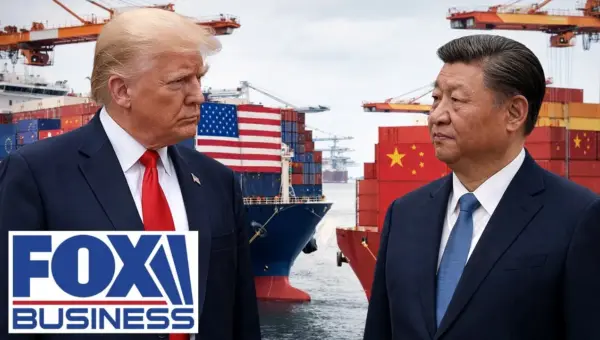
Trump Threatens 50% Tariffs on China Over Iran Support
Former President Donald Trump has issued a stark warning to China, threatening a 50% tariff if Beijing supplies military equipment to Iran. The interview also highlighted U.S. energy dominance and criticized NATO allies for their perceived lack of support.
US Navy Blockades Strait of Hormuz Amid Global Tensions
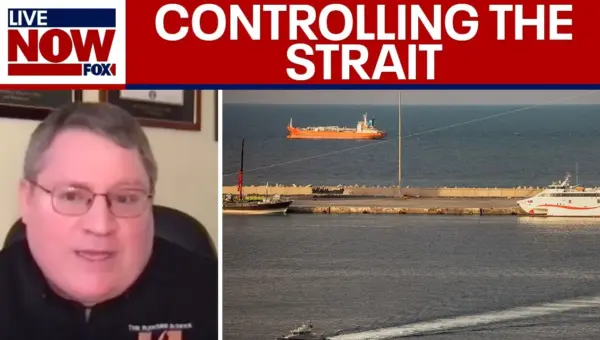
The US Navy has initiated a blockade of the Strait of Hormuz, a vital global shipping lane, in response to Iran's actions. This move is already impacting global oil prices and prompting international coalitions to form for maritime security. The situation remains tense, with a focus on diplomatic solutions and ensuring freedom of navigation.
Oil Surges Past $100 on Iran Blockade Fears
Global oil prices have surged past $100 per barrel amid fears of supply disruptions following the U.S. announcement of a blockade targeting Iranian oil exports via the Strait of Hormuz. This critical waterway handles 20% of global oil supply, and the blockade risks escalating geopolitical tensions and further damaging an already fragile global economy.