US Begs Ukraine for Drone Help Amidst Russian War
In a surprising shift, the U.S. is reportedly seeking Ukraine's expertise to defend against Iranian drones, a move highlighting the complex and interconnected nature of global security. This development contrasts sharply with past diplomatic tensions and underscores Ukraine's crucial role and battlefield experience.

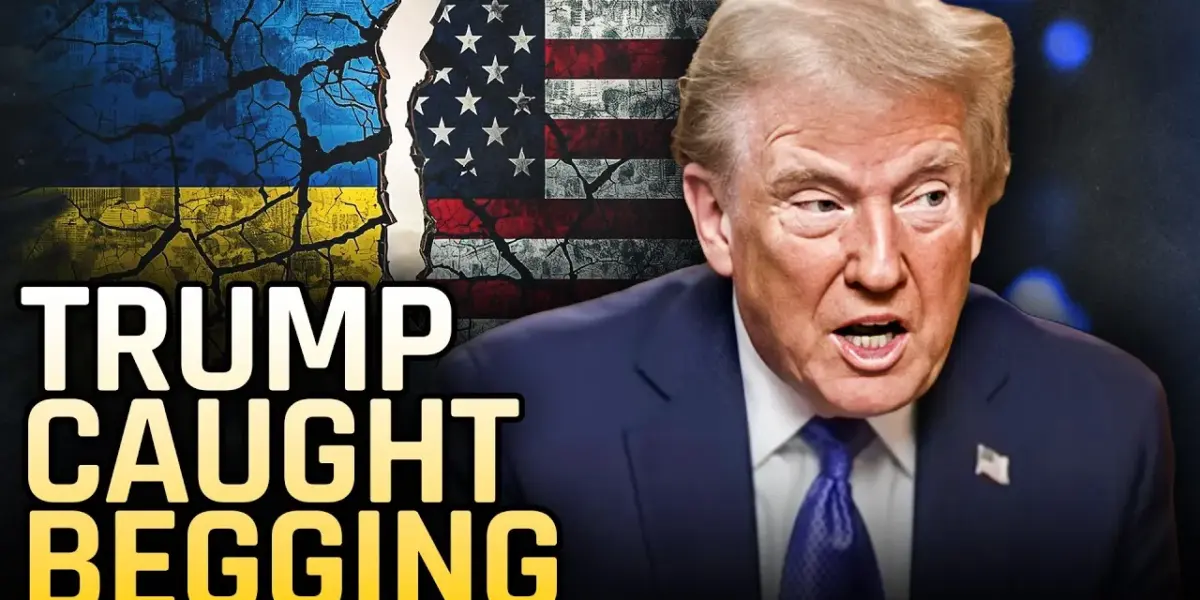
US Turns to Ukraine for Drone Defense Amidst Global Strife
In a surprising and, for some, deeply ironic turn of events, reports indicate that the United States, along with its European allies, is now seeking assistance from Ukraine in defending against Iranian-designed drones. This plea for help comes at a time when the global geopolitical landscape, particularly concerning the ongoing conflict in Ukraine, is increasingly complex and interconnected. The Daily Beast and Reuters have reported on Ukrainian President Volodymyr Zelenskyy’s acknowledgment that allied nations, including the U.S., are requesting Kiev’s expertise in countering the Shahed drone threat.
A Stark Contrast in Diplomacy
The current situation presents a striking contrast to past interactions between the U.S. and Ukrainian leadership. The transcript references a past instance where former President Donald Trump, during his administration, reportedly summoned President Zelenskyy to the White House. This meeting, as described, involved Trump berating Zelenskyy and his cabinet, with notable moments, such as Senator JD Vance’s widely discussed query about whether Ukraine had said “please and thank you.” This historical context highlights a period of perceived pressure and even humiliation exerted by the U.S. on Ukraine.
Now, the narrative has shifted dramatically. The same U.S. administration, or at least elements within it that have previously been critical, is reportedly in a position of needing Ukraine’s operational experience. The transcript points out the irony of seeking aid from a nation that was, by some accounts, treated dismissively and even attacked on social media by Trump himself just days prior to these reports, with claims that the U.S. “doesn’t know what the hell we’re doing.” The implication is that the U.S. is now asking Ukraine to “bail us out.”
Ukraine’s Strategic Response
The transcript suggests that Ukraine is likely to offer assistance without hesitation. This is attributed not to a desire for retribution or to mirror past diplomatic slights, but to a sophisticated understanding of the broader global implications of the conflict and instability. Unlike the hypothetical scenario of Ukraine subjecting Trump to public criticism, the text posits that Ukraine will act pragmatically and with a sense of global responsibility. They understand, the argument goes, that the initial “kicking of the hornet’s nest” by Russia has led to widespread repercussions, affecting not only the region but also the United States.
The Interconnectedness of Global Instability
The analysis presented emphasizes that global instability, exacerbated by Russia’s invasion of Ukraine four years ago, has far-reaching consequences. The idea that nations can isolate themselves from such conflicts is deemed unrealistic and detrimental. The transcript criticizes the notion, attributed to “MAGA freaks,” that Ukraine should not receive U.S. aid, asserting that global instability threatens everyone. The current U.S. request for help is framed as a belated recognition of this interconnected reality.
The piece argues that Ukraine’s willingness to help, even in the face of past diplomatic friction, stems from an “intelligent” understanding of the situation, contrasting this with a perceived lack of comprehension within the current U.S. administration. This intelligence is characterized by an ability to grasp the wider implications and the necessity of collective security.
Historical Context and the Drone Threat
The mention of Iranian-designed Shahed drones is particularly significant. These drones have been a prominent feature of the conflict in Ukraine, utilized by Russia. The request for assistance in defending against them points to a specific, evolving aspect of modern warfare and the strategic challenges it presents. Ukraine’s extensive experience in countering these specific weapons systems in real-world combat scenarios makes their expertise highly valuable.
Historically, the U.S. has been a primary supporter of Ukraine, particularly following the 2014 annexation of Crimea and the subsequent full-scale invasion by Russia in 2022. This support has included significant military, financial, and humanitarian aid. However, the dynamics of this relationship have been subject to intense political debate within the U.S., with varying levels of commitment and differing strategic perspectives.
Why This Matters
This development underscores several critical points. Firstly, it highlights the evolving nature of international relations and military support, where expertise gained in conflict zones can become a valuable commodity. Secondly, it illustrates the complex and often contradictory nature of U.S. foreign policy, particularly when domestic political considerations intersect with global security needs. The perceived shift from a position of pressure to one of supplication suggests a pragmatic adjustment driven by necessity.
Furthermore, it emphasizes the interconnectedness of global security. The instability originating from the conflict in Ukraine has tangible effects on international security, including threats that require collaborative defense strategies. The reliance on Ukraine’s experience with specific weapon systems like the Shahed drones demonstrates that even major global powers can face knowledge gaps that are best filled by allies on the front lines.
Implications, Trends, and Future Outlook
The trend indicated by these reports suggests a potential recalibration of U.S. foreign policy priorities and a deeper acknowledgment of Ukraine’s strategic importance beyond its immediate territorial defense. It implies that the U.S. may be recognizing the limitations of its own military-industrial complex in addressing every emerging threat and the value of practical, battlefield-tested knowledge.
Looking ahead, this situation could foster a more robust and reciprocal security partnership between the U.S. and Ukraine. It may also signal a broader shift in how Western nations approach defense cooperation, valuing diverse operational experiences. The future outlook will likely depend on the efficacy of this collaborative effort in countering the drone threat and the broader trajectory of the conflict in Ukraine, as well as the evolving political landscape within the United States.
The narrative also serves as a potent reminder that geopolitical actions have long-term, often unforeseen, consequences. The initial decisions made regarding the conflict and U.S. engagement have led to a present where strategic interdependence is not merely a theoretical concept but a practical necessity, compelling even former critics to seek assistance from those they once marginalized.
Source: Terrified Trump BEGGING Ukraine To Help Him (YouTube)

Related Articles
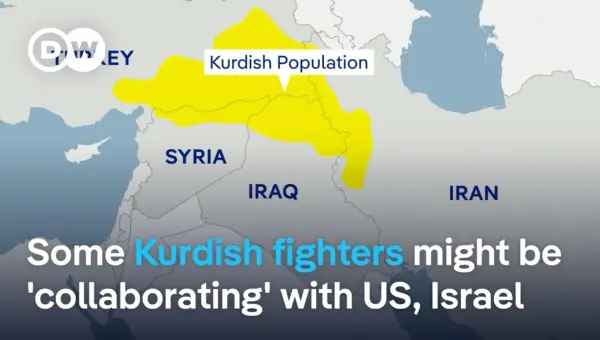
US Explores Kurdish Alliance to Undermine Iran Regime
Reports indicate the U.S. may be seeking military assistance from Kurdish fighters in Iraq to counter Iran, potentially avoiding direct troop deployment. Experts suggest this strategy could aim to destabilize Iran or provide crucial ground support, but raises significant geopolitical concerns and questions about trust.

Iran War’s Shockwaves: Energy Crippled, Regime Fractured, Ukraine Responds
The Iran war's sixth day reveals critical energy market disruptions, a fractured Iranian regime increasingly controlled by the IRGC, and Ukraine's surprising emergence as a provider of drone defense technology. The conflict's ripple effects are reshaping global security and economics.

Iran War Funding Sparks Market Volatility Fears
Potential $50 billion in Iran war funding and escalating Middle East tensions are creating significant market uncertainty. Analysts warn of increased volatility in stocks, Bitcoin, and oil prices, while the Federal Reserve faces renewed inflation concerns. Regulatory developments in crypto also add to the complex market outlook.