US and Iran Agree to 2-Week Ceasefire, Peace Talks Loom
The U.S. and Iran have agreed to a two-week ceasefire, halting a month-long conflict that threatened wider escalation. President Trump announced the truce after Pakistan presented a ten-point peace plan, which the U.S. calls a "workable starting point." The deal hinges on the reopening of the Strait of Hormuz, but significant questions remain about Iran's nuclear program and regional stability.

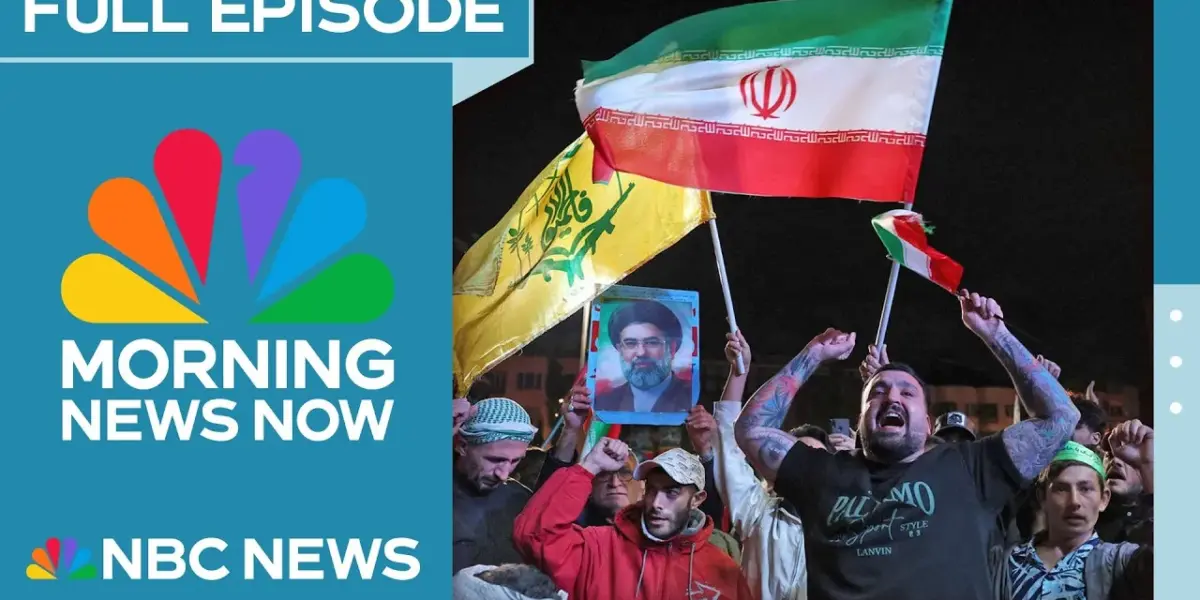
US and Iran Forge Fragile Ceasefire Amidst Escalating Tensions
In a stunning development, the United States and Iran have reached a two-week ceasefire agreement, halting a conflict that had threatened to engulf the region and sparked international alarm. President Trump announced the truce on social media late last night, just 90 minutes before a looming deadline that could have seen Iran face severe consequences for not reopening the Strait of Hormuz. The threat of military action had been described as potentially leading to the death of “a whole civilization,” drawing widespread condemnation.
Pakistan Brokers Peace, Offers Diplomatic Path
The unexpected shift towards de-escalation was significantly influenced by Pakistan’s Prime Minister, who presented a ten-point peace plan from Iran to the White House. President Trump has called this plan a “workable starting point” for future negotiations. The Pakistani leader has invited leaders from both the U.S. and Iran to Islamabad this Friday for continued peace talks, aiming for a sustainable peace. White House Press Secretary Karoline Leavitt confirmed discussions about in-person talks but emphasized that no agreements are final until officially announced.
Key Terms of the Ceasefire and Lingering Questions
The core of the ceasefire hinges on the complete, immediate, and safe reopening of the Strait of Hormuz, a vital energy route. If Iran complies, the U.S. has agreed to suspend bombing and attacks for two weeks. President Trump stated that the U.S. had achieved its military objectives. However, significant questions remain about the specifics of Iran’s ten-point proposal. Key points reportedly include the withdrawal of U.S. combat forces from the Middle East and coordinated passage through the Strait of Hormuz with Iran’s armed forces. It is unclear how this coordination will align with the U.S. demand for a complete reopening. Major shipping companies have already expressed doubts about resuming operations, and the U.S. plans to monitor the situation closely.
Iran’s Peace Plan: A Mix of Demands and Ambiguities
Details emerging from Iran’s ten-point plan reveal a complex set of demands. Beyond the controlled passage through the Strait of Hormuz, Iran is reportedly seeking an end to conflicts in Yemen, Lebanon, and Iraq, which it terms the “Axis of Resistance.” Other demands include the withdrawal of U.S. combat forces, full compensation for damages to Iran, the lifting of sanctions, and the release of frozen Iranian assets. A significant point of contention is the potential right to enrich uranium, which was reportedly included in the Farsi version of the plan but omitted from the English version provided to journalists. This raises concerns, as preventing Iran from developing nuclear capabilities was a stated reason for the conflict.
Ceasefire Holds Amidst Reported Strikes and Shipping Concerns
Despite the agreement, reports of Iranian strikes across the Gulf region surfaced this morning, raising doubts about whether the ceasefire is being fully enforced. The status of the Strait of Hormuz remains unclear, with questions about whether ships are transiting and if Iran will impose fees. Maersk, a major shipping company, stated that while the ceasefire may create transit opportunities, it does not yet provide full maritime certainty.
Domestic Political Fallout: Calls for Removal and Divided Reactions
The ceasefire announcement has not quelled concerns among some members of Congress. Over 70 Democrats are now calling for President Trump’s removal from office, either through the invocation of the 25th Amendment or through impeachment. These calls stem from the President’s rhetoric, particularly the threat to a “whole civilization.” Senator Ed Markey described the situation as “as grave a moment as the world has faced in the nuclear era.” Congressman Seth Moulton stated that the President had already committed an impeachable offense, regardless of the ceasefire. However, such a move would require Republican support, which has not yet materialized, though some Republicans have criticized the President’s language.
Shifting Alliances and Global Reactions
The conflict and its resolution have also highlighted shifting global dynamics. While many leaders expressed relief, some, like the Prime Minister of Spain, have been critical of those who initiated the conflict. The situation in Lebanon adds another layer of complexity, as Israel has stated it will continue fighting Hezbollah, despite Pakistan’s claim that the ceasefire includes Lebanon. This dispute could complicate peace prospects between the U.S. and Iran.
Economic Repercussions: Oil Prices Plummet, Markets React
The sudden about-face has had a dramatic impact on global markets. Oil prices plunged, with U.S. crude oil dropping more than 15% to around $95 a barrel, down from $117 a barrel. Stock futures also rose significantly in the aftermath of the announcement. The closure of the Strait of Hormuz, through which about a fifth of the world’s oil typically passes, had previously driven up prices. The speed at which the Strait reopens and shipping normalizes will be crucial in determining how quickly gas and oil prices decrease further.
Journalist Freed, ICE Shooting Under Investigation
In separate news, American journalist Shelley Kittleson, who was kidnapped a week ago near Baghdad by an Iran-backed militia, has been freed. Secretary of State Marco Rubio thanked various agencies for their role in securing her release. Separately, a federal investigation is underway into a shooting involving ICE agents in Northern California. Video shows officers opening fire on a car that accelerated towards them during a targeted traffic stop. ICE stated that the driver, a suspected gang member wanted for murder, weaponized his vehicle in an attempt to run over an officer.
Looking Ahead: Diplomacy and Uncertainty
The coming days will be critical in determining the longevity of this ceasefire. The success of the upcoming talks in Islamabad, the clarification of Iran’s nuclear ambitions, and the resolution of regional conflicts like the one in Lebanon will all play significant roles. While a fragile peace has been achieved, the underlying tensions and differing objectives suggest that the path forward remains uncertain.
Source: Morning News NOW Full Episode – April 8 (YouTube)

Related Articles

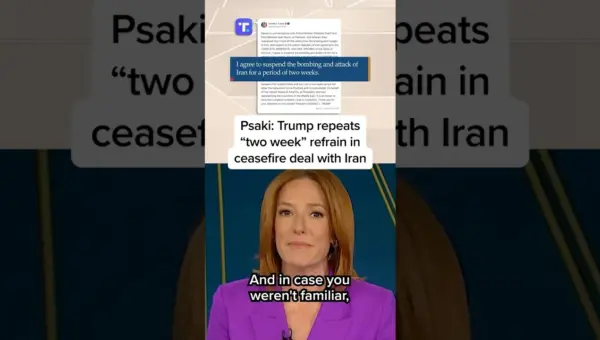
Psaki Mocks Trump’s Familiar ‘Two Weeks’ Iran Ceasefire Claim
Former White House Press Secretary Jen Psaki highlighted a familiar pattern in Donald Trump's recent statements about a potential Iran ceasefire deal. Psaki noted Trump's repeated insistence on a 'two-week' timeline, suggesting it echoes past rhetoric without substantive backing. This observation points to the recurring nature of his diplomatic talking points.


Iran Controls Persian Gulf After US Ceasefire, Analyst Claims
Iran has asserted control over the Persian Gulf following a US-declared military victory and ceasefire, according to analyst Tim Marshall. Despite US claims of success, Marshall argues Iran's actions demonstrate its regional dominance, particularly concerning its nuclear program and control of the Strait of Hormuz.
Trump Halts Iran Strikes, Hopes for Mideast Peace
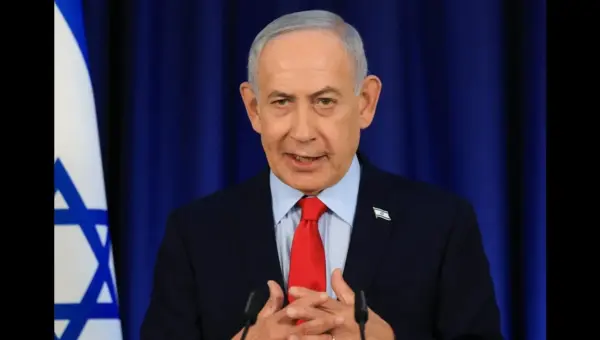
President Trump has agreed to a two-week pause on planned attacks against Iran, contingent on Iran opening the Strait of Hormuz. This move, supported by Israeli Prime Minister Netanyahu, aims to foster peace talks. The President also vowed to investigate reports of 'fake news' regarding the deal.