US Allies Rethink Ties as Washington Sows Global Discord
Allegations of geopolitical confusion and disregard for allies from the White House are straining international relationships. This perceived unpredictability is forcing nations to reconsider alliances and forge new economic partnerships, potentially reshaping the global order.

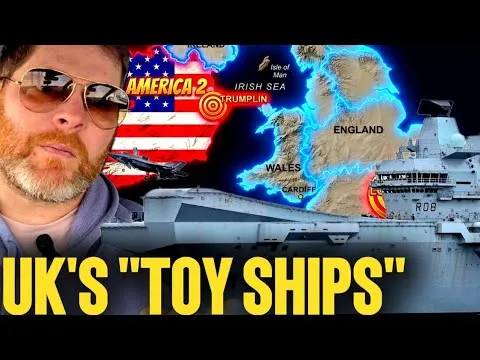
US Allies Rethink Ties as Washington Sows Global Discord
Recent statements from the White House suggest a growing disconnect between the United States and its traditional allies, raising concerns about the future of global security and economic stability. The core of the issue appears to stem from a perceived lack of understanding of international geography and a disregard for long-standing alliances, particularly with the United Kingdom and NATO members.
Misplaced Geography and Strained Alliances
A central point of criticism involves apparent confusion over basic geography. Reports indicate instances where leaders have conflated Ireland with Greenland, and the UK with Denmark. This confusion, while seemingly minor, signals a deeper problem: a lack of engagement with the nuances of international relations and the specific concerns of allied nations. For example, the UK’s historical position on certain geopolitical issues, like potential involvement in conflicts near Denmark, is distinct from its relationship with the United States. This suggests a potential weakening of the trust and shared understanding that underpins alliances like NATO, a security partnership that has existed for over 75 years.
NATO’s Role and Perceived Inaction
The transcript highlights a critical view of NATO’s effectiveness, with some suggesting it has become a “paper tiger.” This perspective argues that while the US has historically supported allies, reciprocal aid has been lacking when needed. The criticism is that NATO allies are perceived as being unwilling to engage in conflicts until after the fact, rather than offering support at the outset or during critical junctures. This sentiment fuels frustration among those who believe allies should be more proactive in shared security efforts. The idea that the US is left to manage crises alone, even while attempting to support allies, points to a breakdown in collective security expectations.
Economic Concerns and Shifting Trade Patterns
Beyond security, the geopolitical shifts have significant economic implications. The transcript suggests that as the US alienates allies, these nations are forming new economic partnerships that exclude America. Examples include trade deals between Europe and Australia, and similar arrangements involving Canada, India, and China. This creates a new global economic system where the US is increasingly isolated. Such trends could lead to a decline in American manufacturing and industry, as global transportation networks adapt to exclude the US. The rise of AI and automation further compounds these economic challenges, painting a bleak future for American jobs and the overall economy.
Motivations and Competing Interests
The actions and statements discussed appear driven by a complex mix of perceived national interest, domestic political considerations, and potentially, a desire for personal or corporate gain. The transcript suggests that decisions regarding foreign policy and military action may be influenced by the desire to profit the military-industrial complex, especially when the stock market declines. This is framed as a strategy to redirect tax money and boost market performance through conflict. For allies, the primary motivation remains stability and maintaining their own economic and security interests. When faced with unpredictability from a major power, countries naturally seek alternative arrangements to ensure their continued prosperity and safety.
Historical Context and Future Scenarios
The current situation can be viewed against the backdrop of post-World War II international order, built on strong alliances and collective security. The erosion of trust in these alliances, particularly NATO, represents a significant departure from that established order. Historically, alliances have been crucial for maintaining global peace and stability. The current trajectory, however, suggests a move towards a more fragmented world, where regional blocs and bilateral agreements become more prominent. One future scenario sees the US further isolated, struggling economically and strategically. Another, perhaps less likely, involves a course correction, where a renewed focus on diplomacy and alliance management helps restore trust and rebuild a more cooperative global framework. The current climate, however, leans towards increasing unpredictability.
Global Impact: A Reshaping World Order
The perceived erratic behavior and disregard for alliances emanating from Washington are not just internal US issues; they have profound global consequences. When a major power like the United States, a cornerstone of the existing international system, acts unpredictably, it forces other nations to adapt. This adaptation involves seeking new partnerships, re-evaluating existing trade dependencies, and potentially developing independent defense capabilities. The formation of new economic blocs that exclude the US is a direct consequence. This could lead to a multipolar world order, but one characterized by greater uncertainty and potential for regional conflicts, as the established checks and balances weaken. The reliance on oil, for instance, remains a key driver, and shifts in how it is accessed and traded will continue to shape international relations.
Conclusion
The current geopolitical climate, as described, is marked by deep concern among allies about the United States’ reliability and strategic direction. The apparent confusion over basic geography, coupled with criticism of long-standing alliances like NATO, suggests a potential unraveling of the international order. As allies seek stability and economic security, they are increasingly looking beyond the US, forming new partnerships that could reshape global trade and influence for decades to come. This trend, if it continues, presents significant challenges for the United States and the international community alike.
Source: SPITTING ON OUR ALLIES: The President Wants UK to Give Him IRELAND (YouTube)

Related Articles
Russia’s TV Dreams of Dividing Europe
Russian state television broadcasts increasingly aggressive rhetoric, discussing the division of Europe and dismissing Ukraine's statehood. This contrasts with battlefield realities and official diplomatic stances, highlighting a dual strategy of projecting strength and seeking geopolitical advantage. Analysts warn that these televised fantasies ignore the ongoing war and Ukraine's fight for sovereignty.

Ukraine Strikes Russian Oil Hubs, Straining War Funding
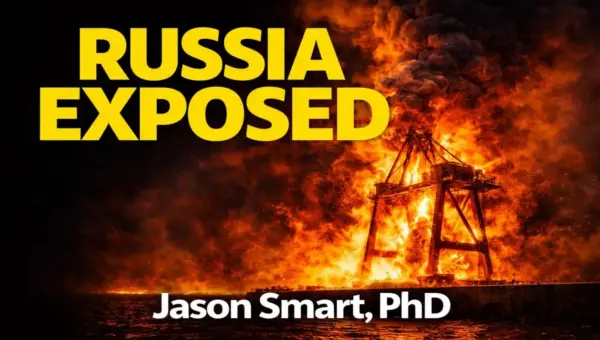
Ukraine's repeated strikes on Russian oil export terminals are targeting the financial backbone of Moscow's war machine. These attacks aim to cripple Russia's revenue streams and force a costly defense of its energy infrastructure, creating significant economic and political pressure on the Kremlin.
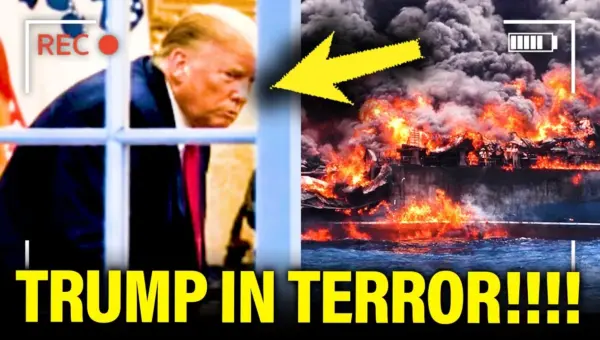
Trump’s Fury Erupts as Iran Vows Retaliation Amidst Escalating Tensions
Former President Donald Trump has reportedly reacted with intense anger following U.S. and Israeli strikes on Iranian steel plants. Iran has vowed massive retaliation, raising concerns about regional stability and potential escalation. This event draws on a long history of U.S.-Iran tensions.