US Airmen Rescued from Iran in Daring Military Operation
Two US airmen were rescued from Iran in a complex, high-risk military operation involving extensive aircraft and personnel. President Trump hailed the mission as historic, emphasizing the US commitment to leaving no one behind while also addressing national security concerns over information leaks.

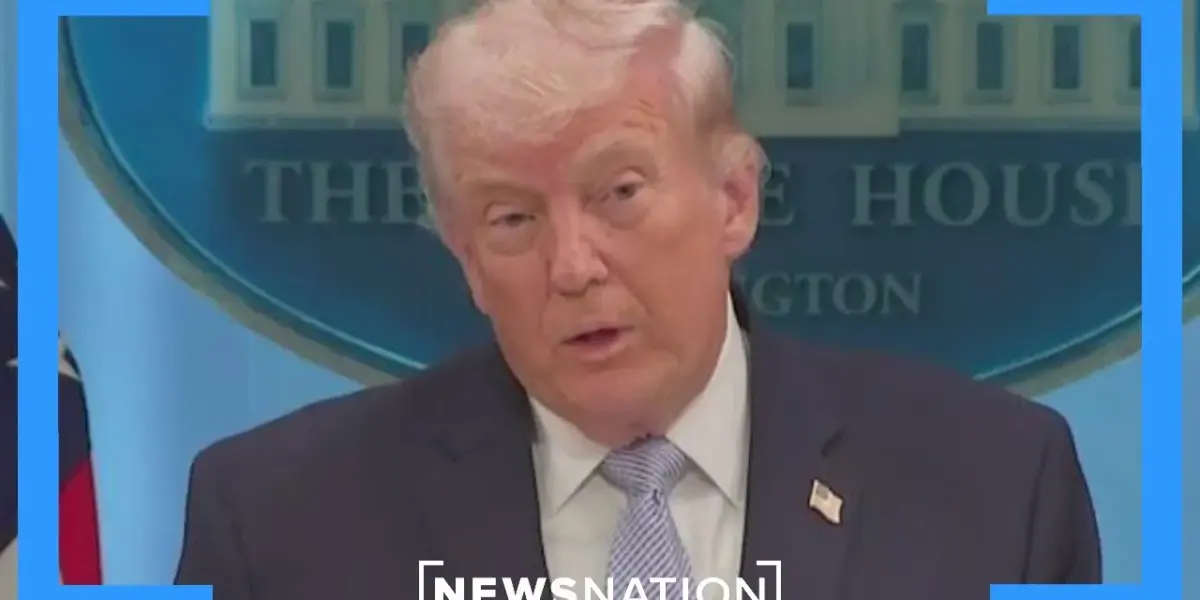
US Airmen Rescued from Iran in Daring Military Operation
President Trump announced a complex and risky military operation to rescue two US service members after their F-15 fighter jet crashed deep inside Iran. The mission, described as one of the largest combat search and rescue efforts ever attempted, highlights the extreme dangers faced by military personnel operating in hostile territory. It also underscores the US commitment to leaving no one behind, even in the most challenging circumstances.
The Incident and Immediate Response
The crisis began when an F-15 fighter jet participating in ‘Operation Epic Fury’ went down inside Iran. Both crew members ejected and landed alive. President Trump immediately ordered US armed forces to do whatever was necessary to bring them home. This was a high-stakes decision, as such missions often carry the risk of additional casualties.
Within hours, the US military mobilized a massive response. This involved 21 military aircraft. Many flew at very low altitudes over Iran for seven hours, facing heavy enemy fire. The operation aimed to locate and extract both crew members safely.
Rescuing the First Crew Member
The first wave of rescue forces successfully located the pilot. He was extracted from enemy territory by an MH-60 ‘Pave Hawk’ helicopter. This helicopter faced gunfire at very close range, but miraculously, no one was injured during this part of the operation. The advanced equipment and training of the US military were credited with this success.
The Challenge of Rescuing the Second Officer
The second crew member, a highly respected Weapons Systems Officer, had landed a significant distance away from the pilot. He was injured and stranded in an area filled with members of the Islamic Revolutionary Guard Corps, military bases, and local militias. The Iranian government had reportedly offered large rewards to local communities for his capture.
Despite his injuries, the officer followed his training. He climbed into treacherous mountain terrain, moving away from the crash site to evade capture. He used a sophisticated personal locator beacon to transmit his location to American forces. This allowed for a massive operation to retrieve him from his mountain hideout.
A Massive Second Rescue Operation
The second rescue mission was even larger, involving 155 aircraft. This included 4 bombers, 64 fighters, 48 refueling tankers, and 13 rescue aircraft. The goal was to confuse the thousands of Iranian personnel searching for the stranded officer. US forces operated in seven different locations, drawing attention away from the actual rescue site.
The operation demonstrated incredible skill and precision. US forces engaged the enemy, rescued the officer, and destroyed any threats. Remarkably, they did this without taking any casualties themselves. The officer had evaded capture for nearly 48 hours, a long and dangerous time, especially while injured.
Logistical Challenges and Contingency Planning
Extracting the crew involved significant logistical challenges. Large planes were used to carry the rescue equipment and personnel. However, the landing area was sandy and wet, raising concerns about the planes’ ability to take off due to their weight. To address this, a contingency plan was in place.
Lighter, faster aircraft were ready to extract the personnel if the larger planes could not take off. The original planes, carrying sensitive equipment, were destroyed to prevent them from falling into enemy hands. Three helicopters were heavily used during the operation. Their rotors were removed and reassembled in less than 10 minutes, showcasing the remarkable ingenuity of the crews.
Presidential Commendation and National Security Concerns
President Trump praised the extraordinary risks taken by the military personnel involved. He highlighted the genius behind the contingency plans and the rapid execution of the rescue. He also emphasized the US military’s capability to bring its people home safely, referencing a similar successful operation in Venezuela.
The President also expressed strong concern about a leak of information regarding the second rescue. He stated that the leak put the mission and the individuals at great risk. The Iranian government had offered a large award for the pilot’s capture, and the leak made the search more difficult by alerting the entire country. Trump vowed to find the leaker, stating that such actions jeopardize national security and could lead to jail time.
Global Impact and Historical Context
This rescue operation, while focused on saving two airmen, has broader implications. It demonstrates the lengths to which the US will go to protect its personnel. It also highlights the advanced capabilities of the US military and its ability to conduct complex operations deep within hostile territory.
Historically, combat search and rescue missions have always been dangerous. However, the scale and complexity of this operation, particularly its execution under heavy fire and within Iran, set a new precedent. It showcases a willingness to undertake high-risk missions when lives are on the line, reinforcing the principle of ‘leave no American behind’. The incident also underscores the ongoing tensions and military posturing in the Middle East.
Future Scenarios
This event could lead to increased US military readiness and continued investment in specialized rescue capabilities. It might also prompt Iran to enhance its air defenses and surveillance in border regions. For allies and adversaries alike, it serves as a stark reminder of US resolve and operational capacity. The successful retrieval of both airmen, despite significant challenges, reinforces the US commitment to its service members and its ability to project power effectively, even in highly contested environments.
Source: Decision to rescue 2 US service members in Iran was 'historic,' 'risky': Trump | NewsNation (YouTube)

Related Articles
Trump Escalates Iran Standoff With Infrastructure Threats
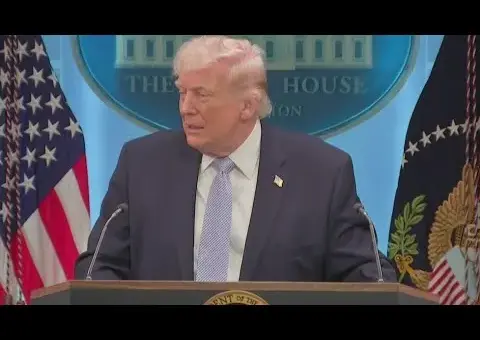
President Trump has issued a stern ultimatum to Iran, threatening to destroy its infrastructure if a deal isn't reached by Tuesday. This follows a successful U.S. military rescue of two airmen. The situation highlights a dual strategy of demonstrating military power while pursuing diplomatic resolution.

Britain’s Gulf Ambition Collides With Reality
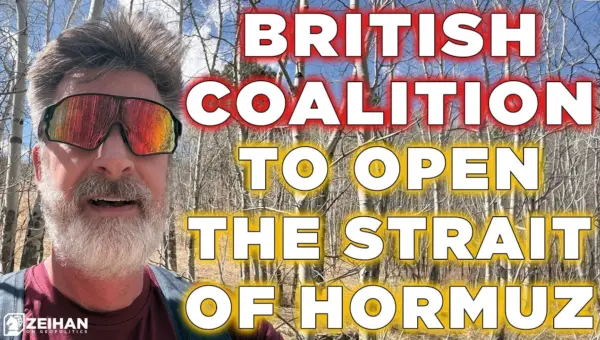
Britain's plan to secure the Strait of Hormuz without the U.S. highlights global naval limitations. Decades of U.S.-led security have left allies without the necessary naval power to act independently. A political solution with Iran seems more likely than a military one.


Crypto Eyes Rally as Tax Day Looms, Geopolitics Simmer
Cryptocurrencies like Bitcoin and Ethereum are holding steady near important price levels as traders anticipate a potential rally following the U.S. tax deadline on April 15th. Geopolitical events and ongoing regulatory discussions are key factors influencing market sentiment.