US Aims for Moon Again, Igniting Space Race Echoes
The United States is set to launch Artemis II, sending four astronauts on the first human mission to the moon in over 50 years. This mission marks a renewed focus on lunar exploration, driven by scientific discovery, resource potential, and strategic positioning.


US Aims for Moon Again, Igniting Space Race Echoes
The United States is preparing for a historic journey back to the moon with the Artemis II mission. This flight will carry four astronauts on the first human mission to the moon since the Apollo era ended in the 1970s. The mission signifies a renewed focus on lunar exploration and carries echoes of the original space race.
A New Era for Lunar Exploration
Artemis II is designed as a follow-up to the Apollo program, with the name itself chosen as a nod to Apollo’s ‘twin sister.’ The primary goal is to return humans to the lunar surface, but the mission is also about looking ahead. Leaders in the space program emphasize that the question isn’t just *if* humans should go to the moon, but rather whether the US will lead or follow in this new chapter of space exploration.
“Really, the question is not should we go, but should we lead or should we follow.”
The Moon: A Resource Hub and Gateway
The scientific and strategic importance of the moon is a key driver for the Artemis program. The moon is seen as a place with valuable resources that humanity will need access to in the future. Furthermore, controlling access to the moon is viewed as crucial for controlling access to space and the wider universe. This perspective suggests a modern interpretation of the space race, focusing on strategic advantage and future expansion.
A Race for Influence
The idea of a ‘space race’ is very much alive. Whoever has a strong presence on the moon could potentially control access to space. While there are no immediate adversaries threatening to block access, being present on the moon can help ensure that such a situation doesn’t arise. This strategic thinking highlights the geopolitical implications of lunar exploration.
Scientific Discoveries Await
Beyond strategic interests, the moon holds immense scientific value. Studying the moon can serve as a ‘Rosetta stone’ for understanding how other solar systems form. Telescopes like Kepler have shown that planets orbit many other stars. By exploring the moon, scientists can unlock crucial information about the formation of these distant worlds and our place in the galaxy.
A Diverse Crew for a Historic Mission
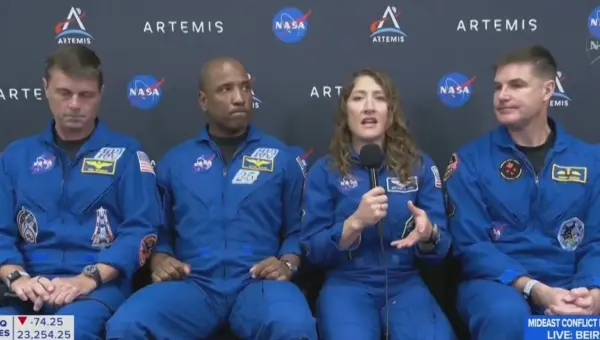
The Artemis II mission is notable for its crew composition. It includes the first woman, the first person of color, and the first Canadian to fly on a lunar mission. These astronauts recently spoke from their quarantine facility, emphasizing the test nature of this flight. It will be the first time humans have traveled to the moon in over fifty years.
“And I will tell you, the four of us, we are ready to go. The team is ready to go and the vehicle is ready to go.”
Human Connection and Future Ambitions
One astronaut shared a personal reflection on the mission’s significance. The tradition of families gathering outside the facility as astronauts depart offers a poignant moment. It’s an opportunity to share personal goodbyes, a more direct and meaningful connection than a simple text or phone call. This highlights the human element at the heart of these ambitious endeavors.
Looking Ahead: Artemis and Beyond
Artemis II is scheduled to launch as early as Wednesday, April 1st. This mission is a critical step in NASA’s larger Artemis program, which aims to establish a long-term human presence on the moon. The program is paving the way for future missions, including eventual human travel to Mars. The scientific, strategic, and inspirational goals of returning to the moon are driving this new era of space exploration.
Why This Matters
The Artemis II mission is more than just a trip around the moon; it represents a significant moment for humanity’s reach into space. It signals a return to deep space exploration after decades of focusing on low Earth orbit. The mission’s success could reignite public interest in space travel and inspire a new generation of scientists and engineers. It also brings back the idea of a space race, not necessarily a competition between nations, but a race to discover, to innovate, and to secure humanity’s future beyond Earth. The scientific knowledge gained could unlock secrets of the universe, while the strategic positioning on the moon could shape global dynamics for decades to come.
Implications and Future Outlook
The return to the moon signifies a shift in space exploration priorities. For years, the focus has been on the International Space Station and commercial ventures in low Earth orbit. Artemis II marks a bold step back into deep space, with long-term goals of establishing a sustainable lunar presence and eventually sending humans to Mars. This renewed focus on lunar exploration could lead to new technologies, economic opportunities related to lunar resources, and a deeper understanding of our solar system. The international nature of the crew also suggests a collaborative approach, though underlying strategic interests remain.
Historical Context
The Apollo program in the mid-20th century was a direct result of the Cold War space race between the United States and the Soviet Union. It was a monumental achievement that captured the world’s imagination. Artemis II, while inspired by Apollo, is set in a different global context. It’s driven by a mix of scientific curiosity, economic potential, and a desire for continued leadership in space. The mission builds on the legacy of Apollo, aiming to achieve new milestones and push the boundaries of human exploration further than ever before.
Source: Artemis II: USA Awaits Launch Back to the Moon (YouTube)

Related Articles

US Aims for Lunar Dominance in New Space Race
NASA's Artemis II mission is set to launch, marking a critical step in America's return to the Moon. This mission is part of a larger plan to establish a permanent lunar base, aiming to beat China to the surface and secure future space dominance. The program also serves as a stepping stone for Mars exploration, highlighting a new era of international competition and cooperation in space.


Artemis II Crew Ready for Historic Moon Mission
The Artemis II crew is ready for their historic lunar mission, emphasizing safety and a commitment to launching only when the vehicle and team confirm readiness. This flight aims to inspire humanity and foster international collaboration in space exploration.

Artemis II Lunar Mission Nears Launch: All Systems Go
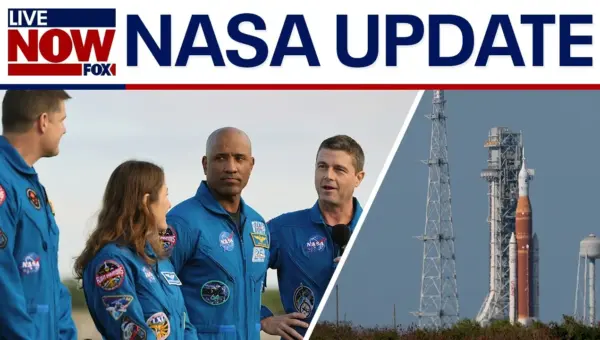
NASA's Artemis II mission is poised for launch, with all systems confirmed ready for the historic crewed flight to the Moon. The crew, rocket, spacecraft, and ground teams are all reporting 'go' as favorable weather is forecast for Wednesday's launch attempt. This mission marks humanity's return to deep space exploration after more than 50 years.