US Accused of Manufacturing Cuba Crisis for Wall Street Profit
The United States is accused of manufacturing a severe humanitarian crisis in Cuba by cutting off fuel supplies, aiming to destabilize the government and create a profitable market for American oil corporations. Critics decry this strategy as a "mafia shakeddown" that prioritizes Wall Street profits over human well-being, drawing parallels to domestic U.S. policies.

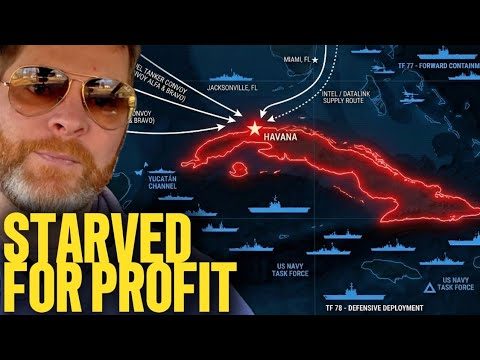
US Faces Accusations of Engineered Humanitarian Crisis in Cuba
In a move that has drawn sharp criticism, the United States is reportedly orchestrating a severe humanitarian crisis in Cuba, not to alleviate suffering, but to create an environment where Wall Street and major oil corporations can profit. The U.S. is being accused of intentionally choking off fuel supplies to the island nation, leading to widespread blackouts, water shortages, and a breakdown of essential services, all while planning to present itself as a savior through controlled oil shipments.
Manufactured Crisis for Regime Change and Profit
The narrative being pushed by some observers is that the U.S. government, under the guise of addressing an energy crisis, is actually implementing a strategy for regime change. For months, the United States has aggressively curtailed oil shipments to Cuba, which previously relied heavily on Venezuela for its fuel. This action, according to critics, is a deliberate act of economic warfare designed to destabilize the Cuban government by inflicting hardship on its population.
The transcript highlights the severe consequences of these actions: “rolling blackouts,” with up to 60% of the country experiencing prolonged power and water outages. This has led to a “sanitation breakdown and sewage in the streets,” fostering fears of disease outbreaks like cholera. Essential services are crippled, impacting individuals with critical medical needs. “Incubators in the hospitals that were keeping babies alive that have had to be shut down because there’s no power,” illustrates the dire humanitarian cost.
“The United States is about to be portrayed as a benevolent force who’s saving Cuba from an energy crisis, a fuel crisis. But in all reality, this is a manufactured humanitarian crisis that has been created by the United States for regime change.”
Wall Street’s Role in the ‘Mafia Shakedown’
The core of the accusation is that this manufactured crisis is designed to create a captive market for American oil companies. Once Cuba is sufficiently weakened and desperate, the U.S. plans to allow its own corporations to step in, not as altruistic providers, but as profiteers. This strategy is described as a “mafia shakedown” rather than legitimate foreign policy. The implication is that the U.S. government is enabling these corporations to “get their beak wet” by profiting from the suffering they helped create.
The transcript further elaborates on the mechanism: “This isn’t foreign policy. This is this is a mafia shakeddown.” The analogy of poisoning a well and then offering water is used to describe the U.S. approach: “you can’t claim the moral high ground for giving a man a glass of water after you’ve been poisoning his well for the past 2 months.”
Hard Power vs. Soft Power Diplomacy
Critics argue that the U.S. has eschewed diplomatic solutions in favor of aggressive, punitive measures. Instead of negotiating with the Cuban administration about fuel supplies in exchange for political concessions following the disruption of Venezuelan oil, the U.S. opted for a complete shutdown. This “hard power” approach involved threatening sanctions and tariffs on any nation attempting to supply Cuba with oil, effectively isolating the island.
The transcript contrasts this with a more effective approach: “Now, it would have been much more effective obviously if the United States would have talked to the Cuban administration and been like, ‘Since we took out Venezuela, who supplies your oil, we’re willing to supply you with oil as long as you have these political contritions that you’re willing to make.’ But that’s not what we did.” Instead, the U.S. “immediately went to hard power. We shut off the country entirely.”
Geopolitical Farce and Collateral Damage
The U.S. government is accused of treating the 11 million people of Cuba as “expendable collateral damage” in a geopolitical game aimed at forcing the government’s surrender. This strategy, the critics contend, fundamentally misunderstands the nature of authoritarian regimes, which may allow their populations to suffer extensively to maintain power. The ultimate goal, it is argued, is not to help the Cuban people, but to ensure that American corporations gain a “federally sanctioned monopoly on the desperate captive market.” Wall Street and Big Oil are positioned to act as the “sole savior” after the U.S. military has “artificially starved an island.”
The transcript states: “This administration, the US government decided to take 11 million people and put them into an apocalyptic crisis and seed them as expendable collateral damage in a a geopolitical farce in an attempt to get their government to surrender.”
A Playbook Used Domestically and Internationally
The article draws a parallel between the U.S. actions in Cuba and its domestic policies. It suggests that the same tactics used to create desperation abroad are mirrored in policies that undermine the social safety net within the United States. Federal funding cuts to states, reductions in Medicare, food stamps, and EBT are cited as examples of how the U.S. administration allegedly attacks available means of assistance for its own citizens.
This playbook, the author argues, is designed to maintain a population at a “level of desperation” while the “lifestyle in America continues to go down.” The narrative of freedom is maintained, even as economic hardship increases, serving to benefit the wealthy. “The truth is there is no real freedom in the United States, not for the working class. There’s only freedom for the wealthy.”
The Illusion of Freedom and Imperial Goals
The piece concludes that the actions in Cuba, like those in other nations, are manifestations of the “imperial goals of Wall Street and big oil being realized with the backing of the U.S. military.” The U.S. is portrayed not as a force for global good, but as an entity that “doesn’t want to fix the world,” but rather wants the world to “subscribe to a payment service,” aligning with U.S. foreign policy and supporting its economy. The existence of a “failed state” that the U.S. can point to as evidence of its own freedom is seen as a perverse outcome of its foreign policy, especially when that state has been actively destroyed by U.S. actions.
A Slippery Slope and the Soul of America
The recent U.S. decision to open a lane for oil to enter Cuba, with the stipulation that it cannot go to the regime but must go to private businesses, is viewed with skepticism. Critics worry this could be a pretext for increased U.S. military intervention. The question of who determines the distribution of this oil and who ensures it doesn’t fall into the hands of the government raises concerns about potential violations of agreements and further U.S. escalation. This situation is framed as a “slippery slope” that endangers the 11 million Cubans and compromises “the soul of America” as such atrocities are committed in its name.
The article ends with a call for reflection: “Unless the blockade drops and we actually start using our soft power again like we should have decades ago with Cuba.” The author questions whether this approach truly offers a positive outcome for the people of Cuba, suggesting a continuing breakdown is more likely without a fundamental shift in U.S. policy.
Source: They Starved an Island So Wall Street Could Profit (YouTube)

Related Articles
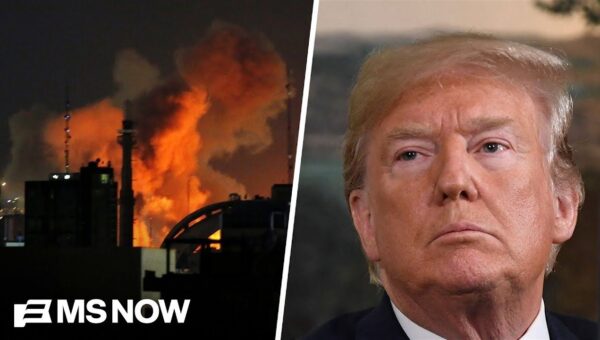
Congressman Swalwell Slams Trump’s Iran Strikes, Cites ‘No Plan’
Congressman Eric Swalwell has strongly condemned the recent U.S. military strikes in Iran, deeming them illegal and lacking a clear strategic plan. He joins Democrats in demanding a War Powers vote, asserting that the administration has failed to present evidence of provocation or a post-strike strategy. Swalwell criticizes the move as a distraction from domestic issues and a departure from campaign promises.
Trump’s Putin Stance: US Strategy and Global Implications
Analysis suggests Donald Trump's approach to the Ukraine war involves pressuring Kyiv, but US involvement is crucial for resolution. China's influence and the 'MAGA' agenda's geopolitical implications are key factors.
US Regime Change Efforts: A History of Tactical Wins, Strategic Losses
A comprehensive review of U.S. interventions reveals a consistent pattern: while the United States is adept at tactically removing foreign governments, achieving strategic success—the establishment of stable, legitimate political orders—has proven exceedingly difficult. Historical analysis points to unintended consequences and long-term instability as common outcomes.