US Abstains on Ukraine UN Vote, Sparks Outcry
The United States abstained on a UN General Assembly resolution for peace in Ukraine, drawing sharp criticism. President Trump addressed the war and the tragic death of a Ukrainian refugee in his Congress speech, while concerns grow over Russia's potential disinformation tactics and nuclear threats.

US Abstains on Ukraine UN Vote, Sparks Outcry
In a move that has drawn sharp criticism from allies and observers, the United States abstained from a United Nations General Assembly vote on a resolution calling for peace in Ukraine. The decision, which occurred on the fourth anniversary of Russia’s full-scale invasion, saw 107 countries vote in favor of the resolution, with 12 against and 51 abstentions, including the U.S. This stance has been met with dismay, particularly from former U.S. officials who view it as a departure from a clear commitment to Ukraine’s sovereignty.
President Trump Addresses the War and a Refugee’s Tragedy
The ongoing conflict in Ukraine also featured prominently in President Donald Trump’s recent address to Congress. During his remarks, President Trump highlighted the devastating human cost of the war, stating, “25,000 soldiers are dying each and every month. A war which would have never happened if I were president.” He underscored his administration’s commitment to ending the hostilities, emphasizing ongoing diplomatic efforts aimed at achieving peace and reducing casualties.
President Trump also shared a poignant story of Arena Zaritzka, a Ukrainian refugee who tragically lost her life in North Carolina after fleeing the war-torn nation. Addressing Arena’s mother, who was present in the audience, Trump recounted how Zaritzka and her mother had sought refuge in Charlotte, North Carolina, after the full-scale invasion began. The president detailed the horrific crime, where the 23-year-old Arena was fatally stabbed while driving home, allegedly by a repeat offender with a history of arrests and releases without bail. Trump vowed that justice would be served for Arena’s murder, a stark reminder of the dangers faced by those seeking safety on foreign soil.
Criticism Over UN Abstention
The U.S. abstention at the UN has ignited a firestorm of debate. Kurt Volker, former Special Envoy of the President of the United States for Ukraine, publicly criticized the decision. “A UN vote on the last and peace in Ukraine and we abstained. Go figure. It is not a business deal. It is war,” Volker wrote, expressing his disappointment with the U.S. position.
Tammy Bruce, Deputy Representative of the United States to the United Nations, offered a justification for the abstention, stating that while Washington continues to work towards ending the war, the administration had reservations about the resolution’s wording. According to Bruce, the text might distract from ongoing diplomatic negotiations rather than contributing to a peaceful resolution. This explanation, however, has done little to quell the criticism from those who believe the U.S. should have unequivocally supported the peace initiative.
Ukraine’s Stance on Peace Negotiations
Ukrainian President Volodymyr Zelenskyy reiterated his country’s desire for a swift end to the war but firmly stated that Ukraine is not prepared to make territorial concessions. Responding to reports that the United States aimed to conclude the war by July 4th, the 250th anniversary of U.S. independence, Zelenskyy acknowledged the possibility of such a goal but emphasized that any peace must be just and uphold Ukraine’s territorial integrity. “Ukraine has always supported fast solutions. We often talk about a fast track regarding EU accession and regarding ending the war. This is exactly the fast track we unconditionally support. But this does not mean that the fast track is linked to giving up part of our territory,” he explained.
Sources suggest that the White House had hoped to reach an agreement to end the war by the significant U.S. independence day anniversary. However, European officials and NATO representatives have expressed skepticism, noting a lack of signs indicating Russia’s willingness to compromise. Negotiations have reportedly faced repeated deadline extensions.
Russia’s Alleged Tactics and Nuclear Threats
Amidst the diplomatic maneuvering, concerns are mounting over Russia’s potential tactics. The Institute for the Study of War (ISW) has warned that Russia might orchestrate or permit a radiological incident on Ukrainian territory to manipulate information and discredit Kyiv. This warning comes as Moscow intensifies its nuclear rhetoric against Western nations discussing security guarantees for Ukraine. Analysts suggest that Russian officials are using statements from their Foreign Intelligence Service to amplify threats, potentially aiming to sow fear of escalation, deter European support for Ukraine, and compel the U.S. to limit its assistance.
The ISW report highlights that Russian forces regularly attack Ukrainian energy infrastructure, including nuclear facilities, which could intentionally or accidentally create radiological risks. Furthermore, Russia has been accused of attempting to use such incidents for propaganda purposes, potentially blaming Ukraine for using nuclear or radiological weapons to undermine Western support.
European Nuclear Deterrence Discussions
The broader security landscape in Europe is also evolving, with discussions around nuclear deterrence gaining traction. France has indicated a willingness to explore deploying its nuclear weapons as an alternative to American nuclear deterrence in Europe, with President Emmanuel Macron announcing strategic discussions on ensuring European security through French capabilities. German Chancellor Olaf Scholz has confirmed ongoing negotiations between Berlin and Paris regarding a European nuclear deterrence system. Amidst declining trust in the U.S., several European nations reportedly support developing their own nuclear capabilities, with Poland’s president suggesting the country should consider creating its own nuclear weapons due to its proximity to potential armed conflict.
These developments occur against a backdrop of Russian President Vladimir Putin’s claims that Britain intends to provide Ukraine with nuclear weapons, a statement vehemently denied by the UK. The report also notes an incident involving alleged drone attacks on a chemical plant in Smolensk, Russia, a facility specializing in nitrogen fertilizers, components of which can be used in both civilian and military sectors.
Looking Ahead
The coming months will be crucial in observing whether diplomatic efforts can overcome the current impasse and the escalating rhetoric. The U.S. position at the UN and its sustained commitment to Ukraine’s sovereignty will remain under scrutiny, as will Russia’s adherence to international norms and its potential use of disinformation tactics. The evolving discussions on European nuclear deterrence also signal a significant shift in the continent’s security architecture, demanding close attention as the conflict in Ukraine continues to reshape global geopolitics.
Source: 😱Kellogg's sharp reaction to the US decision! No one expected this turn (YouTube)

Related Articles

Trump: Iran Strikes Ahead of Schedule, Expects ‘Great Deal for World’
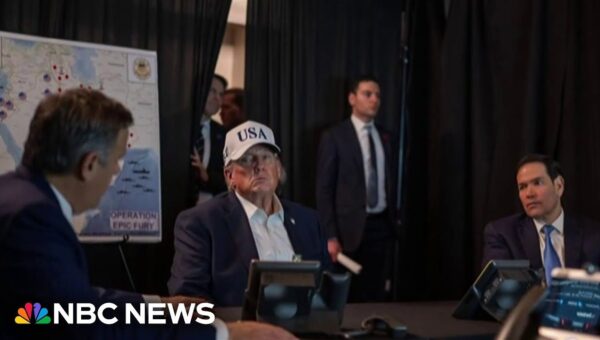
Three U.S. service members have been killed amid escalating conflict with Iran, President Trump confirmed. He stated that strikes are ahead of schedule, with senior Iranian leaders killed, and expressed optimism for a "great deal for the world" despite ongoing talks with Iranian officials.
Trump Agrees to Talks with Iran After Major Strikes
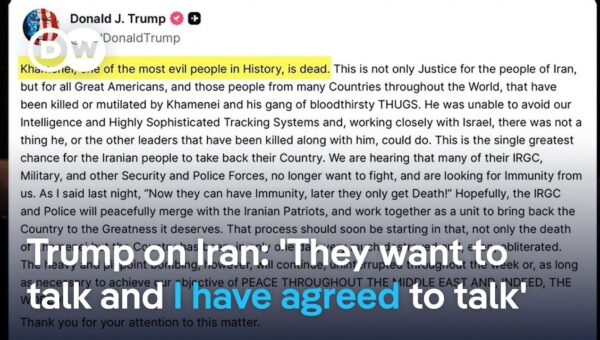
President Donald Trump has agreed to talks with Iran's leadership following coordinated strikes that reportedly killed key figures, including the Supreme Leader. While Trump claims significant military successes, U.S. strategy remains unclear, and public opinion shows limited support for the actions amid rising American casualties.
Trump’s Putin Stance: US Strategy and Global Implications
Analysis suggests Donald Trump's approach to the Ukraine war involves pressuring Kyiv, but US involvement is crucial for resolution. China's influence and the 'MAGA' agenda's geopolitical implications are key factors.