US Abandons Citizens: No Rescue Plan for Stranded Americans
Thousands of Americans are stranded in the Middle East with no government-backed evacuation plan, facing an automated message that states "do not rely on the U.S. government." This failure highlights a critical disconnect between rhetoric and reality, leaving citizens vulnerable and eroding trust.


Stranded Americans Left to Fate as Government Offers No Evacuation Plan
In a stark display of governmental inadequacy, thousands of American citizens, including unsuspecting tourists, find themselves stranded in the Middle East with no clear path home. Despite the escalating conflict in the region, the U.S. government has effectively communicated a message of abandonment, leaving its citizens to navigate a perilous situation with little to no support. The narrative, as presented, paints a picture of a nation ill-prepared and unwilling to fulfill its most basic obligation: the safety and repatriation of its own people.
A Government’s Empty Promises
The situation has been exacerbated by a series of contradictory and unhelpful statements from government officials. Senator Marco Rubio, in an attempt to appear responsive, released a video advising stranded Americans to call a specific State Department phone number. The expectation was that this number would serve as a lifeline, connecting individuals to evacuation assistance. However, upon calling the provided number, citizens are met with an automated message that brutally shatters any hope: “Please do not rely on the U.S. government for assisted departure or evacuation at this time. There are currently no United States evacuation points.” This leaves Americans in a war zone with the chilling realization that their government has no plan to rescue them.
This stark reality stands in sharp contrast to the assurances offered by other administration figures. Caroline Levit, from the State Department, issued a statement claiming the department was “actively working on plans to help Americans in the Middle East return home.” The phrase “working on plans”, however, rings hollow when juxtaposed with the immediate and desperate need for action. The transcript highlights the perceived dichotomy between the administration’s rhetoric and the tangible lack of preparedness, suggesting a governmental approach characterized by improvisation rather than strategic planning.
The Stark Contrast: Rhetoric vs. Reality
The commentary within the transcript suggests a deep-seated frustration with the perceived incompetence and lack of foresight within the current administration. The speaker contrasts the current situation with the hypothetical efficiency of previous administrations, implying that a more competent government would have readily available resources and contingency plans. The availability of large military aircraft with ample seating capacity is pointed out, along with the existence of pilots and the strategic advantage of military airspace being open when civilian options are not. This raises the question: why are these resources not being mobilized for the urgent repatriation of American citizens?
The proposed solutions are straightforward and, according to the speaker, entirely feasible: utilize military planes to transport stranded individuals to areas with open airspace, from where they can then secure commercial flights home. Alternatively, a more direct approach of flying them all the way home is presented as a logical, albeit perhaps overly simplistic, solution. The fact that such seemingly viable plans are not being implemented, or at least not publicly communicated as such, fuels the narrative of governmental failure.
Historical Context: A Pattern of Neglect?
While the transcript focuses on the immediate crisis, the underlying sentiment suggests a broader concern about the government’s commitment to its citizens abroad during times of crisis. Historically, nations have often prioritized the evacuation of their citizens from conflict zones. The current situation, however, appears to deviate from this norm, leaving a significant number of Americans vulnerable. The lack of a clear evacuation strategy in this instance could set a concerning precedent for future international crises.
Why This Matters
The abandonment of American citizens in a volatile region has profound implications. Firstly, it erodes public trust in the government’s ability to protect its people, especially when they are most vulnerable. Secondly, it raises serious questions about the effectiveness of foreign policy and national security decision-making. If the government cannot ensure the safety of its citizens abroad, its broader foreign policy objectives are called into question. The situation highlights a critical disconnect between the government’s stated intentions and its actual capacity to act, particularly in times of crisis. The message sent to these stranded individuals is one of being expendable, a message that is deeply damaging to the social contract between a government and its citizens.
Implications, Trends, and Future Outlook
The current crisis underscores a potential trend towards a more transactional or less interventionist approach to citizen welfare abroad, at least in certain contexts. The reliance on automated messages and vague assurances, rather than concrete action, suggests a system that is either overwhelmed, underprepared, or deliberately disengaged. Looking ahead, this incident could prompt a re-evaluation of evacuation protocols and the resources allocated to the State Department for citizen services during emergencies. There may be increased pressure on lawmakers to ensure that contingency plans are not just on paper but are robust, well-resourced, and actionable. The public’s expectation for government accountability in such matters will likely intensify, demanding transparency and demonstrable competence in future crises.
The narrative presented is one of deep concern, questioning the administration’s priorities and capabilities. The stranded Americans are not just statistics; they are individuals whose lives are in jeopardy due to what appears to be a catastrophic failure in governmental planning and execution. The question remains: when will the U.S. government truly prioritize the safety and well-being of its citizens caught in the crossfire of international conflict?
Source: US Government Tells Stranded Americans They’re Screwed (YouTube)

Related Articles


Americans Stranded in Middle East Seek Escape Amid War
Thousands of Americans are stranded in the Middle East, struggling to return home amid escalating conflict. Critics point to delayed State Department warnings and a lack of preparedness as key factors hindering safe evacuation efforts.


Middle East Tensions: Bolton Warns of US Public Preparedness Gap
Former US national security adviser John Bolton has criticized the Biden administration's handling of the escalating Middle East crisis. He argues the public was not adequately prepared for potential military action or regime change justifications following US-Israeli strikes on Iran. The discussion highlights broader geopolitical concerns and the need for transparent communication in foreign policy.

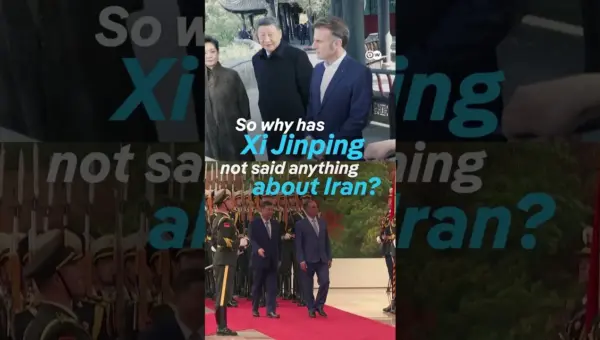
China’s Silent Stance on Iran Conflict Puzzles Global Markets
China maintains a quiet stance on the escalating Middle East crisis, prioritizing economic stability and its long-term strategy to counter U.S. influence. Despite heavy reliance on Iranian oil, Beijing offers diplomatic statements while pressuring Tehran to keep key shipping lanes open.