Unraveling China’s Military Movements: Rebellion or Elaborate Political Theater?
Recent large-scale troop movements across China, following the arrest of a prominent general, have fueled intense speculation: is it an anti-Xi Jinping rebellion or sophisticated political theater? While some point to coordinated anti-Xi factions exerting pressure, insider accounts reveal immense challenges to staging a coup. An alternative theory suggests these movements are localized displays of force, signaling resistance to Beijing's demands for loyalty without open defiance.

Unraveling China’s Military Movements: Rebellion or Elaborate Political Theater?
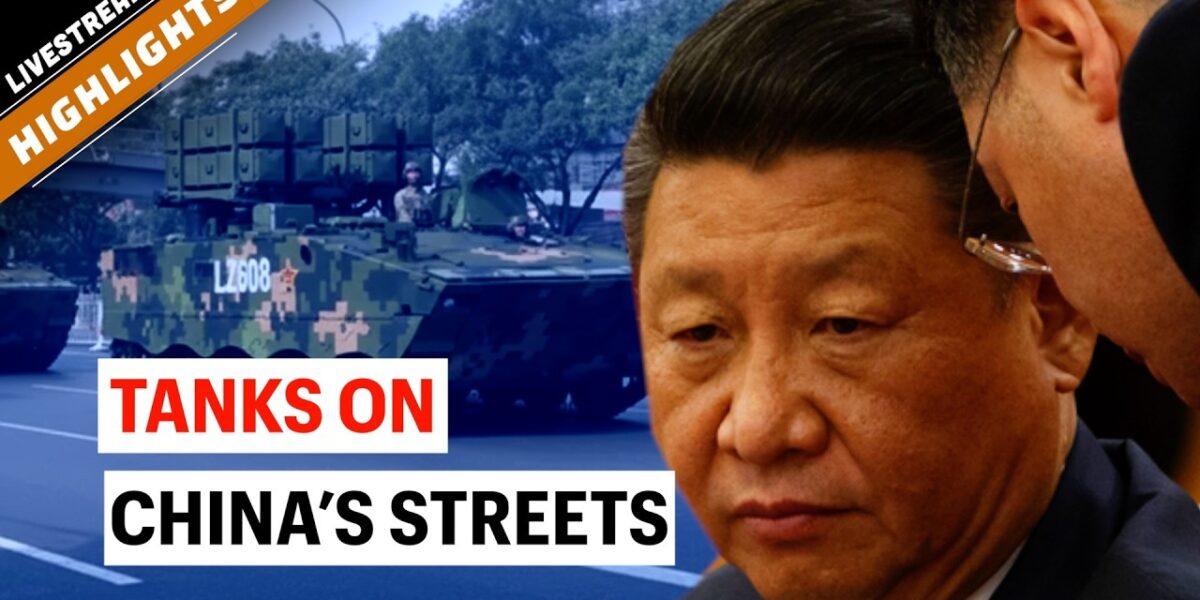
Recent weeks have seen an unusual flurry of military activity across multiple regions of China, sparking intense speculation and fueling rumors of internal power struggles within the ruling Communist Party and its formidable military arm, the People’s Liberation Army (PLA). From highways in the Eastern Theater Command to the bustling streets of major cities, the sight of tanks, armored vehicles, missile launchers, and fully armed soldiers has raised a critical question: Are these movements a prelude to an open rebellion against President Xi Jinping, or are they an elaborate display of political theater designed to send a message?
The highly synchronized nature and widespread distribution of these deployments, occurring shortly after the reported arrest of a prominent military figure, Jang Yusha, have led some analysts to suggest a coordinated challenge to Xi’s authority. However, others caution against premature conclusions, pointing to the immense difficulties of staging a successful coup in China’s tightly controlled political and military environment. This article delves into the various interpretations, drawing on expert analysis and insider perspectives to dissect the complex dynamics at play within the world’s largest military.
Widespread Troop Movements Spark Alarm
The initial reports of large-scale troop movements emerged after the arrest of Jang Yusha, a figure whose influence within the PLA is widely acknowledged. Videos and photographic evidence quickly circulated, depicting a diverse array of military hardware on the move. Missile launch vehicles, tanks, and armored vehicles were observed traversing highways in key strategic areas such as Xuzhou and Taiyuan, both situated within the jurisdiction of the Eastern Theater Command. Further footage confirmed heavy activity in other critical regions, including Guangdong, Fujian, Anhui, Shandong, Inner Mongolia, and Tianjin.
The deployments were not limited to heavy armor. Military trucks, troop carriers, and engineering vehicles were seen in significant numbers, alongside armed helicopters. Perhaps most strikingly, some clips captured fully armed soldiers on city streets, conducting temporary nighttime assemblies and prompting road closures. These visual cues painted a vivid picture of heightened military readiness and unusual operational tempo.
One particularly notable incident occurred on February 2nd in Guangxi province, where large convoys of military trucks were filmed racing down highways. Public information later indicated that the units stationed in Guangxi belong to the PLA Southern Theater Command’s 74th and 75th Group Armies. The sheer scale and geographical breadth of these movements immediately ignited a firestorm of questions regarding their origin and purpose.
The Authorship Question: Xi’s Order or Anti-Xi Maneuvers?
The most pressing question arising from these developments is who authorized such extensive cross-regional deployments. Was it a direct order from Xi Jinping, the Chairman of the Central Military Commission (CMC) and the supreme commander of the PLA? Or did these movements originate from a different source, perhaps even from factions opposed to Xi?
Skepticism about Xi’s direct involvement quickly emerged. Given that commanders across various theater commands and service branches have not publicly declared explicit support for Xi Jinping in the wake of recent political events, it seemed improbable that he would personally trust them to authorize such sensitive and large-scale deployments. This lack of public endorsement from senior military figures, particularly after the arrest of a high-ranking general, is itself a significant deviation from typical protocol in China’s highly centralized political system, where loyalty pledges are often a visible barometer of political stability.
The ‘Encirclement’ Narrative: A Coordinated Anti-Xi Movement?
Among the most vocal proponents of the anti-Xi narrative is Yao Yin, a former PLA Navy Lieutenant Colonel now based overseas. After meticulously analyzing the available videos, Yao Yin put forth a stark argument: the observed deployments constitute a nationwide synchronized operation, an undertaking of such magnitude that it would be impossible without coordination across multiple chains of command. Crucially, he posited that these movements were unlikely to have been ordered directly by Xi Jinping.
Yao Yin’s analysis went further, suggesting that Beijing itself was effectively surrounded. According to his assessment, units from the Northern Theater Command, Shandong province, and the Central Theater Command had been mobilized in a manner designed to cut off Xi Jinping’s potential routes of retreat. This strategy, he noted, bears a striking resemblance to the concept of encirclement, a tactic the Chinese Communist Party (CCP) has reportedly discussed in its planning for a potential conflict over Taiwan. The implication was clear: forces loyal to a faction opposing Xi were strategically positioning themselves around the capital, awaiting a signal to act against Xi’s loyalists.
This view resonated with many observers. Whispers began to circulate that commanders in the Central and Eastern Theater Commands were coordinating their actions with Liu Yuan, a prominent ‘princeling’ and son of former President Liu Shaoqi, who is widely regarded as a de facto leader of anti-Xi forces. Liu Yuan is known to have close ties to Jiang Zemin, the former Party General Secretary, and both belong to the influential ‘princeling’ faction—descendants of high-ranking Communist Party officials who historically wield significant influence within the party and military. The narrative suggested that Liu Yuan was acting as a crucial link, coordinating between disgruntled party elders and commanders loyal to former President Hu Jintao.
According to this compelling narrative, these extensive military deployments were not the result of Xi’s direct command but rather approved by a small, clandestine decision and coordination body. This powerful, seven-person group was reportedly composed of past and present senior CCP leaders, including former Premier Wen Jiabao, a veteran leader with deep connections within the party apparatus. The stated purpose of this body, according to sources, was not an immediate overthrow of Xi Jinping but rather to exert immense pressure on him to cooperate—specifically, to hand over the two recently detained generals, alive or dead. The fact that Xi Jinping has not yet complied, this theory suggests, explains the ongoing pressure and military movements without escalating into open confrontation, as both sides remain in a tense negotiation phase.
The Reality Check: Challenges of a Military Rebellion in China
While the ‘encirclement’ narrative paints a dramatic picture of impending rebellion, a more grounded perspective offered by political commentator Du Wen, now based in Europe, brings a crucial reality check. Du Wen recently launched a ‘rescue action’ for families of rebelling PLA soldiers, and the response, he claims, was strong, with active-duty PLA personnel, even at high levels, contacting him. He relayed insights from a group army commander, shedding light on the immense difficulties of an armed rebellion in China.
The Commander’s Candid Assessment
The group army commander’s assessment was blunt: an armed rebellion in China is ‘extremely difficult.’ The biggest obstacle, he explained, is that generals do not directly control large numbers of troops. A group army commander, for instance, could only command his personal guard company, typically just over a hundred soldiers, without intermediaries. To move substantial forces, a commander must navigate a lengthy and complex chain of command, involving division commanders, regimental commanders, and then battalion and company commanders. This extended chain presents numerous vulnerabilities: ‘Not everyone is loyal, and with today’s communications, one leak blows the entire operation, and there’s almost no room for secrecy.’
Beyond command and control, logistics pose another insurmountable hurdle. The PLA maintains extremely tight control over ammunition. Even if rebellious units could secure weapons, large-scale ammunition supplies are not stored locally; they require cross-province and cross-theater coordination, which would be virtually impossible to conceal. ‘Rebelling at the theater command level is extremely difficult,’ the commander concluded.
However, he did offer one rare scenario where an attack could occur: ‘If Xi Jinping personally showed up for an inspection, an attack could happen in a moment of opportunity.’ This, he stressed, would require a rare, unpredictable opening, not a planned and executed operation across multiple theater commands. This highlights the opportunistic nature of potential resistance rather than a grand, coordinated plot.
Widespread ‘Quiet Refusal’ of Loyalty
The commander also revealed the pervasive internal resistance to Xi Jinping’s consolidation of power. He noted that every member of the military is now being forced to declare loyalty to the Party Central and to Xi Jinping, not just verbally, but through written pledges, guarantees, and ideological reports. Yet, a significant and alarming trend has emerged: while officers might privately express willingness to support Xi, they are publicly refusing to make overt statements of loyalty. The reason? Fear of retaliation from Jang Yusha’s formidable and extensive network. ‘This quiet refusal is widespread,’ the commander stated, ‘It has left Xi Jinping and the political commissars at every level feeling embarrassed and alarmed.’
This explains the conspicuous absence of public loyalty statements from officers in state media. Jang Yusha’s enduring influence, the commander elaborated, stems from decades of holding real power at every level—from group army commander to military region commander to head of the CMC’s Equipment Development Department and, ultimately, Vice Chairman of the CMC. Each of these posts allowed him to control careers, promotions, and resources. Consequently, anyone he promoted or worked with, or anyone promoted by his associates, is now labeled part of ‘Jang’s network,’ which is assessed to be extensive.
The commander’s most startling revelation concerned the sentiment within the ranks: ‘Over 60% of rank-and-file soldiers and more than 80% of CCP military officers sympathize with and support [Jang Yusha and Liu Yuan], the two fallen generals.’ Even if these numbers are exaggerated, the direction of sentiment is clear: ‘the resistance inside the PLA is real and deep.’
Further evidence of this internal turbulence is the fact that many of Jang Yusha’s former subordinates have been ordered to take leave, while others have requested it. These requests have been approved, but significantly, no one is allowed to transfer out of the military, signaling an attempt to contain and monitor potentially disloyal elements without triggering outright defiance.
Political Theater: An Alternative Interpretation
Given the immense obstacles to a successful military coup, the notion that the observed troop movements represent an open rebellion seems unlikely, bordering on suicidal. Instead, a more nuanced interpretation suggests that what we are witnessing is a complex interplay of coordinated pressure tactics from anti-Xi factions, internal repositioning, and, crucially, a significant element of political theater.
This ‘theater’ hypothesis posits that some of these military movements are staged for show, not as genuine war preparations or coup attempts, but as a sophisticated form of intimidation. The context for this interpretation lies in Xi Jinping’s recent actions: he has reportedly dispatched ‘working teams’ to various theater commands to pressure commanders into publicly endorsing his decision to remove the two generals. So far, these teams have met with resistance, with commanders and political officers employing various excuses to delay, dodge, and push back against the demands for public loyalty.
Consider the psychological impact: if a working team arrives at a command headquarters and finds everything quiet, peaceful, with no drills or movement, that creates one atmosphere. But if they arrive to a command center buzzing with activity, troops mobilizing, armored vehicles moving, artillery visible, and live-fire drills underway, the atmosphere is entirely different. The latter scene is undeniably more intimidating.
Therefore, one compelling interpretation is that some of these movements and exercises are being initiated locally, not because war is imminent, but to create an atmosphere of force and readiness. This is a subtle yet powerful signal to Beijing’s envoys: ‘Don’t push too hard; don’t cross certain lines.’ It’s a way for local commanders to communicate, without explicit defiance, ‘We’re not as weak, isolated, or compliant as you think.’ This strategy raises the psychological cost for Xi Jinping’s working teams, demonstrating a level of localized strength and autonomy that Beijing might not have anticipated.
This interpretation aligns well with the observed phenomena: pressure emanating from the central leadership, resistance on the ground, and significant military movement without escalating into open rebellion. It suggests a delicate dance of power, where factions within the PLA are leveraging their operational capabilities to push back against Xi’s directives and assert their influence, all while carefully avoiding direct confrontation that could trigger a violent purge.
Implications for Xi Jinping’s Authority and China’s Stability
The intricate dynamics at play within the PLA have profound implications for Xi Jinping’s authority and the broader stability of the Chinese Communist Party. For over a decade, Xi has meticulously consolidated power, eliminating rivals through an extensive anti-corruption campaign that has disproportionately targeted figures associated with previous administrations, particularly those linked to Jiang Zemin and Hu Jintao. His efforts to ensure ‘absolute loyalty’ from the military have been relentless, yet the current situation suggests that his grip, while formidable, is not absolute.
The ‘quiet refusal’ of public loyalty statements, the extensive network of sympathy for the ‘fallen generals,’ and the strategic use of military movements as a form of political signaling all indicate a deep-seated resistance within the PLA. This is not merely a challenge from disgruntled individuals but potentially from entrenched factions with significant institutional power and historical connections.
Should the ‘coordination body’ narrative hold true, it signifies a remarkable resurgence of influence from party elders and former leaders, challenging Xi’s unprecedented third term and his vision of singular authority. The ability of such a body to orchestrate widespread military maneuvers, even for ‘pressure’ rather than ‘overthrow,’ suggests that Xi’s control over the party-state apparatus may be less complete than previously assumed.
The political theater aspect, while less dramatic than an outright coup, is equally significant. It demonstrates that local military commanders are not merely compliant cogs in Xi’s machine but possess the agency and capability to use their forces for internal political signaling. This introduces a layer of complexity and potential unpredictability into China’s political landscape, where the show of force can be as potent a weapon as its actual deployment.
Ultimately, the military movements observed across China are likely a confluence of several factors: coordinated pressure from anti-Xi factions at the highest levels, genuine resistance on the ground, strategic signals sent to intimidate Xi’s envoys, and perhaps routine internal repositioning. What is clear is that these are not the signs of a unified military unequivocally loyal to one man. Instead, they reveal a Chinese military grappling with internal divisions, factional loyalties, and a subtle but determined pushback against the absolute authority of its supreme commander. The coming months will undoubtedly test the resilience of Xi Jinping’s power and the delicate balance of power within the CCP.
Source: Is the PLA Turning on Xi—Or Is This Political Theater? (YouTube)

Related Articles
China’s Info War: Rumors, Ads Hint at Deep Political Strife
Unusual rumors of executions and a provocative game advertisement hint at a brewing information war within China. State media's own subtly critical reports further suggest deep political undercurrents and potential dissent.
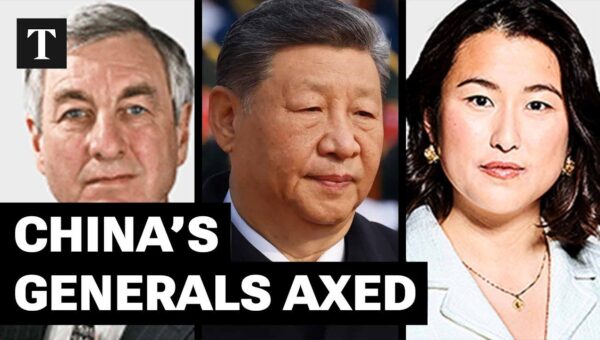
Xi’s Military Purge Sparks Questions of Paranoia and Weakness
President Xi Jinping's extensive purge of top military commanders has triggered debates about his paranoia and the PLA's readiness. Analysts question if these dismissals signal a consolidation of power or reveal deep-seated corruption and incompetence within China's armed forces, with significant implications for regional stability, particularly concerning Taiwan.
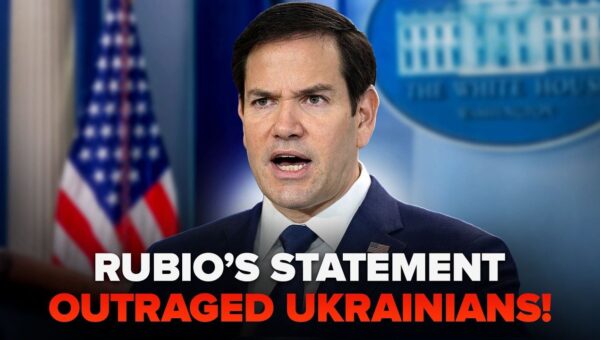
Rubio: War’s End Lies in Talks, Not Military Might
U.S. Secretary of State Marco Rubio stated that the Ukraine war lacks a military solution and will ultimately be settled through negotiation, highlighting America's crucial role in facilitating talks. Meanwhile, Hungary's PM Viktor Orbán accused Kyiv of election interference and disrupting energy supplies, while China's Xi Jinping called for inclusive peace negotiations.